
Imran Khan: The Leader Emerges – From Cricket Captain to Political Visionary (31 to 60)
Imran Khan: A New Era – Leadership on the Field and Beyond (31 to 60)


Part 2: Imran Khan – The Leader Emerges (31 to 60)
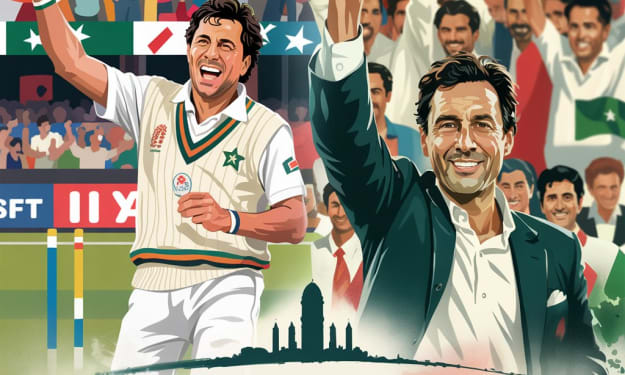
As Imran Khan entered his thirties, his life underwent a significant transformation. No longer just a cricket captain, he began to solidify his position as a leader in the eyes of Pakistanis and the world. This phase of his life, from 31 to 60, was marked by his growth as a political and philanthropic figure, the challenges he faced in transitioning from sport to politics, and his enduring influence on Pakistan’s social fabric.
The End of a Cricketing Career
By the age of 31, Imran Khan had already achieved everything a cricketer could dream of: national and international acclaim, the respect of his peers, and countless records. His leadership culminated in one of the greatest moments in the history of cricket—the 1992 Cricket World Cup. However, by the early 1990s, Imran began to recognize that his time in the sport was drawing to a close.
At the age of 39, in 1992, Imran Khan retired from international cricket, leaving behind a legacy that would remain unmatched for years to come. The decision to retire was not an easy one. Despite his iconic World Cup win, Imran knew his time in the game had passed. But his exit from cricket wasn’t the end of his story—it was merely the beginning of a new chapter.
After retiring, Imran Khan sought to shift his focus towards various philanthropic efforts, particularly in the field of healthcare and education. The success of his leadership in cricket was a testament to his ability to build and lead strong teams, and he now sought to channel this ability into his country’s needs.
Philanthropy: Shaukat Khanum Memorial Cancer Hospital
Imran Khan’s philanthropic journey took a significant leap in the early 1990s with the creation of the Shaukat Khanum Memorial Cancer Hospital & Research Centre in Lahore. The hospital was named after his mother, Shaukat Khanum, who had passed away from cancer in 1985. His mother’s battle with cancer had a profound effect on him and motivated him to establish a world-class medical institution in Pakistan that would provide cancer treatment to the underprivileged, free of charge.
The project was not an easy one. Imran had to overcome significant challenges, including raising funds, navigating bureaucratic hurdles, and convincing people of the hospital’s necessity. His relentless commitment paid off when the hospital was inaugurated in 1994, becoming a cornerstone of healthcare in Pakistan and earning him admiration as a compassionate leader. The Shaukat Khanum Hospital continues to operate today, providing vital medical care to thousands of cancer patients each year.
A Political Awakening
While Imran Khan had been a public figure for much of his life, his entry into politics was a slow and gradual process. Having seen the country’s political instability and growing disillusionment with traditional political parties, Imran became increasingly frustrated with the status quo. The public’s desire for a leader who could bring change and integrity to Pakistan’s political landscape became clear to him.
In 1996, at the age of 43, Imran Khan founded his political party, Pakistan Tehreek-e-Insaf (PTI), with a vision to bring about a “Naya Pakistan” or a new Pakistan. His political ideology was grounded in transparency, anti-corruption, and social justice. Imran’s decision to enter politics was not based on ambition for power but on a genuine desire to reform the system and make Pakistan a better place for its people.
Despite his fame and popularity, Imran’s early years in politics were marked by struggle. PTI faced numerous challenges in establishing itself as a viable alternative to the entrenched political parties in Pakistan. During the late 1990s and early 2000s, PTI struggled to gain significant political traction, and Imran faced criticism for his perceived lack of political experience.
Personal Life: Marriage and Family
Imran Khan’s personal life during this period was also evolving. His marriage to Jemima Goldsmith, a British socialite and daughter of a prominent media mogul, took place in 1995. Their relationship captured the public’s attention, and the couple’s contrasting backgrounds made them a subject of media scrutiny. Despite their differences, Imran and Jemima’s marriage represented a blend of East and West, bringing a new dimension to Imran’s public persona.
However, the marriage faced challenges due to cultural differences, and the couple divorced in 2004. Imran Khan’s personal life and relationships, especially his marriage, played a significant role in his evolving image. In 2015, he married Reham Khan, a journalist, but the marriage ended in divorce within a year. His third marriage was to Bushra Bibi, a spiritual advisor, in 2018.
Imran Khan in the 2000s: A Rising Political Force
In the 2000s, Imran Khan began to reshape his approach to politics. PTI, though still a minor political party, started gaining support from younger, educated Pakistanis who were disillusioned with the established political dynasties. Imran’s message of anti-corruption and reform resonated with a growing segment of the population who yearned for change.
Imran’s political fortunes took a significant turn when, in 2007, he played a key role in the movement for the restoration of the judiciary, advocating for the reinstatement of Chief Justice Iftikhar Muhammad Chaudhry. This activism earned him further respect and recognition as a leader willing to stand up against the establishment.
By 2010, PTI had begun to establish itself as a credible alternative, gaining traction in the public eye. Imran Khan’s charisma, combined with his message of hope and reform, turned PTI into a political force to be reckoned with. His rise, however, was not without obstacles—he faced criticism for his perceived lack of experience and the challenge of consolidating a broad base of support.
Turning Point: The 2013 General Election
Imran Khan’s political journey reached a turning point in the 2013 general elections. Although PTI failed to secure a majority, the party became the second-largest political force in Pakistan, capturing the imagination of millions. Imran’s impassioned speeches, commitment to accountability, and promises of social justice helped galvanize a large section of the electorate.
Despite facing challenges in achieving immediate success, Imran Khan’s position as a political leader was now firmly established. His party's growing popularity set the stage for his eventual rise to the highest office in the country.
To be continued........
About the Creator
Umair Ali Shah
Writer exploring life, truth, and human nature through words. I craft stories, essays, and reflections that aim to inspire, challenge, and connect. Every piece is a step on a shared journey of thought and emotion.
Keep reading
More stories from Umair Ali Shah and writers in Motivation and other communities.
“A Poor Man Helped a Stranger… The Next Day His Life Changed Forever”
In a small dusty village surrounded by dry fields and broken roads, there lived a poor man named Rahim. Rahim owned nothing but a tiny mud house, a worn-out bicycle, and a heart full of kindness.
By Maavia tahirabout 21 hours ago in Motivation
The Last Voice Message
It was a quiet Sunday evening when Daniel’s phone vibrated on the kitchen table. He had just returned home after a long day at work, the kind of day that left your mind empty and your body tired. Outside, the sky was fading into deep shades of blue, and the city lights were slowly flickering on. Daniel poured himself a cup of coffee and glanced at his phone. 1 New Voice Message. The notification made him pause. He frowned slightly when he saw the sender's name. Lucas. Daniel’s heart skipped. Lucas had been his best friend since childhood. They had grown up together, shared secrets, dreams, and countless late-night conversations. But Lucas had died three days ago. A car accident on a rainy highway. The kind of sudden tragedy that leaves people staring at the floor during funerals, unsure what words could possibly make sense. Daniel had stood there at the funeral home, staring at the closed casket, trying to convince himself it wasn’t real. And now… A voice message from Lucas. Daniel stared at the screen, his coffee forgotten. Maybe it was an old message delayed by the network. Maybe Lucas had sent it earlier and it only just arrived. That had to be it. Still, his hands felt strangely cold as he pressed play. For a moment, there was only static. Then a familiar voice spoke. “Hey, Daniel… if you're hearing this, something probably went wrong.” Daniel froze. Lucas’s voice sounded calm, but there was something unusual in it. A strange heaviness. “I’m recording this because… well, I have a feeling something bad might happen tonight.” Daniel felt his chest tighten. Lucas continued. “You know how I always trust my gut. And right now it’s screaming at me.” A quiet laugh followed. “But you’ll probably call me dramatic.” Daniel remembered saying exactly that many times. Lucas had always been the intuitive one. The message continued. “I’m driving back from the lake house right now. It’s raining pretty hard, and the roads are terrible.” Daniel’s grip on the phone tightened. The accident had happened on that same road. Lucas paused for a few seconds before speaking again. “I didn’t want to call because I’d probably just sound paranoid. But there are things I’ve been meaning to say for a long time.” The rain could be heard faintly in the background of the recording. “First… thank you.” Daniel blinked, confused. “For sticking by me all these years. You’re more than a friend, man. You’re family.” Daniel swallowed hard. Lucas’s voice softened. “I know I don’t say stuff like this often, but you deserve to hear it.” Daniel suddenly felt a deep ache in his chest. The kind of ache that only comes from words that arrive too late. Lucas continued. “And there’s something else…” The sound of a windshield wiper swept across the background. “If anything ever happens to me… don’t let Mom stay alone in that house. She pretends she’s strong, but she’s not as tough as she acts.” Daniel closed his eyes. Lucas always worried about his mother. “Visit her sometimes. Even if she says she’s fine.” The message went quiet for a moment. Then Lucas spoke again, slower this time. “And Daniel… there’s one more thing.” A faint rumble of thunder echoed through the recording. “You keep putting your life on pause.” Daniel frowned slightly. “You always say you’ll chase your dreams later. Later when you have more money. Later when things are safer.” Lucas sighed. “Stop waiting.” The rain in the recording grew louder. “You wanted to write stories. You wanted to travel. You wanted to start that podcast we talked about.” Daniel’s throat tightened. “Life doesn’t wait for the perfect moment.” Lucas chuckled softly. “And clearly… neither does fate.” Daniel felt a chill run down his spine. “I guess what I’m trying to say is… don’t waste time the way I did.” The car engine could be heard revving slightly. “If you’re hearing this, it probably means I never made it home.” Daniel’s eyes filled with tears. There was a long pause in the recording. Then Lucas spoke one last time. “But I’m not scared.” Daniel leaned closer to the phone. “I’ve had a good life.” The rain softened slightly in the background. “And I had a great friend.” Daniel wiped his eyes. “Take care of yourself, okay?” A faint smile crept into Lucas’s voice. “And hey… if there’s Wi-Fi in the afterlife, maybe I’ll send you another message someday.” Then the recording ended. Silence filled the kitchen. Daniel sat there, staring at the screen long after the message had finished. Outside, the wind rustled softly through the trees. For the first time since the funeral, Daniel let the tears fall freely. But mixed within the sadness was something unexpected. Clarity. Lucas had known something might happen, and instead of fear, he had chosen to leave behind words that mattered. Daniel slowly stood up and looked out the window at the city lights stretching into the distance. For years he had postponed his dreams. Waiting. Delaying. Convincing himself there would always be more time. But Lucas’s final message echoed in his mind. Life doesn’t wait for the perfect moment. Daniel picked up his phone again. Not to replay the message. But to open a blank document. At the top of the page, he typed the title of his first story. “The Last Voice Message.” And for the first time in a long while, Daniel began to write.
By Sahir E Shafqat7 days ago in Motivation


Comments
There are no comments for this story
Be the first to respond and start the conversation.