
If You Can’t Raise My Head, Don’t Lower It
A father's gentle words that left a deeper mark than punishment ever could.
If You Can’t Raise My Head, Don’t Lower It
By{Muhammad Faizan}.
It was an ordinary school morning. The soft golden sunlight filtered through the trees as I arrived at the school gate, just like every other day. As the headmaster of a government secondary school, I took great pride in keeping the institution clean, disciplined, and well-organized. But that morning, something deeply disturbing caught my eye.
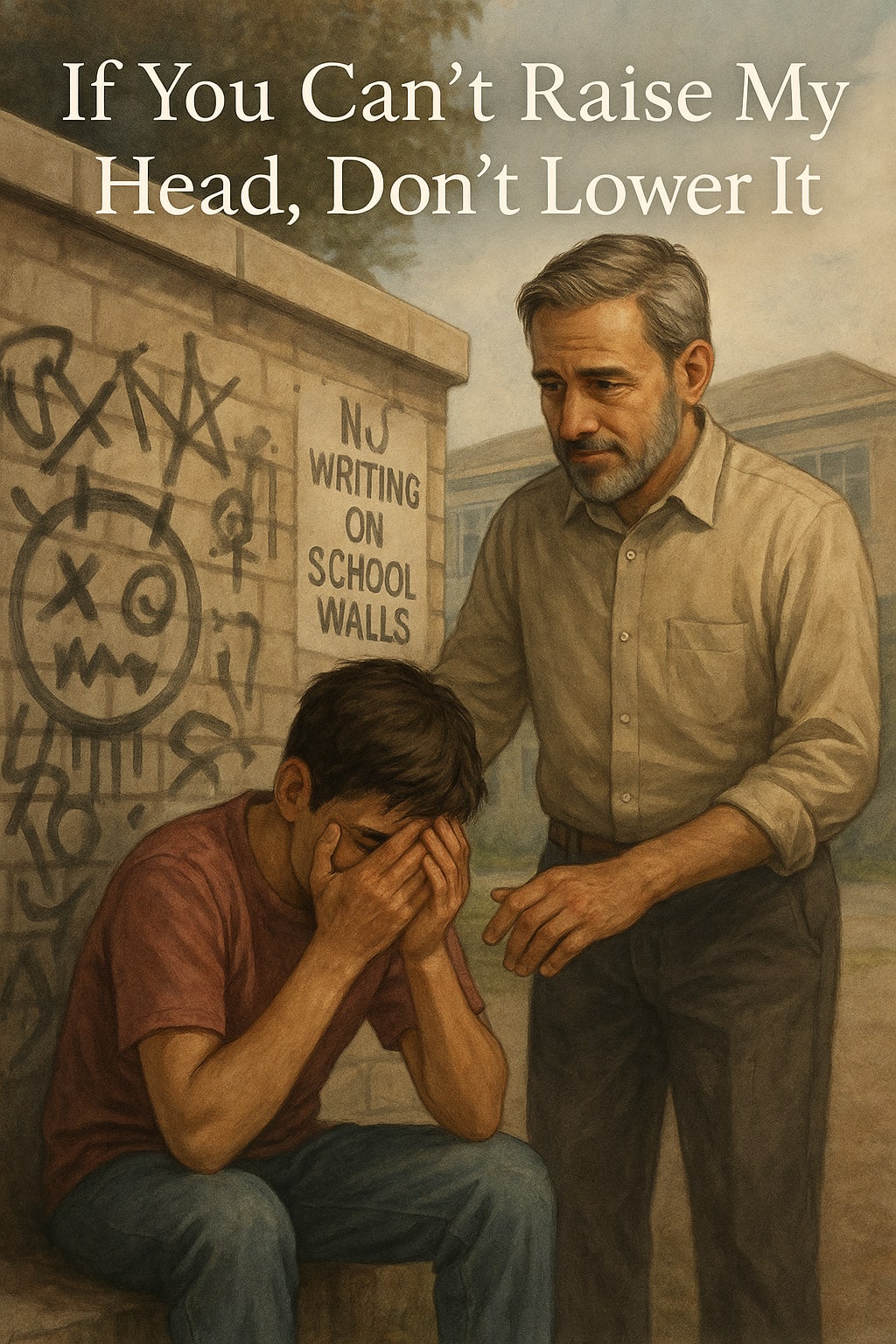
The school’s outer walls—freshly painted only a few months ago—were now covered in graffiti. Someone had spray-painted crude drawings and vulgar words all over them. My eyes immediately went to the signboard I had placed myself:
"Writing on the school walls is strictly prohibited."
The sight of those defaced walls felt like a personal wound. This wasn’t just vandalism—it was an insult to the values we worked so hard to instill in our students. My heart sank.
Once inside, I immediately called a staff meeting. I asked the administrative assistant to bring the attendance records and class logs. I wanted to find out who had done this—not to punish them, but to help them understand the weight of their actions.
After some investigation and questioning a few students, we narrowed it down to one boy. He was in Grade 9. Quiet, not very disruptive in class, but clearly troubled in ways we hadn’t noticed before.
I didn’t confront him directly that day. Instead, I called his father.
ello, this is the headmaster speaking. I need to speak with you about your son. Could you please come to the school tomorrow morning?”
The next day, the boy’s father arrived. He was a humble man, respectful in demeanor and calm in tone. I narrated the whole incident and then gently told him:
“We have reason to believe that your son is responsible for the graffiti on the school walls.”
He listened quietly and asked me to call his son in. When the boy entered the office, he kept his head down. His father, in a gentle voice, asked:
“Son, did you do this?”
The boy hesitated, then slowly nodded.
“Yes, father. I did it.”
What happened next took me completely by surprise.
The father didn’t raise his voice. He didn’t slap his son or scold him. He didn’t even express visible anger. Instead, he calmly pulled out his phone and called a local painter.
He said:
“Please come to the school. I need you to repaint the school’s boundary walls.”
Then he turned to me and said:
“Sir, I will restore the walls at my own expense. Please allow the painter to begin.”
I was stunned. I expected anger, maybe even denial. But this man’s composure and responsibility left me speechless. Before leaving, he placed his hand softly on his son's head and said one sentence that I will never forget:
“Son, if you can’t raise my head with pride, at least don’t do something that lowers it.”
And with that, he turned and walked away.
As I turned to look at the boy, I noticed he had buried his face in his hands—and he was crying. Tears streamed down his cheeks, not because he had been punished, but because of the pain in that one sentence.
I asked him softly:
“Your father didn’t scold you, didn’t beat you, didn’t even raise his voice. Then why are you crying?”
The boy wiped his tears and said:
“Sir… I’m crying because I wish he had hit me. I wish he had shouted at me. But what he said hurt more than anything else. His disappointment broke me.”
---
The Turning Point
That single moment became a turning point in the boy’s life. In the weeks that followed, I watched him change completely. The once quiet and disconnected boy became one of our most active students.
He began arriving early to school, participated in classroom discussions, and joined various extracurricular activities. He volunteered to help repaint the walls, joined the cleanliness committee, and even contributed articles to the school magazine.
More importantly, he started helping other students—especially those who were struggling like he once was. His academic performance improved, and by the end of the year, he had become one of the top-performing students.
It was incredible.
---
A Father’s Method: The Power of Words
In a world where many parents resort to harsh punishments, threats, or emotional detachment, this father chose a path of wisdom, empathy, and responsibility.
He didn’t let his son off the hook.
He made sure the damage was fixed.
But he also ensured that his son understood the moral damage—not just the physical one. He spoke not to his son’s fear, but to his heart.
That one sentence:
“If you can’t raise my head, don’t lower it…”
—had more power than any beating or punishment ever could. It carried weight, honor, and trust.
---
The Boy’s Transformation
Months later, I asked the boy, now a school prefect:
“How did you change so much?”
He smiled and said:
“Sir, that one sentence from my father changed everything. I realized I never want to see that look in his eyes again. He didn’t humiliate me… but he made me realize what I had done. That kind of love is rare. And I want to make him proud now—not ashamed.”
---
Conclusion: A Lesson for All Parents and Educators
This true story carries a message for all of us:
Discipline doesn’t always require anger.
Correction doesn’t always require punishment.
And transformation often comes from empathy, not fear.
Talk to your children. Guide them with love. Make them feel accountable, not afraid.
Sometimes, a single sentence filled with wisdom can change a life forever.
About the Creator
Keep reading
More stories from Muhammad Faizan and writers in Motivation and other communities.
The 5-Minute Decision
Mohsin stood at the edge of the rooftop, phone in hand, staring at the dark city below. It was colder than usual. The kind of cold that slips into your chest, not just your skin. The buildings around him were silent. Some windows glowed softly with warm light — families, dinners, TV laughter. It felt like the world was still moving, just not with him.
By Muhammad Faizan7 months ago in Motivation
How to Detach Without Hating Them
Detachment is one of the hardest emotional skills to learn, especially when you genuinely cared about someone. Many people believe the only way to move on is to hate the person who hurt them. But hatred doesn’t heal — it only keeps you emotionally tied to the same pain you’re trying to escape.
By Millicent Chisom2 days ago in Motivation



Comments