
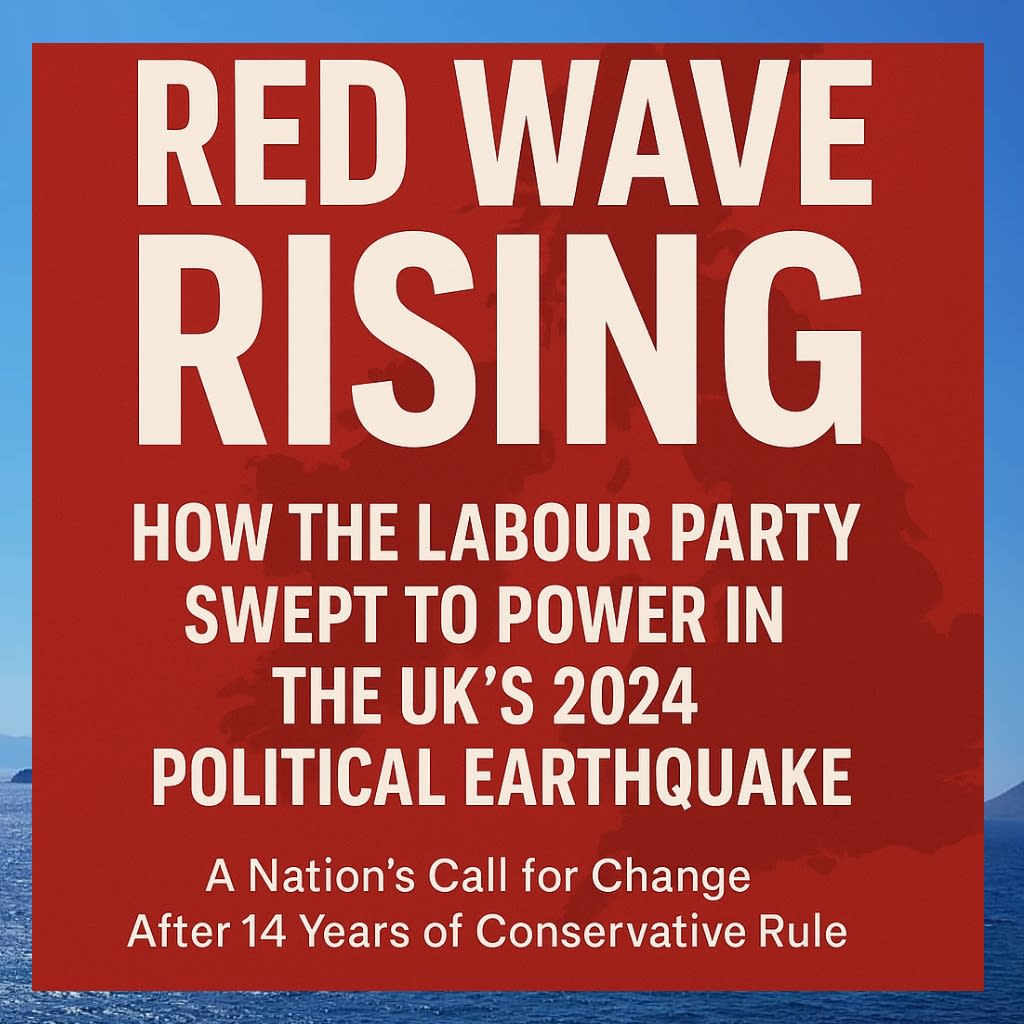
How the Labour Party Swept to Power in the UK’s 2024 Political Earthquake
"A Nation’s Call for Change After 14 Years of Conservative Rule"
n one of the most dramatic political shifts in modern British history, the Labour Party surged back into power with a resounding landslide victory in the 2024 general election, ending 14 years of Conservative rule. The result wasn’t just a change in government—it was a declaration from the British electorate that they were ready for a new direction, a new tone, and a break from the crises that had defined the past decade.
The man at the center of it all was Keir Starmer, the former Director of Public Prosecutions turned Labour leader, who had spent years methodically rebuilding the party after its crushing defeat in 2019. His reward? An electoral map bathed in red, a majority not seen since the days of Tony Blair, and a political mandate many leaders only dream of.
The Road to Victory
The seeds of Labour’s triumph were sown long before the 2024 campaign. In the aftermath of Brexit, COVID-19, multiple scandals, and economic turbulence, the British public had grown weary of Conservative leadership. While Boris Johnson had initially energized the base with his populist rhetoric and 2019 landslide, his premiership—and the rapid succession of Liz Truss and Rishi Sunak—left the country with a sense of fatigue and instability.
Cost-of-living crises, NHS pressures, housing shortages, and public sector strikes painted a bleak picture. Voters across traditional Tory strongholds began to reconsider their loyalty. Starmer, meanwhile, carefully navigated a centrist course, purging the party’s far-left factions and presenting himself as a competent, calm alternative.
By the time the 2024 election was called, polling already showed Labour ahead by double digits. What followed was a disciplined campaign focused on “Renewal,” public trust, and restoring basic services. Starmer wasn’t flashy, but that was the point. After years of political drama, the UK seemed ready for boring—boring and effective.
Election Night Shockwaves
On the night of the election, the results came in fast and unrelenting for the Conservatives. Seats that had been blue for generations fell like dominoes. The “Red Wall,” which crumbled in 2019, was rebuilt—and extended. Labour gained in cities, suburbs, and even rural areas. In a moment symbolic of the night’s reversal of fortunes, several senior Conservative MPs lost their seats, including former Cabinet members and high-profile Brexiteers.
In total, Labour secured over 400 seats, delivering a parliamentary majority not seen since the early 2000s. The Liberal Democrats had a minor resurgence, while the Scottish National Party (SNP) suffered setbacks, giving Labour new leverage in Scotland. Reform UK, a right-wing populist party, split some of the Tory vote but failed to gain meaningful parliamentary representation.
Keir Starmer’s First Address
In his first address as Prime Minister, Keir Starmer struck a humble, unifying tone.
> “Tonight, the British people have spoken—not in anger, but in hope,” he said outside 10 Downing Street. “They have placed their trust in a government that promises to serve, not divide; to build, not break; to heal, not harm.”
He emphasized restoring the NHS, rebuilding trust in public institutions, and reestablishing Britain’s global partnerships. While his message was optimistic, he didn’t shy away from the challenges ahead.
> “There is no magic wand. But there is hard work, honesty, and a shared purpose.”
A New Era Begins
Starmer’s cabinet appointments reflected his pragmatic approach. Yvette Cooper returned to the Home Office with a focus on policing reform and immigration balance. Rachel Reeves, as Chancellor, became the first woman in UK history to hold the role. David Lammy took over as Foreign Secretary, signaling a push to reset Britain’s global image.
Policy priorities included:
Massive investment in NHS modernization.
Green energy job programs to tackle climate goals and economic disparity.
Planning reforms to build affordable housing.
An ambitious education uplift plan, including free school meals and teacher salary increases.
Perhaps most notably, Starmer promised to repeal certain anti-protest and voter ID laws introduced under Conservative rule, framing it as a restoration of civil liberties.
The Opposition in Disarray
The Conservative Party, meanwhile, entered a period of soul-searching. Rishi Sunak resigned as party leader the morning after the election, stating, “The British people deserve a strong opposition, and it is now time for someone else to build that.”
With the party splintered between moderates and hardline factions, leadership contenders scrambled to define the path forward. Some blamed Reform UK for the loss; others pointed to Sunak’s technocratic tone and lack of charisma. There were even whispers of a realignment on the right, with populist forces gaining traction among disillusioned voters.
Global Reaction
World leaders reacted swiftly to the news. U.S. President Joe Biden congratulated Starmer, calling him a “steadfast ally and partner in democracy.” EU leaders expressed hope that relations with the UK would improve post-Brexit, hinting at a warmer tone in trade negotiations and cross-border cooperation.
Political analysts noted that Labour’s win was part of a broader trend in Western democracies: a rejection of chaos, scandal, and populism in favor of stability and moderation. While the far right continues to rise in parts of Europe, the UK’s shift toward center-left governance offered a counterpoint.
A Mandate with a Shelf Life?
Despite the scale of Labour’s victory, the party knows that public patience is thin. Voters didn’t grant a blank cheque—they expect results, and fast. After more than a decade of cuts and crisis, the public mood is cautious.
Starmer’s greatest challenge may not be winning the next election, but managing the weight of expectations now. With a weakened Conservative opposition and a restless electorate, his every move will be scrutinized.
Conclusion: A Nation Reset
The 2024 election marked a clear turning point for the United Kingdom. It wasn’t just a swing in party politics—it was a national recalibration. Voters demanded less drama, more delivery. Less ideology, more action.
Labour has been handed the keys to rebuild. Whether it can drive the country toward real transformation remains to be seen. But for now, the message from Britain is clear: change was not just wanted—it was demanded.
And the red wave has delivered it.
About the Creator
Keep reading
More stories from Same and writers in Motivation and other communities.
“He Kept Going When No One Was Watching — And That Changed Everything”
No one ever noticed the days he almost gave up. There were no messages asking if he was okay. No one wondered why he became quieter. No one asked how much effort it took just to keep going. To the world, he was just another ordinary man. His name was Ayaan. Ayaan’s life didn’t collapse in one dramatic moment. It slowly faded. Missed opportunities. Rejected ideas. Silent disappointments. Every failure was small, but together they became heavy. He had dreams once. Big ones. Dreams that kept him awake at night, imagining a future where his hard work would finally matter. But over time, those dreams began to feel unrealistic—almost embarrassing. People around him seemed to move forward effortlessly. They celebrated promotions, achievements, and milestones. Ayaan watched from the side, smiling politely while feeling invisible. At work, his efforts were ignored. Among friends, his voice faded. At home, expectations weighed heavily on him. Slowly, a dangerous thought settled into his mind: “Maybe I’m not good enough.” That thought followed him everywhere. It followed him on crowded buses. It followed him into sleepless nights. It followed him every time he tried again and failed. One night, after scrolling through endless success stories online, Ayaan closed his phone and stared at the dark ceiling. His chest felt tight, not because of pain—but because of exhaustion. He whispered quietly, “How long do I keep trying?” There was no answer. But that night, Ayaan made a decision—not a loud one, not a confident one. A tired decision. He decided to keep going, even if nothing changed. The next morning felt the same. The same routine. The same doubts. The same fear of wasting his life. But Ayaan showed up anyway. He worked when no one praised him. He studied when no one guided him. He practiced when no one believed in him. Some days, motivation disappeared completely. On those days, discipline took over. He reminded himself: “I don’t need applause. I need progress.” Weeks passed. Nothing dramatic happened. No sudden success. No recognition. No miracle. But something subtle began to shift. Ayaan became calmer under pressure. He learned to sit with discomfort instead of running from it. He stopped comparing his journey to others. The silence that once scared him now became his training ground. Months later, a serious problem appeared at his workplace. It was complicated, risky, and easy to blame on someone else. Most people avoided it. Some pretended it wasn’t their responsibility. Ayaan didn’t announce himself. He didn’t seek attention. He simply started working. Late nights. Mistakes. Corrections. Learning. There were moments he wanted to quit. Moments when fear whispered, “You’re not ready.” But he answered back, “I’ll learn.” Slowly, the problem began to disappear. Not perfectly—but steadily. People noticed, quietly. One afternoon, his manager called him into the office. Ayaan expected criticism. Instead, he heard a question that stunned him: “Where did you learn all this?” Ayaan paused. How could he explain years of silent effort? How could he explain working when no one cared? He simply replied, “I kept going.” That moment didn’t change his life overnight. He didn’t become famous. He didn’t suddenly become successful. But it changed something far more important. His belief in himself. For the first time, Ayaan understood that life doesn’t always reward effort immediately. Sometimes, it watches. It watches who continues without praise. Who improves without recognition. Who grows in silence. Years later, Ayaan looked back at the version of himself who almost quit. The man who felt invisible. The man who thought no one was watching. And he smiled. Because he finally understood the truth: Life was always watching. Not to judge. Not to rush. But to see if he would keep going when it was hardest. The world doesn’t reward those who only work when they’re seen. It rewards those who build strength in silence. And sometimes, the moment that changes everything doesn’t come with applause. It comes quietly. After patience. After effort. After consistency. That is when everything finally begins to change. Final Message Keep going—even when no one is watching. Especially then.
By Inayat khan3 days ago in Motivation



Comments
There are no comments for this story
Be the first to respond and start the conversation.