
"Hello Beautiful"
The Transformative Power of Love and Shifting Perspectives: A Review of "Hello Beautiful" by Ann Napolitano

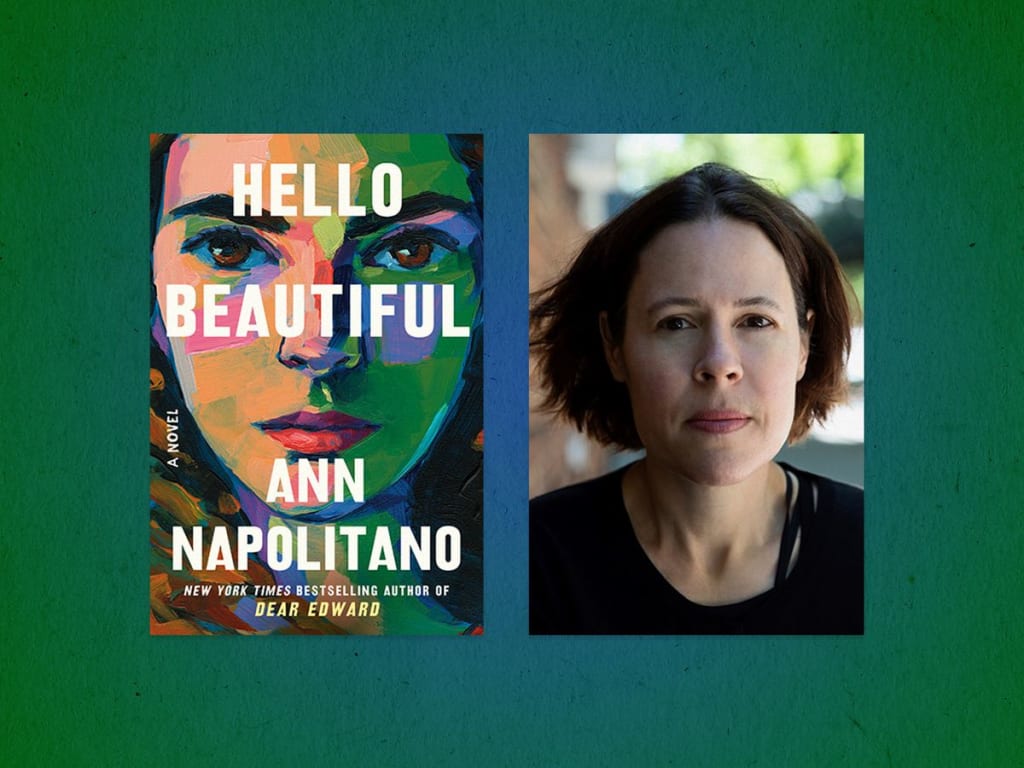
Ann Napolitano's highly anticipated novel, "Hello Beautiful," takes readers on a transformative journey alongside the Padavano family. Spanning three decades filled with trials and triumphs, the book delves into the extraordinary power of love and the importance of allowing oneself to receive it. Drawing inspiration from Louisa May Alcott's classic "Little Women," Napolitano weaves a tapestry of warmth and familial ties, exploring the intricate dynamics of the Padavano clan. From the 1980s to 2008, readers witness their relentless pursuit of personal growth, forgiveness, and love within the close-knit confines of their lives.
The narrative unfolds through multiple perspectives, providing a glimpse into the complex inner worlds of the characters. Their arguments, conflicts, broken hearts, and battles for forgiveness are illuminated, showcasing the dimension and depth within their relationships. At the heart of the story are the bonds between the sisters: Julia, Sylvie, Cecelia, and Emeline. Their lives are forever changed when William, a mysterious newcomer, enters the family's fold. With his presence, he brings a foreign introspection that forces them to confront existential questions that have haunted him throughout his own life: "What am I doing? Why am I doing this? Who am I?"
William Waters grew up in a household haunted by loss, under the watchful eyes of two heartbroken and apathetic parents. Seeking solace from loneliness, he finds refuge in basketball and develops an unwavering passion for the sport. However, the rhythmic sound of the ball hitting the floor and the swish of the net fail to heal the deep wounds within him. It is not until he meets Julia Padavano during their college years, when he is adrift and she is determined, that everything changes. Their intense and rapid love ignites a profound connection, introducing William to Julia's three spirited sisters, her vivacious mother Rose, and her contemplative father Charlie. Like a piece of driftwood caught in a powerful current, William surrenders to the warm embrace of a family he never thought possible. Yet, he carries a history of darkness and tragedy, one that Julia is unprepared to confront. Over the next three decades, as the perspectives alternate primarily between William, Julia, and Sylvie, each character struggles to find happiness and learns to accept the joy found in the lives of others, even if it comes at a personal cost.
Clocking in at nearly 400 pages, "Hello Beautiful" meticulously illustrates how family and relationships evolve over time and how wounds change in their potency. Adjusting to the varying pace can be challenging; sometimes, eight pages cover 13 years, while other times, three months occupy nearly 100 pages. The story is driven by its characters, and the narrative tempo aligns with the ebb and flow of their lives, where urgency depends on their circumstances. Moments of calm domesticity may unfold in just a dozen pages, while reunions, betrayals, medical misfortunes, and broken hearts require considerably more.
The parallels to "Little Women" are unmistakable. The Padavano sisters openly compare themselves to the March sisters, using simple declarations like "I'm Beth today" to express their struggles. Inspired by Alcott's portrayal of familial love, "Hello Beautiful" expands beyond blood ties, celebrating the bonds formed with those we choose as our family. William, burdened by a fractured past, embodies the novel's central theme. His cold upbringing manifests as low self-esteem and an inability to communicate his desires and needs. Napolitano presents his journey as an essential part of the Padavanos', depicting how he discovers the power of love and basketball
as catalysts for personal growth. William's choices often require him to prioritize his own well-being over the expectations and needs of others, a sacrifice portrayed as noble by Napolitano.
In addition to paying homage to Alcott, "Hello Beautiful" distinguishes itself through its realism. Each character possesses virtues, such as Sylvie's level-headed romanticism, Julia's meticulous planning, Cecelia's sentimental artistry, and Emeline's nurturing nature. However, they are far from perfect. They grapple with challenges, easily get hurt, hold grudges, act on irrational impulses, and struggle with egos and tempers. Yet, at the core of their conflicts lies the yearning for forgiveness and love.
Ursula K. Le Guin once remarked that as American fiction writers, we have the freedom to change points of view, but it is crucial to do so with awareness. Napolitano exemplifies this understanding in her writing. Throughout her career, spanning four novels over nearly two decades, she has experimented with different perspectives, crafting narratives that align with the moral arcs of her characters' stories.
Her debut novel, "Within Arm's Reach," masterfully incorporated six first-person points of view across three generations of an Irish Catholic family. "A Good Hard Look" employed a close third-person perspective to capture a rich ensemble cast and explore themes of estrangement and desire, while "Dear Edward" ventured even further by taking risks with point of view. The novel skillfully utilized third-person perspective to depict the unfolding tragedy of a doomed airplane, intertwined with the singular point of view of Edward, the sole survivor caught between memory and oblivion.
In "Hello Beautiful," Napolitano continues to demonstrate her prowess in manipulating point of view. The novel opens in 1960 with the birth of William Waters, instantly revealing a tragic twist that shapes his life profoundly. Napolitano navigates between multiple perspectives, primarily those of William, Julia, and Sylvie, maintaining a consistent pattern that only breaks when Julia and William's marriage crumbles. Julia's self-imposed exile leads to a new life in New York, where she raises their daughter, Alice. Although Alice's perspective is not predominant, her introduction packs an emotional punch, offering a glimpse into her understanding of her origins and her estrangement from her father.
While William's character may be enigmatic, his emotional distance influenced by his upbringing, Napolitano's narrative highlights the strength of his relationships. Encouraged by his loyal teammates, who become a constant source of support, William gradually learns that love cannot be hidden. However, his personal growth unfolds at a glacial pace, and it is only toward the end of the novel that he breaks through the emotional barriers, finding resilience in the very tragedies that have confined him.
In a poignant closing scene, William reflects on the significance of changing perspectives, recognizing the importance of viewing our own stories through different lenses. Napolitano skillfully weaves this introspective moment, underscoring the affective capacity of shifting points of view.
"Hello Beautiful" is a testament to the enduring power of love and forgiveness within the context of family bonds. Napolitano's skillful manipulation of perspective breathes life into the intricate relationships of the Padavano family, capturing their struggles, growth, and eventual understanding of one another. As readers navigate the emotional landscapes of the characters, they are reminded of the profound impact that a change in perspective can have on our own lives, allowing us to see the difficult truths and limitations of our individual viewpoints. With "Hello Beautiful," Ann Napolitano continues to prove herself as a masterful storyteller, exploring the depths of human connections with grace and authenticity.
About the Creator
BASKAR M
Nothig 2 Say.....
Keep reading
More stories from BASKAR M and writers in Motivation and other communities.
The Overlooked Assistant Who Changed How the World Hears: The True Story of James Edward West
History often celebrates the astronauts who touch the stars. It remembers the celebrated scientists who cure diseases. It honors the elite engineers who build our bridges.
By Frank Massey about 19 hours ago in Motivation
Staying sane in the insane world.
”It is no measure of health to be well adjusted to a profoundly sick society.” Jiddu Krishnamurti This quote has been one of my favourites since the moment I first laid my eyes on it. To me, it cuts right through the fog of the illusion of normality that permeates our lives. And since I am someone who has never felt (well) adjusted to this society, Krishnamurti’s words gifted me with the realisation that there isn’t anything inherently wrong with me.
By Eva Smitte6 days ago in Humans




Comments
There are no comments for this story
Be the first to respond and start the conversation.