
From the Streets to the Stadium: Dreams of the IPL
The Untold Journeys of Young Cricketers and the Rise of a Sporting Revolution in India


Every morning at dawn, the streets of India come alive with a sound more iconic than the horn of rickshaws or the chirp of early birds—the crisp crack of a bat striking a ball.
In one such lane in the heart of Mumbai, 14-year-old Aarav swings his battered bat at a tennis ball with the confidence of a seasoned professional. His stumps are a stack of red bricks, his boundary is a parked scooter, and the umpire is a chaiwala who peeks over his kettle every few deliveries. His jersey is a faded replica of his idol, MS Dhoni. His dreams, though, are anything but faded.
“I want to play for CSK,” he says, grinning, sweat dripping from his brow, his feet bare and dusty. He says it not with arrogance, but with the fierce belief that millions of boys across India carry—the belief that cricket is not just a game here; it is a way out, a way up.
The Indian Premier League (IPL) has changed the shape of those dreams. Before its arrival, aspiring cricketers had a narrow, nearly impossible path: play domestic cricket, wait years, hope for a national call-up. But now, a breakout IPL season can turn a teenager into a millionaire, a household name, and a role model overnight.
The league was born in 2008, in the wake of India’s T20 World Cup victory. It exploded like fireworks in the night sky—colorful, loud, and impossible to ignore. With every new season, it blurred the lines between sport and entertainment, tradition and innovation. Bollywood stars, billionaire owners, international players, and packed stadiums created a spectacle never before seen in Indian sports.
But beneath all that glitz lies its greatest legacy—opportunity.
Take the story of T. Natarajan from Tamil Nadu. Born to a daily wage laborer in a small village near Salem, he grew up bowling with tennis balls on uneven pitches, often barefoot. His first leather ball came years after his first yorker. And yet, in 2020, he stood on the IPL stage, bowling at 145 km/h for Sunrisers Hyderabad and earning praise from legends of the game. The IPL didn’t just find him; it made him.
Or think of Rinku Singh, a domestic cricketer from Aligarh who lived in a one-room house with five siblings. He worked odd jobs, sometimes cleaned houses, but never let go of the bat. In IPL 2023, he smashed five sixes in a single over to win a match for Kolkata Knight Riders—a moment that turned a humble boy into a cricketing legend.
These aren’t isolated miracles—they’re part of a pattern. The IPL has reached into small towns and dusty villages, pulled out raw talent, and polished it under stadium floodlights.
But for every Natarajan or Rinku, there are thousands like Aarav, still chasing the dream.
“I train in the morning before school, then again in the evening,” Aarav explains. “Sometimes I skip dinner to afford new grips for my bat. But it’s okay. One day, I’ll walk onto Wankhede in front of 30,000 people. And my mother will be watching from the stands.”
His mother, a domestic worker, smiles quietly when she hears him. “He talks to the mirror like he’s giving a post-match interview,” she says. “Every six he hits, he yells ‘That’s for the Orange Cap!’ I don’t understand cricket, but I understand dreams.”
And that’s what IPL has become for India—not just a tournament, but a platform of hope, especially for those who come from nowhere, with nothing but talent and belief. It has broken caste barriers, bridged the urban-rural divide, and given stage time to voices long ignored in Indian cricket.
It has also changed how families view cricket. Once considered a risky distraction from academics, it’s now a legitimate career path. Cricket academies are booming, YouTube channels dissect batting techniques, and gully matches are streamed on Instagram. The game has moved from the pages of newspapers to the fingertips of every smartphone user in the country.
Still, the journey from the streets to the stadium is long. It is paved with hard work, discipline, missed meals, and constant rejections. But for those like Aarav, that’s just part of the process.
“When I close my eyes,” he says, “I can hear the crowd chanting my name. I’m wearing the yellow jersey. I’m not scared. I’m ready.”
His eyes gleam with fire, the kind that has fueled the rise of so many before him.
In India, every alley is a nursery, every child with a bat is a believer. The IPL didn’t create this passion—it just gave it a stage, a camera, and a prime-time slot.
And so, from dusty gullies to grand arenas, from foam balls to flying sixes, the journey continues—a billion dreams, all bound by one game.
About the Creator
Keep reading
More stories from Mohammad Tariq Sideeqi and writers in Motivation and other communities.
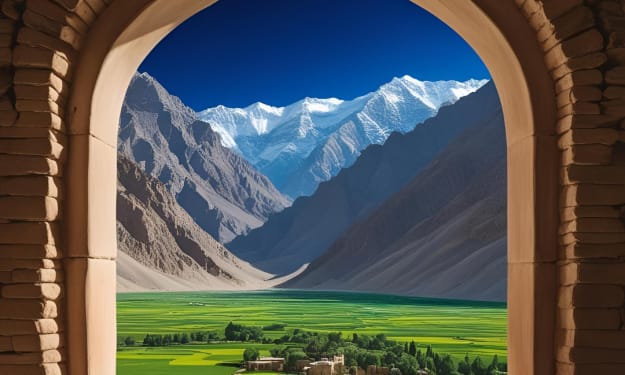
Emerald Valleys and Sapphire Skies: Discovering Afghanistan’s Natural Wonders
I arrived in Afghanistan not seeking war stories, nor political headlines—I came chasing colors. As a photographer and a wanderer of the forgotten, I had spent years chasing the world’s fading beauty. And now, I was here, drawn by whispers of emerald valleys and sapphire skies. Afghanistan, for most, meant conflict. For me, it meant a mystery yet untold.
By Mohammad Tariq Sideeqi10 months ago in Earth
One Hard Thing
Stop me if you’ve heard this one before: You have the number, you know your schedule- you’ve even picked out the perfect day and time to make this appointment. Shoot, you’ve even picked out alternative days and times just in case their schedules can’t accommodate you!
By Taylor Rigsbya day ago in Motivation
Learning to Heal Is Learning to Grow
I didn’t realize I was hurting. Not really. I thought I was just tired. Busy. Pushing through like everyone else. But one evening, as I stood in front of my bathroom mirror, I noticed how unfamiliar my own eyes looked—dull, guarded, exhausted.
By Fazal Hadi2 days ago in Motivation
The Blue Ridge Stalker
Tom had left the Ford down the way, its spark plugs finally exhausted and no mechanics for a dozen miles back through the foothills to Strossburg. No matter, he had worn his boots—almost as if he planned for this to happen. The puzzle he sought to solve emanated from the woods clinging to the slopes above; the valley behind held no mysteries.
By Stephen A. Roddewig6 days ago in Fiction



Comments (1)
Just wanted to drop in and say—you absolutely nailed it with this piece. 🎯 Your writing keeps getting better and better, and it's such a joy to read your work. 📚✨ Keep up the amazing work—you’ve got something truly special here. 💥 Super proud of your writing! 💖🙌 Can't wait to see what you create next! #KeepShining 🌟 #WriterOnTheRise 🚀