
From Pain to the Palace: The Shahrukh Khan Story Americans Don’t Know”
KING OF BOLLYWOOD

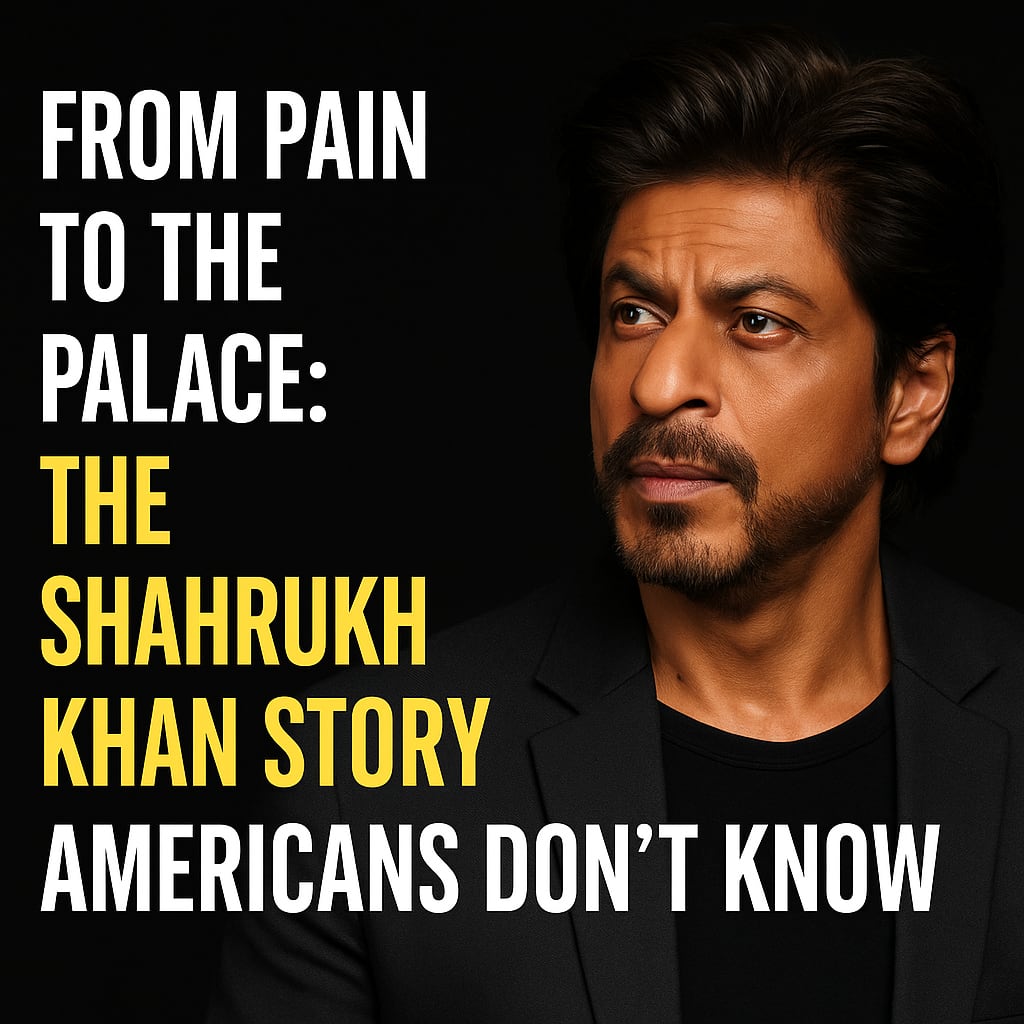
As a writer focused on motivation and technology, I spend a lot of late nights diving into strange rabbit holes on the internet. One night, while looking for a story about perseverance in the face of loss, I stumbled across something unexpected — not a Silicon Valley CEO or a war hero, but a Bollywood actor. A name I’d heard in passing but never really known: Shahrukh Khan.
I had no idea how famous this man was — not just in India, but globally. But more than that, I had no idea how deeply his story would affect me. Because beyond the movie stardom, behind the glitz and awards, was a life shaped by tragedy, grit, and unbelievable resilience.
This isn’t just a celebrity story. This is a story about what a human being can become when everything is taken from them — and they still choose to rise.
The Boy Who Wasn’t Supposed to Be a Star
Before he was called the “King of Bollywood,” Shahrukh Khan was just a middle-class boy from Delhi, India. Born on November 2, 1965, he grew up in a small rented apartment in Rajendra Nagar. His father, Meer Taj Muhammad Khan, was a freedom fighter — proud, principled, and poor. His mother, Lateef Fatima, was a strong woman with dreams for her children far bigger than their tiny home.
Money was tight. There were no movie connections, no fancy private schools, no legacy of success. Just a small family trying to stay afloat in a chaotic city.
What stood out, even back then, was Shahrukh’s hunger. Not for food — though that was scarce sometimes — but for purpose. He loved acting, sports, mimicry. He would entertain his neighbors and classmates by imitating famous actors. People laughed. They didn’t realize they were witnessing the beginning of something huge.
Then the Deaths Came
One of the most haunting truths I learned that night was this: Shahrukh Khan’s rise didn’t begin with fame. It began with death.
When he was just 15, his father died of cancer. It shook the family — emotionally and financially. His mother was suddenly alone, trying to raise two children on a modest pension. Shahrukh, then a teenager, was forced to grow up fast.
But tragedy wasn’t done with him.
While trying to make something of his life, he enrolled at Hansraj College in Delhi and later studied mass communication. He also trained in theater under the legendary Barry John. He was good — incredibly good — but success was still a dream far away.
In 1991, just as he was beginning to act on television, his mother died from complications of diabetes. That loss shattered him.
“I was so broken that I used acting as a way to fill that vacuum,” he once said. “I didn’t want to face reality, so I became someone else — on screen.”
That hit me. Imagine losing both parents before turning 26 — and still pushing forward.
He Left Delhi with a Broken Heart and Empty Pockets
With no family left in Delhi, Shahrukh made a bold decision: He moved to Mumbai (formerly Bombay) — the city of dreams.
He arrived with nothing. No friends. No place to stay. No Godfather to open doors. He slept on benches at train stations some nights. He wandered the streets, handing out photos to casting agents who barely looked up. At one point, he had to borrow money from friends to afford rent.
“I came to Mumbai with only 1500 rupees (about $20),” he once said in an interview. “I thought if things don’t work out in a year, I’ll go back and run a restaurant.”
But fate had a different plan.
A Promise Made to His Mother
Before his mother died, Shahrukh had promised her something simple: “I will make you proud.”
He kept that fire alive — even when it meant sacrificing everything else.
He landed small roles in TV serials like Fauji and Circus. Audiences began to notice the intensity in his eyes, the way he spoke with emotion and charm. But TV wasn’t enough. He wanted the big screen.
In 1992, his life changed forever.
From Outsider to Icon
Shahrukh made his film debut in Deewana — not as the main lead, but as the second hero. Yet his presence was magnetic. People talked about the new guy with the wild hair and wounded eyes. More films followed: Baazigar, Darr, Anjaam. But here’s what’s crazy:
He became a star by playing villains.
At a time when heroes were supposed to be clean-cut, soft-spoken gentlemen, Shahrukh showed up as the obsessed stalker, the angry killer, the man on the edge. He was dark. Raw. Real.
Audiences couldn’t get enough.
Soon, he transitioned to romantic roles — and Dilwale Dulhania Le Jayenge (1995) changed everything. It ran in theaters for over 20 years. That film made him not just a star — it made him a symbol of love across an entire generation.
Battles Behind the Scenes
What most people don’t know is how much pain he carried behind his charm.
He had no home to return to when he made his first hit. No mother to celebrate with. No father to guide him. At the peak of his stardom, he said in an interview:
“Every time something good happens to me, I miss my parents. I wonder if they would’ve been proud.”
In 2010, he injured his shoulder so badly that he needed surgery. For months, he couldn’t sleep because of the pain. He’s had multiple surgeries over the years but kept working — sometimes in braces, sometimes while limping on set.
Add to that the pressure of being the biggest star in a country of 1.4 billion people. The media tore into him for personal matters. When his son was arrested in 2021 on a false drug charge, Shahrukh remained silent. The man who danced in front of millions stayed inside for weeks, shielding his family.
His Legacy Beyond Movies
This is what truly blew me away: Shahrukh Khan isn’t just an actor.
He’s also:
A philanthropist who quietly donates millions to children’s hospitals, cancer wards, and disaster relief funds.
A businessman, owning a successful production house and the Kolkata Knight Riders cricket team.
A global icon recognized by Time Magazine and Harvard University — yet humble enough to joke about making noodles for his kids.
He was once detained at American airports simply because of his Muslim name — and yet, he never let bitterness define him. Instead, he made jokes, shook hands, and kept moving forward.
“Success is not a good teacher. Failure makes you humble,” he once told students at Yale.
Why His Story Matters — Even to Americans
In America, we talk a lot about hustle, about rising from nothing. But how often do we look beyond our borders for inspiration?
Shahrukh Khan didn’t just survive tragedy. He turned pain into fuel. He built an empire from loss. He did it without a famous last name, without a safety net, without quitting.
Today, he’s one of the most recognized faces in the world. He has over 4 billion fans, more than any Hollywood star. And yet, most Americans still don’t know who he really is.
I’m not here to convert you into a Bollywood fan. I’m here to tell you that greatness isn’t limited by geography.
🔥 Final Words from “Frank”
So the next time you feel like the odds are too big, or the world too cruel, think of that boy from Delhi — the one who lost everything and still chose to smile. The one who loved, lost, fought, and created magic for millions.
His name is Shahrukh Khan. He may be far from Hollywood — but his story belongs to all of us.
Because no matter where we’re from — struggle, pain, and hope speak the same language.
🧠 SRK’s Favorite Quotes to End With:
“Don’t become a philosopher before you become rich.”
“There is no right time and right place for success. You have to be ready for it.”
“Success is not a good teacher. Failure makes you humble.”
About the Creator
Frank Massey
Tech, AI, and social media writer with a passion for storytelling. I turn complex trends into engaging, relatable content. Exploring the future, one story at a time
Keep reading
More stories from Frank Massey and writers in Motivation and other communities.
Face the Shadow Find the Light
(Trigger warning: This article covers the topic of domestic violence. If you or someone you know needs help, please get in touch with the National Domestic Violence Hotline for help https://www.thehotline.org/ 1–800–799- 7233)
By Kristine Franklin6 days ago in Motivation
Ludacris and Nelly draw backlash over bookings at MAGA-coded music festival
Ludacris and Nelly headlining a mostly right-wing event is good for them. It’s also great for the genre of hip hop. The two rap veterans have showcased their talents on other stages. Why can’t they perform for mostly MAGA folks and grab that bag?
By Skyler Saunders4 days ago in Beat


Comments
There are no comments for this story
Be the first to respond and start the conversation.