
From Failure to Fortune
How Setbacks Became Stepping Stones to Success

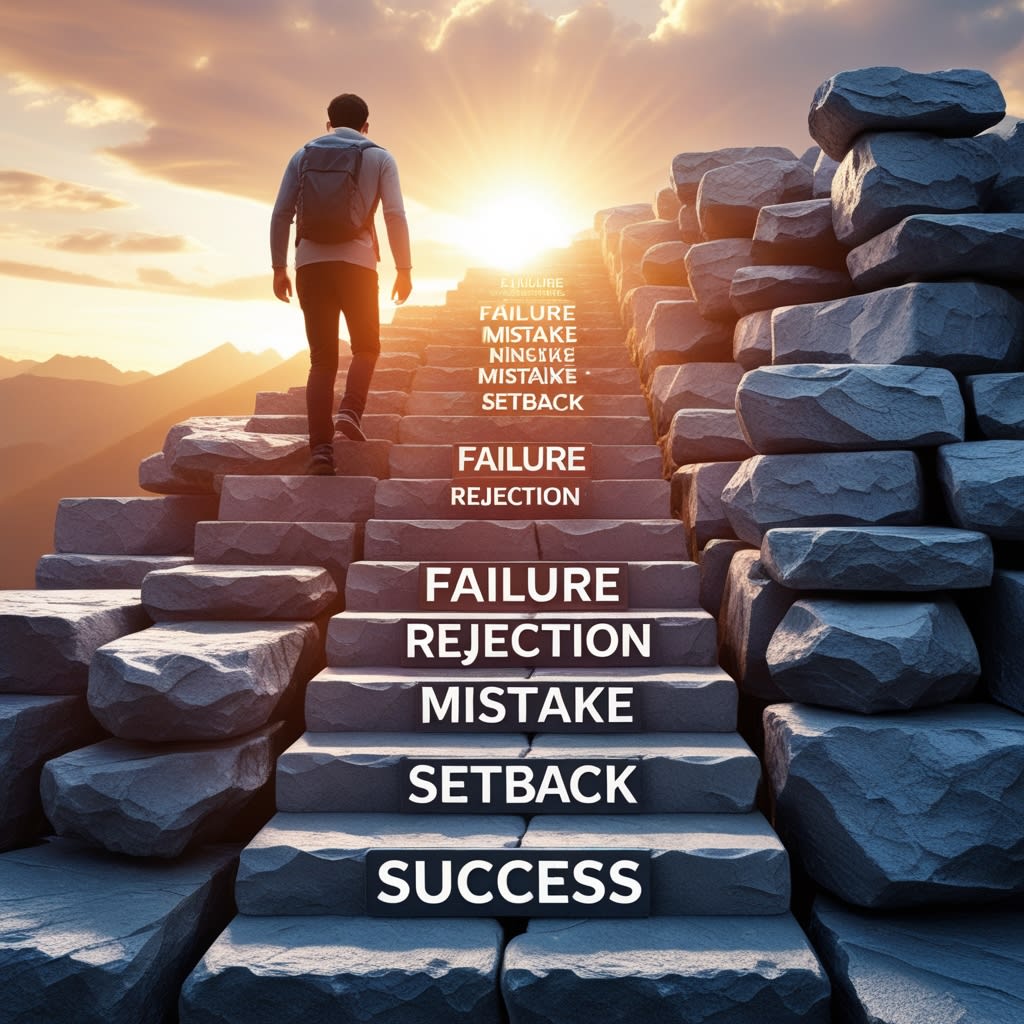
In the heart of a bustling city, where skyscrapers cast long shadows over the streets, lived a man named Elias Kane. At thirty-two, Elias was a dreamer with a knack for ideas but a history of stumbles. His latest venture, a tech startup aimed at revolutionizing urban farming, had just collapsed under the weight of mismanagement and unpaid debts. The office, once buzzing with hope, was now a hollow shell, stripped bare by creditors. Elias sat alone on a folding chair, staring at the eviction notice taped to the door. Failure clung to him like damp clothes, heavy and cold. Elias had always been ambitious. As a child, he’d sketch inventions in notebooks, dreaming of changing the world. But ambition without discipline had led to a string of flops: a failed app, a botched restaurant partnership, and now this. Friends had drifted away, tired of his promises. His savings were gone, and his confidence was a flickering ember. Yet, somewhere deep, a stubborn spark refused to die. That night, Elias wandered the city, hands stuffed in his pockets. The neon glow of a diner caught his eye, its sign flickering “Open 24/7.” Inside, he ordered a coffee and sat at the counter, sketching aimlessly on a napkin. The waitress, a woman with kind eyes and a name tag reading “Marta,” noticed his doodles. “You an artist?” she asked, refilling his cup. “Nah,” Elias muttered. “Just a guy who can’t get it right.” Marta chuckled. “Sounds like half the people in here. What’s your story?” Elias hesitated, then spilled it all—the startup, the debts, the shame. Marta listened, nodding. When he finished, she slid a slice of pie his way. “On the house. Look, failure’s just a detour. You’re still breathing, aren’t you? Figure out what’s next.” Her words stuck with him. Over the next week, Elias scraped by, crashing on a friend’s couch and taking odd jobs. He kept sketching, though—ideas for apps, gadgets, systems. One night, flipping through his napkin drawings, he noticed a pattern. His urban farming tech had failed, but the core idea—compact, automated gardens for city dwellers—still had potential. What if he simplified it? No fancy AI, no overpriced hardware. Just affordable, modular units anyone could use. Elias spent hours in the library, researching materials and patents. He reached out to a former colleague, Priya, who’d been burned by his last venture but still believed in his vision. “You’ve got one shot to not screw this up,” she warned, agreeing to help. They worked from her garage, cobbling together a prototype with secondhand parts. Elias poured every ounce of focus into the project, learning from past mistakes. No overpromising, no cutting corners. Their first prototype was clunky but functional: a stackable garden box with solar-powered irrigation and a simple app for monitoring. They tested it on Priya’s balcony, growing herbs and lettuce. It worked. Elias felt a thrill he hadn’t in years. But building was one thing; selling was another. He had no capital, no connections, and a reputation as a flake. Enter Marta. Elias had kept visiting the diner, updating her on his progress. When he mentioned needing a break, she introduced him to her cousin, Leo, a small-time investor with a passion for sustainability. Leo was skeptical but agreed to see the prototype. Elias and Priya demoed it in the garage, explaining how it could bring fresh food to urban homes. Leo scratched his chin. “It’s rough, but it’s got legs. I’ll give you ten grand to refine it. Don’t make me regret it.” With Leo’s seed money, Elias and Priya built a sleeker version. They named it “GrowEasy” and launched a crowdfunding campaign. Elias poured his heart into the pitch video, owning his past failures. “I’ve messed up before,” he said, looking straight into the camera. “But I’ve learned. This works, and it’s for you.” The honesty resonated. The campaign hit its goal in a week, then tripled it. GrowEasy’s first batch sold out in pre-orders. Elias and Priya moved into a small warehouse, hiring a skeleton crew. They kept costs low, reinvesting every penny. Elias worked tirelessly, handling everything from assembly to customer support. When bugs arose, he fixed them fast, earning trust. Word spread, and a local news outlet ran a story: “From Flop to Fresh: Local Entrepreneur’s Comeback.” By the next year, GrowEasy was in stores. Elias secured a partnership with a major retailer, scaling production. The company turned its first profit, and Elias paid back Leo with interest. Priya, now co-founder, pushed for international expansion. They opened a second facility, creating jobs and sparking a trend in urban gardening. Elias’s name, once synonymous with failure, became a symbol of grit. At a launch event for GrowEasy’s new line, Elias stood before a crowd, no longer the broke dreamer but a man who’d earned his place. He spotted Marta in the audience, there at his invitation. “I was a guy with nothing but a napkin and a bad track record,” he told the crowd. “But failure doesn’t define you unless you let it. Keep going. Find your spark.” After the event, Marta hugged him. “Told you, kid. Just a detour.” Elias smiled, thinking of the long road from that diner counter to this moment. Fortune wasn’t just the money or the success—it was the chance to rebuild, to prove himself, to grow. He’d failed, yes. But he’d risen. And that was worth more than gold.
About the Creator
Keep reading
More stories from Rise & Inspire and writers in Motivation and other communities.
The Last Push Never Give Up
The wind howled across the jagged peaks of Mount Karath, a beast of stone and ice that had claimed countless climbers. At 8,000 meters, the air was thin, each breath a labor, each step a gamble. Lena Korsakov clung to the sheer face of the mountain, her gloved fingers numb, her body screaming for rest. She was alone now, her team scattered by a storm that had torn through their camp two days prior. Her radio was dead, her supplies dwindling. All that remained was the summit, a cruel promise shimmering in the distance, and the fire in her chest that refused to die. Lena was no stranger to struggle. Born in a small Siberian village, she’d grown up hauling water from a frozen river, her hands cracked and bleeding by age ten. Her father, a miner, had taught her one lesson: “The world doesn’t care if you’re tired. Keep moving.” That mantra had carried her through years of training, through the loss of her first climbing partner to an avalanche, through the skeptics who said a woman couldn’t conquer Karath. Now, it was all that kept her alive. The storm had hit without warning, a whiteout that swallowed the world. Her team—Markus, Elena, and Raj—had been tethered together when the wind ripped their anchor free. Lena had watched, helpless, as they vanished into the blizzard. She’d spent hours searching, screaming their names into the void, but the mountain gave nothing back. Her pack, now lightened by the loss of shared gear, held only a single day’s worth of food, a half-empty oxygen canister, and a worn photo of her father, his stern face a reminder of her promise to him: to never give up. The slope ahead was a near-vertical wall of ice, glistening like a blade under the weak sun. Lena’s ice axes bit into it, each swing a test of will. Her muscles burned, her lungs ached, and her mind played tricks—whispers of doubt, visions of warmth and safety. She shook them off. The summit was close, maybe 200 meters. Close enough to taste, far enough to kill. Halfway up the wall, her left crampon snagged on a hidden crevice. She yanked, but it held fast. Her weight shifted, and for a moment, she dangled, one axe buried in the ice, her body swinging over a 1,000-meter drop. Her heart pounded, but panic was a luxury she couldn’t afford. She forced herself to breathe, slow and deliberate, and worked the crampon free. When she finally pulled herself onto a narrow ledge, she collapsed, her chest heaving. The photo slipped from her pocket, fluttering in the wind. She snatched it before it could fall, clutching it like a lifeline. “Keep moving,” she whispered, her voice hoarse. The ledge offered a moment’s respite, but the mountain wasn’t done with her. As she stood, a low rumble echoed from above. She barely had time to react before a cascade of snow and rock roared down. She flattened herself against the wall, her body pressed into the ice as debris pelted her. A fist-sized stone struck her shoulder, sending a jolt of pain through her arm. When the avalanche passed, she was still alive, but her left arm hung limp, useless. Lena stared at the summit, now obscured by clouds. The logical part of her mind screamed to turn back. She was injured, alone, and out of time. But logic had no place here. This was Karath, the mountain that broke the unbreakable. She hadn’t come this far to quit. She thought of her father, his calloused hands, his unyielding belief in her. She thought of Markus, Elena, and Raj, their laughter around the campfire, their trust in her as their leader. She owed them this. She owed herself. With her good arm, she drove her axe into the ice and began to climb again. Each movement was agony, her body a patchwork of bruises and frostbite. The wind grew fiercer, clawing at her, but she pressed on, one agonizing meter at a time. The clouds parted, and the summit came into view—a barren plateau, stark against the endless sky. It wasn’t beautiful. It was raw, unyielding, like the truth. At 50 meters, her oxygen ran out. The world blurred, her head swimming. She tore off the mask, gasping in the thin air. Her vision narrowed to a tunnel, the summit at its end. Her legs buckled, but she caught herself, refusing to fall. “Not yet,” she growled. “Not ever.” The final push was a blur of pain and defiance. She didn’t climb so much as crawl, dragging herself over the last ridge. When her hand touched the summit’s edge, she barely registered it. She pulled herself up, collapsing onto the plateau. The wind was quieter here, the world vast and still. She lay there, staring at the sky, her breath shallow but steady. Lena didn’t know how long she stayed there. Time meant nothing on Karath’s peak. Eventually, she sat up, pulling the photo from her pocket. Her father’s face stared back, proud and fierce. She tucked it away and stood, her legs trembling. The descent would be harder, she knew. The mountain didn’t care that she’d won. It never would.But Lena cared. She’d faced the impossible and refused to break. As she took her first step downward, the wind at her back, she felt something shift inside her. Not triumph, not relief—just the quiet certainty that she could keep moving, no matter what came next.The world below was waiting, and Lena Korsakov was ready.
By Rise & Inspire9 months ago in Motivation
Building a Self-Running System
Managing money doesn’t have to feel overwhelming, exhausting, or emotionally taxing. For most people, financial stress doesn’t come from a lack of self-control- it comes from not having a reliable system in place. When your finances depend on memory, motivation, and constant choices, errors are almost guaranteed.
By Emma Ade5 days ago in Motivation


Comments
There are no comments for this story
Be the first to respond and start the conversation.