
Employees Actively Seek Out Remote and Hybrid Work.
The Rising Demand for Flexible Work: Why Employees Prefer Remote and Hybrid Roles.

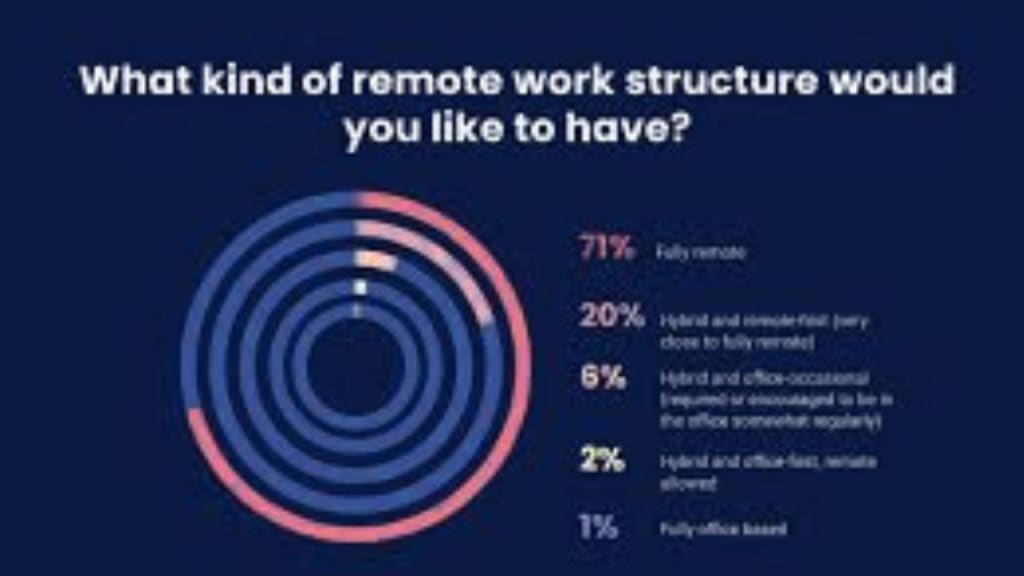
In recent years, the traditional workplace has undergone a seismic shift. The once-standard 9-to-5 office routine is being challenged by a growing demand for remote and hybrid work models. Employees across industries are now actively seeking out roles that offer flexibility, autonomy, and a better work-life balance. This trend, accelerated by the COVID-19 pandemic, has reshaped the way people think about work — and it's here to stay.
The Evolution of Work Preferences
The desire for remote and hybrid work isn't just a temporary fad or a reactionary shift due to health concerns. It's a deeper transformation rooted in changing values, technological advancements, and evolving expectations from the modern workforce.
Before 2020, remote work was often viewed as a perk or a luxury reserved for freelancers, digital nomads, or employees in tech-forward companies. However, when the pandemic forced organizations worldwide to pivot to remote operations, both employers and employees discovered the viability — and in many cases, the superiority — of flexible work arrangements.
What Drives the Demand for Remote and Hybrid Work?
Work-Life Balance
Employees today are more focused than ever on mental health, family time, and personal development. Remote and hybrid work allows individuals to spend less time commuting and more time focusing on the aspects of life that matter most to them.
Increased Productivity
Contrary to early fears, multiple studies have shown that many employees are more productive when working from home. The lack of workplace distractions, flexible hours, and comfortable environments contribute to higher efficiency.
Access to More Job Opportunities
Geographic boundaries no longer limit job seekers. A professional in a small town can now work for a company based in a major city — or even in another country — without relocating.
Cost Savings
Employees save on transportation, meals, childcare, and professional attire. This cost-effectiveness makes remote roles particularly attractive to workers trying to manage their budgets more effectively.
Autonomy and Trust
Flexible work structures signal a high level of trust between employers and employees. Workers feel more empowered and respected when they're judged on output rather than physical presence.
Hybrid Work: The Best of Both Worlds
While fully remote work suits some individuals, many others prefer the hybrid model — a blend of in-office and remote work. Hybrid work allows for the human connection and collaborative opportunities found in traditional office settings, while still offering the flexibility and freedom of working from home.
Employers who adopt hybrid models often find that it strengthens company culture, maintains team cohesion, and supports innovation — all while honoring employees' desire for flexibility.
What Employees Are Saying
Surveys and research consistently indicate that a significant majority of employees prefer jobs that offer remote or hybrid options. According to a Gallup report:
Over 60% of remote-capable workers say they would like to continue working from home at least part of the time.
One in three employees say they would quit their job if remote work was no longer an option.
Hybrid work is now the preferred model for the majority of the global workforce.
These statistics highlight how crucial flexibility has become in attracting and retaining talent.
How Employers Are Responding
Forward-thinking employers are embracing this shift by:
Offering flexible schedules and remote-friendly roles
Investing in technology that supports virtual collaboration (e.g., Zoom, Slack, project management tools)
Reimagining the office as a collaboration hub rather than a daily obligation
Creating clear remote work policies and providing support for home office setups
Companies that resist these changes risk losing top talent to competitors that prioritize flexibility and employee well-being.
The Future of Work Is Flexible
The growing demand for remote and hybrid work options is not a passing trend — it’s a fundamental transformation in how we define the workplace. Employees want more than just a paycheck; they want fulfillment, autonomy, and a job that fits into their lives, not the other way around.
Organizations that listen to their workforce and adapt to these changing expectations will be better positioned for success. In contrast, those that cling to outdated models may face higher turnover, reduced morale, and difficulty in attracting top-tier talent.
Conclusion
As employees actively seek out remote and hybrid work, it's clear that flexibility has become a cornerstone of modern employment. Businesses that align with these preferences will not only enhance employee satisfaction but also drive innovation and growth. The future belongs to those who are willing to adapt — and it's becoming more remote by the day.
About the Creator
Abu Taher
Dear All,
Please Come across to my Profile and Subscribe. Read my stories and suggest me how can I write more interesting and informative stories by your valuable comments.
Thanks a lot to all.
Keep reading
More stories from Abu Taher and writers in Motivation and other communities.
Why So Many People Fail In Affiliate Marketing?
An always expanding number of people are fooled into accomplice displaying and you might be one of them. Without a doubt, auxiliary exhibiting is one of the most incredible technique for making a regular compensation through the Internet. It's a fair game plan between the merchandiser and his branch-offs as both benefit from each arrangement arose. Like in various kinds of business, a ton of the advantages in accomplice displaying depends upon the individuals publicizing, progressing and selling techniques. Consistently, as accomplice advancing industry develops, challenge increments too so a part promoter ought to be adequately innovative to use fascinating and convincing approaches to convincing likely buyers to purchase or benefit of the things and organizations publicized.
By Abu Taher2 years ago in Motivation
“The Selflessness of Hatim Tai”
In pre-Islamic Arabia, where evils were everywhere, there were still some good people. Among them was Hatim. Numerous stories have been told about Hatim. Even if we set aside the exaggerations in these stories, the truth remains that Hatim’s generosity is proverbial. In Islam, the generosity of Hazrat Uthman (RA) is exemplary, and countless incidents about him are well known.
By Sudais Zakwan7 days ago in Motivation


Comments
There are no comments for this story
Be the first to respond and start the conversation.