
David Beckham: From the Streets of London to Global Stardom
Inspirational story

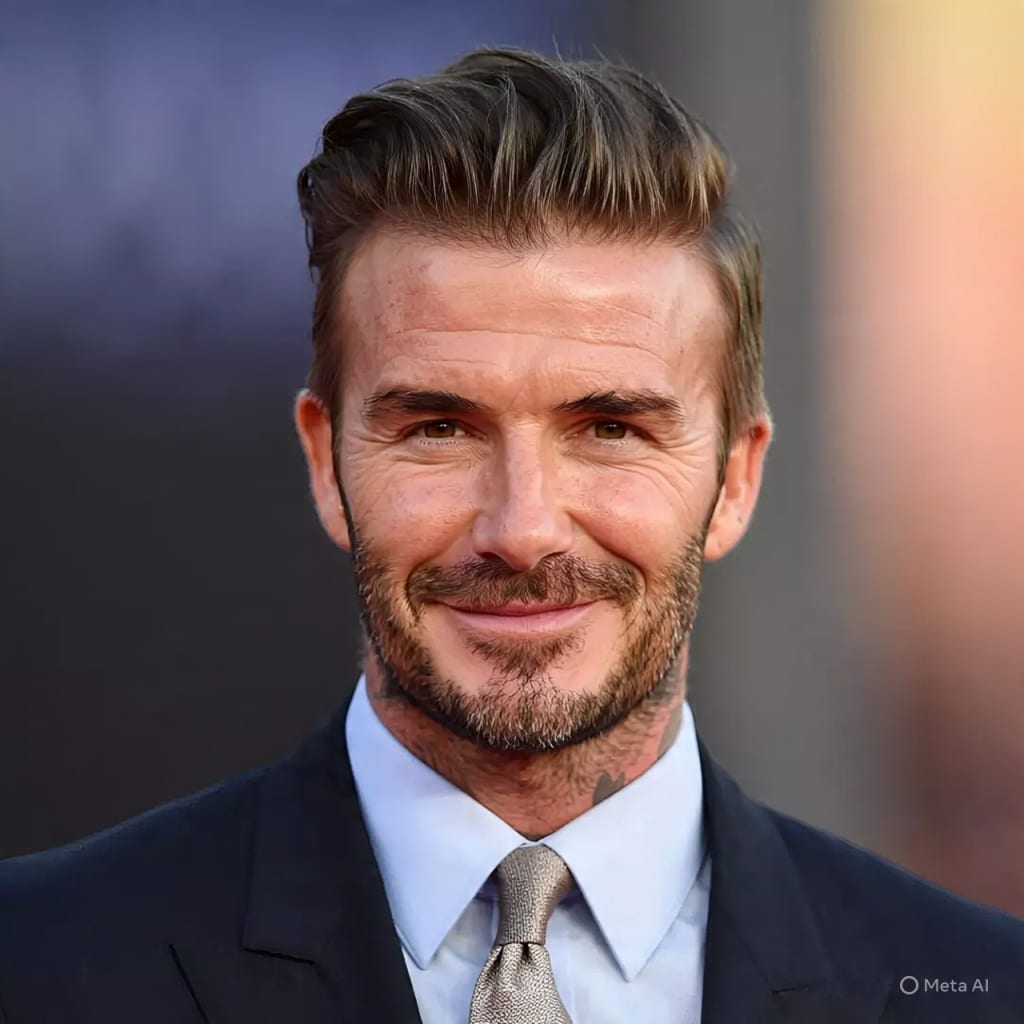
The Boy Who Dreamed Beyond His Street
In the quiet suburbs of Leytonstone, East London, on May 2, 1975, a young boy was born to Ted and Sandra Beckham. His father was a kitchen fitter, and his mother a hairdresser — simple, hardworking people who loved one thing as much as they loved their son: football. From the moment David Beckham could walk, his feet seemed destined for the ball. His father, a passionate Manchester United fan, would take him to Old Trafford whenever he could. Those trips were more than games — they were lessons, dreams, and silent promises whispered between a father and son.
Unlike the privileged kids of today’s academies, Beckham’s early training ground was the narrow streets and local parks of East London. He’d spend hours kicking an old football against a brick wall until the light faded, practicing precision, mastering curves, teaching himself to bend the ball like no one else could. What the world later celebrated as “Bend it like Beckham” started right there — in the lonely practice sessions of a boy chasing something only he could see.
But the path wasn’t easy. Schoolmates mocked him for his obsession. Teachers told him to focus on “realistic careers.” Yet Beckham wasn’t built to fit into the ordinary. His heart was stubborn, his spirit relentless. When asked what he wanted to be when he grew up, he always answered without hesitation: “A footballer.”
The First Step Toward the Dream
At 11, his dream took a real turn. He won the Bobby Charlton Soccer Schools National Skills competition — a prestigious event that opened doors. That victory caught the attention of scouts from one of the most iconic clubs in the world — Manchester United.
For Ted Beckham, it was the ultimate blessing. For young David, it was proof that hard work could bend destiny.
In 1991, at just 16, Beckham officially joined Manchester United’s youth training program. The atmosphere was intense — hungry young talents, fierce coaches, and a legacy that demanded greatness. Under Sir Alex Ferguson’s watchful eye, Beckham learned discipline, precision, and humility — values that would carry him through every success and storm ahead.
Becoming a Red Devil
By 1995, Beckham made his first senior appearance for Manchester United. It wasn’t just talent that brought him here — it was years of grit, patience, and resilience. The boy who once played barefoot on East London’s asphalt was now walking onto the lush green of Old Trafford wearing the number 10 shirt.
His rise wasn’t explosive but steady. And then came that moment — the 1996 goal from the halfway line against Wimbledon. The audacity, the accuracy, the artistry — it changed everything. Overnight, Beckham became a household name. He wasn’t just a footballer anymore; he was a phenomenon.
The Fame, The Fire, and The Pressure
With fame came the weight of expectation. Beckham was as much a celebrity as he was an athlete. He became the face of Manchester United, the idol of millions, and, eventually, half of the world’s most famous couple — when he met Victoria Adams, better known as “Posh Spice” of the Spice Girls.
Their relationship exploded into public fascination. Paparazzi followed them everywhere, tabloids spun stories daily, and Beckham became not just a footballer but a global brand. Yet, through all the flashbulbs, he remained grounded in his roots — a boy from East London who just wanted to play football.
Still, the pressure built. The 1998 FIFA World Cup brought one of Beckham’s darkest moments. In a match against Argentina, he was red-carded for a retaliatory kick against Diego Simeone. England lost, and overnight, Beckham became the nation’s scapegoat. The same fans who once cheered for him now booed his name. Newspapers called him a disgrace; effigies were burned. It was a test of spirit — and Beckham’s spirit refused to break.
The Redemption
Rather than retreat, Beckham trained harder. He focused, matured, and returned stronger than ever. In 1999, he helped Manchester United achieve an extraordinary feat — winning the Treble: the Premier League, FA Cup, and UEFA Champions League in one season. It was the kind of redemption story you couldn’t script better. From villain to hero, from scapegoat to savior — Beckham had rewritten his narrative.
His curling free kicks became legend, his work ethic unmatched. Off the pitch, he evolved into a fashion icon, a father, a husband, and a global ambassador. But inside, he remained that same boy who practiced until sunset — still chasing perfection.
A New Chapter: Leaving Home
In 2003, Beckham shocked the football world by leaving Manchester United for Real Madrid. Behind the glamour of the move was pain — a strained relationship with Sir Alex Ferguson had made his stay impossible. Yet Beckham, as always, took the risk. He joined the “Galácticos,” playing alongside legends like Ronaldo, Zidane, and Figo.
Critics doubted him, calling the move a publicity stunt. But Beckham silenced them with his play. His passes were poetry, his free kicks flawless, his commitment unshakable. When Real Madrid lifted the La Liga trophy in 2007, Beckham’s legacy as a global footballer was cemented.
Beyond Borders: The American Dream
While many players would have retired on a high note, Beckham wasn’t finished. In 2007, he made another surprising decision — joining the LA Galaxy in the United States. The move was more than just football; it was visionary. Beckham wanted to make soccer a mainstream sport in America.
Fans doubted him again. The media mocked the idea of a superstar playing in a league still finding its feet. But Beckham believed in transformation. He brought his discipline, his fame, and his relentless drive — and within years, he changed American soccer forever. Stadiums filled, TV ratings soared, and young players found a new idol to follow.
The Man Behind the Fame
Off the field, Beckham’s journey as a family man deepened his humanity. He and Victoria raised four children — Brooklyn, Romeo, Cruz, and Harper — in a world of fame yet with firm values. Beckham often spoke of his father’s lessons: “Work hard, stay humble, and never forget where you come from.”
Even at the height of his fame, Beckham’s humility never wavered. He participated in countless charity projects, UNICEF campaigns, and global humanitarian efforts. His fame became a tool — not for self-promotion, but for spreading hope.
The Final Whistle
In 2013, Beckham officially announced his retirement from professional football. It was emotional, raw, and bittersweet. He cried during his last game for Paris Saint-Germain, realizing that his lifelong dream had come full circle. From a boy in East London to a world ambassador of football — Beckham’s journey had transcended the sport itself.
The Legacy Lives On
Today, Beckham is more than a retired athlete. He’s a successful businessman, a global philanthropist, and co-owner of Inter Miami CF — a testament to his lifelong vision of expanding the sport he loves.
But beyond trophies and fame lies the true legacy of David Beckham: the belief that discipline, humility, and passion can turn ordinary beginnings into extraordinary destinies.
Conclusion: The Beautiful Game Within
David Beckham’s story isn’t just about goals and fame — it’s about perseverance. It’s about the little boy who practiced when nobody watched. It’s about the man who turned failure into redemption, fame into purpose, and dreams into reality.
He once said, “I’ve always believed that if you want to achieve something, you can. You just have to believe in yourself enough.”
And that belief — stronger than any free kick — is what truly made David Beckham a legend.
About the Creator
Frank Massey
Tech, AI, and social media writer with a passion for storytelling. I turn complex trends into engaging, relatable content. Exploring the future, one story at a time
Keep reading
More stories from Frank Massey and writers in Motivation and other communities.
Selena Quintanilla: The Queen Who Never Died
In the heart of Texas, long before she became a symbol of timeless music, love, and loss, there was a little girl who sang before she could even spell her own name. Her voice, delicate yet powerful, carried a warmth that could hush an entire room. That girl was Selena Quintanilla, and she was destined to change Latin music forever.
By Frank Massey 3 months ago in Motivation
The Day He Didn’t Walk Away
The Day He Didn’t Walk Away: A Story About Failure, Patience, and Quiet Success Rizwan stood outside the tall glass building, staring at his reflection as if it belonged to someone else. His tie was slightly crooked, his shoulders tense, and his eyes carried the exhaustion of years that had not gone as planned. People walked past him confidently, tapping access cards, entering doors, moving forward with purpose. He stayed still.
By shakir hamidabout 16 hours ago in Motivation



Comments
There are no comments for this story
Be the first to respond and start the conversation.