
Artificial Intelligence Unlocks a New Frontier: Learning to Talk With Dolphins
Google’s DolphinGemma AI aims to decode dolphin vocalizations, bringing scientists closer than ever to real-time communication with one of the ocean’s most intelligent creatures.

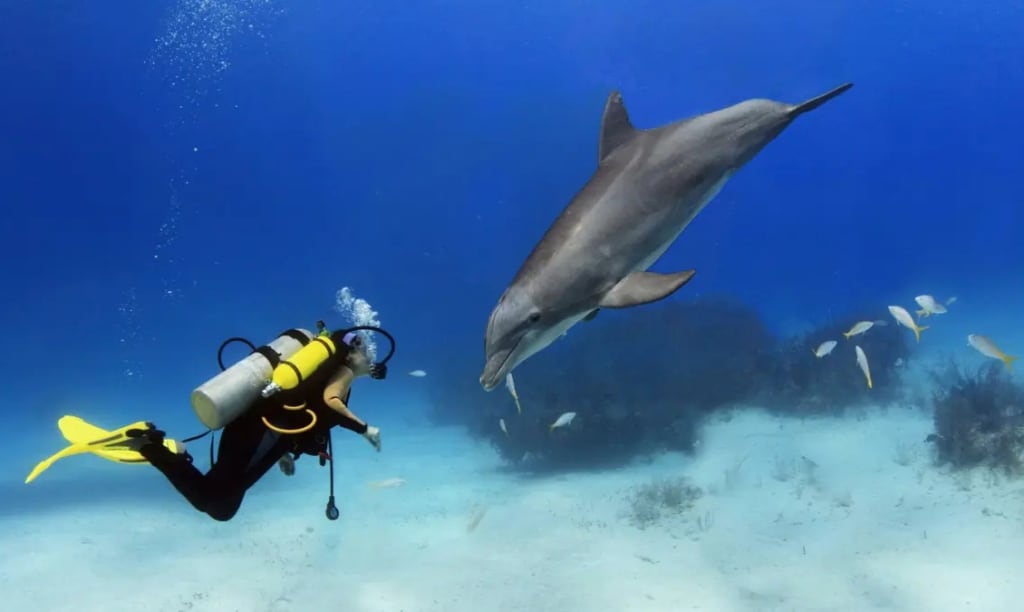
In an exciting leap for science and technology, researchers are bringing the age-old dream of interspecies communication one step closer to reality. Thanks to artificial intelligence, the prospect of understanding the language of dolphins may soon no longer be science fiction.
Recently, Google announced the development of an advanced AI system known as DolphinGemma. This groundbreaking technology is designed to analyze and interpret the complex vocal patterns of dolphins — an animal long recognized for its intelligence and sophisticated social behavior. The project is the result of a collaboration between Google, the Wild Dolphin Project (WDP), and researchers at the Georgia Institute of Technology. Their shared mission is to develop a method for humans to “talk” to dolphins, and perhaps one day understand what these remarkable creatures are saying to one another.
A Long History of Dolphin Research
The roots of this project stretch back more than four decades. Since 1985, the Wild Dolphin Project, led by renowned marine biologist Dr. Denise Herzing, has been dedicated to studying a specific group of wild Atlantic spotted dolphins in the Bahamas. Over these years, the WDP has collected a vast library of underwater recordings, images, and observations, creating one of the most comprehensive datasets ever assembled on dolphin communication and behavior.
Dolphins are known for their social nature and advanced cognitive abilities, including self-awareness, problem-solving, and emotional intelligence. Much like humans, dolphins rely on vocal communication to socialize, navigate, hunt, and maintain group dynamics. Their communication is composed of a variety of sounds: clicks, whistles, and complex burst-pulses that scientists believe may carry specific meanings, much like words or phrases in human languages.
Despite the long-standing belief that dolphins might possess some form of language, decoding their vocalizations has always been an enormous challenge. The difficulty lies not just in the complexity of the sounds, but also in the underwater environment where recording clean, unambiguous audio is tricky. Moreover, identifying the context of specific sounds — who made them, what they were doing, and why — requires years of careful observation and interpretation.
The Role of AI in Understanding Dolphin Communication
That’s where DolphinGemma comes into the picture. Built on the principles of large language models (LLMs) — the same type of AI technology that powers tools like OpenAI's ChatGPT — DolphinGemma applies machine learning to the enormous audio datasets collected by the Wild Dolphin Project. By analyzing patterns in these recordings, the AI is trained to identify distinct dolphin sounds and correlate them with observed behaviors and social contexts.
This approach could help answer one of the most fascinating scientific questions: do dolphins use a structured language similar to human languages, or is their communication more instinctual and limited to a set of simple signals?
The researchers’ long-term goal is to move beyond just recognizing dolphin sounds. With the help of AI, they hope to create an interface that can actually “translate” those sounds into human language and potentially allow humans to send simple messages back to dolphins. If achieved, this would mark the first genuine two-way communication between humans and a non-human species.
The CHAT System: Talking Back to Dolphins
An important component of this work is the Cetacean Hearing Augmentation Telemetry (CHAT) system, which has been part of Dr. Herzing’s research toolkit for some time. The CHAT system is an underwater computer equipped with special software that can both recognize dolphin sounds and broadcast artificially generated dolphin-like sounds in response.
DolphinGemma and CHAT are designed to work hand-in-hand. While DolphinGemma focuses on analyzing and interpreting the meaning of dolphin vocalizations, CHAT will serve as the “voice” of the system, allowing humans to reply to dolphins using sounds that are structured in the same acoustic patterns dolphins use.
In the future, a real-time conversation could become possible, where a diver or marine biologist could "speak" to a dolphin through CHAT, and the AI system would help both sides understand the exchange.
Broader Implications: Unlocking Animal Communication
The potential impact of this project extends far beyond dolphins. If scientists succeed in developing a method for decoding and engaging with dolphin communication, the same machine learning tools could be applied to other animal species as well. Elephants, whales, certain species of birds, and even primates could be next.
Understanding how non-human animals perceive and communicate about their world could profoundly shift how humans interact with and protect wildlife. It could also provide new insights into the evolution of language and intelligence — and redefine the way we think about consciousness beyond the human experience.
A Future Closer Than You Think
The project is still in its early stages, but the progress made so far is promising. As artificial intelligence continues to evolve, the possibility of truly speaking with another species is becoming less a fantasy and more a matter of when, not if.
Whether it’s unlocking the secrets of dolphin society or understanding the language of other creatures, DolphinGemma represents a bold step forward at the intersection of science, technology, and imagination.
About the Creator
Tech Horizons
Exploring the future of technology, AI, gadgets, and innovations shaping tomorrow. Stay updated with Tech Horizons!
Keep reading
More stories from Tech Horizons and writers in Motivation and other communities.
Beverly Hills Cop: Axel F Review
*Beverly Hills Cop: Axel F* wasn't crafted by an algorithm, but you could be forgiven for thinking it was. Co-written by Will Beall, known for *Bad Boys: Ride or Die*, and Tom Gormican and Kevin Etten, writers of *The Unbearable Weight of Massive Talent*, this attempt to revive a 30-year-old franchise goes out of its way to incorporate all the familiar elements from the original trilogy.
By Tech Horizons2 years ago in Motivation
The End of the Internet (As a Human Space)
Since its launch, the Internet has been a place where people talked to people. Platforms like Reddit captured that early promise particularly well. Long before creator economies and algorithmic feeds dominated attention, Reddit worked because people shared unfiltered thoughts, imperfect opinions, half-formed ideas, and harsh reactions. It was uneven, sometimes chaotic, often wrong, but very human.
By Andrea Zanon5 days ago in Motivation
Bruce Lee and The God of War: Kuan Ti
It starts with love.. The Power to the God Of War and Wealth Walk into a Chinese restaurant (even in Oklahoma, USA), a Chinese police station, a kung fu martial arts studio or even a Chinese temple and you often see a red faced warrior holding a heavy quan-do (spear like weapon).
By WILD WAYNE : The Dragon King7 days ago in Chapters


Comments
There are no comments for this story
Be the first to respond and start the conversation.