
Application level and life balance
The end of specialness in excess

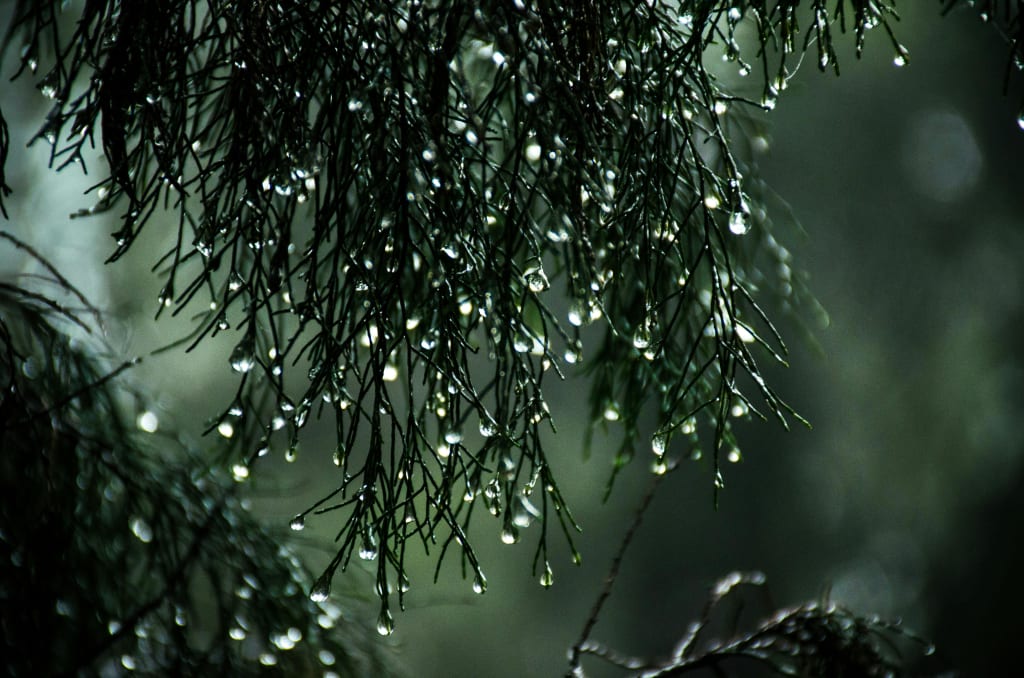
Everything in the world impresses our eyes, minds, and hearts not only because of its relevance, but also because of its ‘dimension’. Every experience, every feeling, and even every relationship has a measure—a balance that makes it valuable. This balance determines what is “special” and what is “ordinary.” And when we lose that measure or balance, even the most precious thing becomes irrelevant, sometimes tiring, or boring.
Love—one of the most sacred and profound feelings of humanity—is no exception to this rule. A person keeps telling his beloved “I love you,” trying to mean it every moment, yet suddenly one day he discovers that the appeal of that love no longer exists. Why? Because love is also a kind of subtle art; it has to be expressed within the time, situation, and perception. If it becomes excessive, it becomes a cliché. There needs to be a distance between expectations and achievements, so that each achievement can light a light of joy in the heart. Just as excessive light causes darkness, so too does excessive love cause love to disappear.
Let's take the case of respect or reverence for someone. If we keep praising a person day and night, if we only applaud his every move, then that praise will have no value. At some point, that person will think - this is a daily habit, there is no novelty in it. That is why the world's best artists never give the same performance on the same stage again and again. Because they know that through repetition, uniqueness is lost.
Life also goes like this. If our daily diary contains only joy, then joy no longer feels like joy. Joy is only felt when there is some waiting before or after it, some separation, some boredom, some fatigue. If we get a holiday every day, then holidays will no longer have any special significance. For example, how unique the days of Eid or Puja were to us as children! Because they were the result of waiting for the whole year. Now if that festival happens every day, it is no longer a festival—it becomes monotony. Our heart perceives joy in its rarity, in its extraordinaryness—not in abundance, but in absence and return.
This also applies to peace of mind. Nowadays, many people say "self-care", "mental health", "love yourself"—these words so much, so often, that they have also become a kind of trend. When feelings are converted into trends, their inherent appeal decreases. Honest advice then also becomes a commercial poster. When a philosophical saying is seen on a thousand posters, on a thousand coats—then its grandeur starts to fade. It no longer thrills the heart, but rather the habit of the eyes makes it monotonous.
Similarly, a kind of limitless application is seen in the case of religious feelings. If a person talks about religion in every sentence, in every word, then the listener's brain eventually takes it as a routine. Then the religious message no longer touches the mind; rather, it creates a kind of fatigue. However, if the same person says the same thing at a specific time, in a specific context, then its appeal is deep and heart-warming.
There is a term in the advertising world—“Brand Fatigue,” meaning that if the same advertisement is shown repeatedly, people lose interest in it. The same is true in life. We need some feelings, some moments, and even some people in a limited way, so that they can take a place in our hearts, imperceptibly—but powerfully.
This limit, this sense of proportion—this is not just an external rule, it is a kind of aesthetics, a kind of philosophy. Nature also follows that philosophy. If this tradition of summer followed by monsoon, then autumn—if there were no such thing, if there were only one continuous season, then the world would become monotonous. The sun rises every day, yet why does the light of dawn attract us so much? Because it comes at a specific time, in a specific measure. If the night were eternal, they would not be seen; And if the day did not stop, even the golden light of the sun would become boring.
One of the hidden beauty of human life is maintaining balance in its diversity. Some things we need every day, but not everything. Some things we need sometimes, so that we can wait for them. That waiting, that pause, is what makes that thing glorious.
So, every emotion in the world, every relationship, every experience has a level of appeal. Once that level is crossed, its beauty is no longer there. Love, respect, joy, prayer—everything has to be applied appropriately, with moderation and subtlety. Because when the level is lost, the thing is no longer special—it becomes ordinary, even sometimes tiring.
Life is like a melody—where every word needs a rhythm, a pause, a silence. Just as excessive words turn a song into noise, so too does excessive emotion dull the language of the heart. Therefore, the most sophisticated art of living is the correct understanding of when to stop at something, when to be silent, and when to say it.
This is perhaps the true beauty of life—the search for frugal feelings, moderate love, balanced relationships, and infinity within limits.
About the Creator
Keep reading
More stories from Abdul Barik and writers in Motivation and other communities.
Allegation: Islam teaches violence and legitimizes bloodshed in the name of 'jihad'.
Allegation: Islam teaches violence and legitimizes bloodshed in the name of ‘jihad’. This allegation has been particularly vocal in the post-9/11 world. This idea is used to portray Islam as a ‘terrorist religion’, where it is said that Islam encourages its followers to fight against non-Muslims and the word jihad is a symbol of this. This interpretation has penetrated so deeply in the Western media that the mere mention of the word ‘jihad’ brings to mind images of gunmen, suicide bombers or radical fundamentalists.
By Abdul Barik8 months ago in Motivation
You are not a failure
“ You look sad, David, what’s going on?” the old man noticed, as David pulled out a chair when he entered the room. “ When I look at my life, I’m not happy. Nothing is working. I’m forty-three. I have no house, no money, no kids. I make minimum wage at my job to survive. Not to mention the credit card debts and some health issues. I think that I’m a failure,” David said, almost in tears.
By Michel Tetchi 4 days ago in Motivation



Comments (1)
Informative.