
7 Key Lessons from 'Rich Dad Poor Dad'—A Must-Read Book
How to Achieve Financial Independence and Build Wealth through Financial Education, Asset Acquisition, and Entrepreneurship

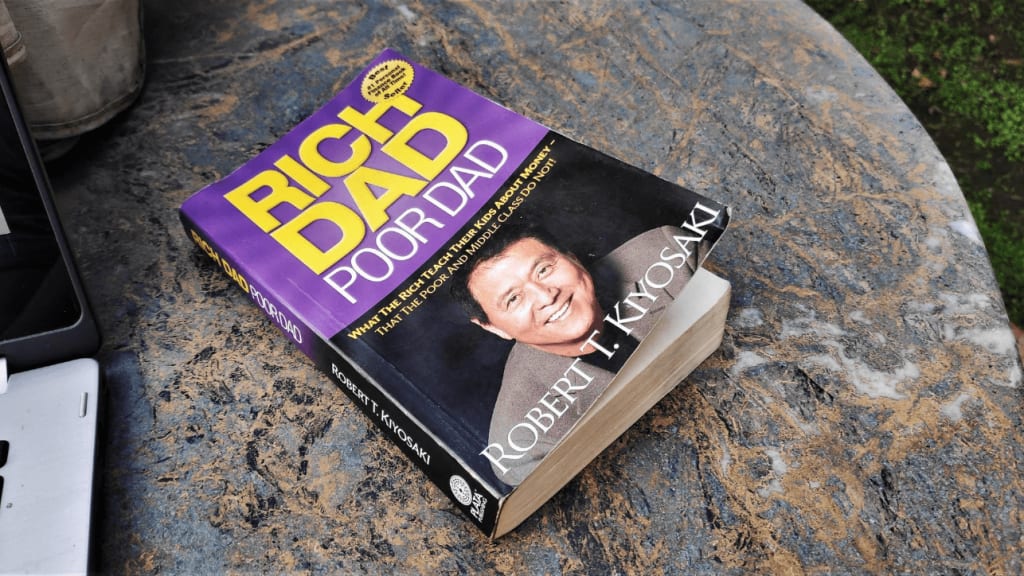
"Rich Dad Poor Dad" is a book written by Robert Kiyosaki that provides insights on how to achieve financial freedom and success. It is a personal finance classic that has sold millions of copies worldwide, and has helped many people change their mindset towards money and wealth creation. In this essay, I will summarize some of the key lessons that can be learned from reading "Rich Dad Poor Dad."
The first lesson from the book is the importance of financial education. Kiyosaki argues that traditional education does not prepare individuals to be financially successful in life. He shares his experience of having two father figures, his biological father (poor dad) who was highly educated but struggled financially, and his best friend's father (rich dad) who did not have a formal education but was highly successful in his financial ventures. Kiyosaki emphasizes the need to have financial literacy and to learn about assets, liabilities, cash flow, and investing to achieve financial independence.
The second lesson is the difference between assets and liabilities. According to Kiyosaki, assets are things that put money in your pocket, while liabilities are things that take money out of your pocket. He emphasizes the need to acquire more assets and reduce liabilities to increase cash flow and achieve financial freedom.
The third lesson is the importance of creating passive income streams. Kiyosaki encourages readers to invest in income-producing assets such as real estate, stocks, bonds, and businesses to generate passive income that can provide financial stability and freedom.
The fourth lesson is the power of taking calculated risks. Kiyosaki believes that taking calculated risks is necessary to achieve financial success. He encourages readers to take risks by investing in assets, starting a business, or pursuing opportunities that have the potential to generate high returns.
The fifth lesson is the importance of entrepreneurship. Kiyosaki believes that entrepreneurship is the key to financial freedom. He encourages readers to start their own businesses or invest in businesses to generate income and build wealth.
The sixth lesson is the importance of financial planning. Kiyosaki emphasizes the need to have a financial plan and to set goals for achieving financial independence. He encourages readers to monitor their finances, track their expenses, and make adjustments to their financial plan as needed.
The seventh lesson is the importance of financial mindset. Kiyosaki believes that a person's mindset towards money and wealth creation is crucial to achieving financial success. He encourages readers to adopt a positive mindset towards money, to think like wealthy people, and to avoid the mindset of the poor.
Moreover, one of the key takeaways from the book is that there are different ways to think about money and wealth creation, and that traditional education often reinforces a narrow mindset that limits one's financial potential. Kiyosaki encourages readers to challenge conventional wisdom and to seek out alternative sources of financial education.
Another important lesson from the book is the distinction between working for money and having money work for you. Kiyosaki argues that most people spend their lives working for money, while the wealthy know how to make money work for them. By investing in assets that generate passive income, readers can break free from the cycle of trading time for money and build wealth over time.
Another theme of the book is the importance of taking control of one's financial future. Kiyosaki argues that relying on a job or government programs for financial security is not a sustainable strategy. Instead, readers should take responsibility for their own financial well-being and seek out opportunities to build wealth through entrepreneurship and investing.
Finally, the book emphasizes the importance of persistence and resilience in achieving financial success. Kiyosaki acknowledges that building wealth is not easy and requires hard work, discipline, and a willingness to learn from mistakes. However, he believes that with the right mindset and approach, anyone can achieve financial independence and live the life they desire.
In conclusion, "Rich Dad Poor Dad" is a powerful book that offers valuable lessons on how to achieve financial freedom and success. By emphasizing the importance of financial education, acquiring assets, creating passive income streams, taking calculated risks, entrepreneurship, financial planning, and having a positive financial mindset, the book provides a roadmap for readers to achieve their financial goals. Ultimately, the book teaches readers that they have the power to take control of their financial future and build the life they desire.
About the Creator
Chisi limi
Storyteller weaving tales to escape reality. Lover of fantasy, sci-fi, and all things magical. Join me on a journey through my imagination. #storyteller #fantasywriter
Keep reading
More stories from Chisi limi and writers in Motivation and other communities.
An Antidote to Dissatisfaction
Dissatisfaction is a natural human emotion that arises when our expectations and reality don't match. It is a feeling of disappointment, discontentment, or unhappiness that can occur in various areas of our lives, such as relationships, work, finances, health, or personal goals. While it is natural to feel dissatisfied at times, chronic dissatisfaction can be detrimental to our mental health and overall well-being.
By Chisi limi3 years ago in Motivation
From ad men to mad men
It's after 2am in the morning when a local police patrol vehicle in Northern New Jersey spots a figure costumed as Quasimodo, The Hunchback of Notre Dame, proceeding southbound on the sidewalk along Lydecker Street. Though the hunchback’s costume stuffing offers added insulation, it's January, and friggin’ freezing. Carefully, the officers slow down, gently question the subject, and offer him a ride home.
By David W. Maury4 days ago in Humor



Comments (1)
Call me a cynical conspiracy nut, but I find myself wondering about the fact that traditional education traps people in a "poor mindset" without the knowledge and tools to achieve wealth. Is that deliberate? Does he address that in the book? 🤔