
"25 Hours of Defiance: Cory Booker's Epic Showdown Against Trump in the Senate"
"In a historic Senate speech, Booker breaks records and calls out Trump’s agenda in a bold stand for justice, democracy, and the American people."
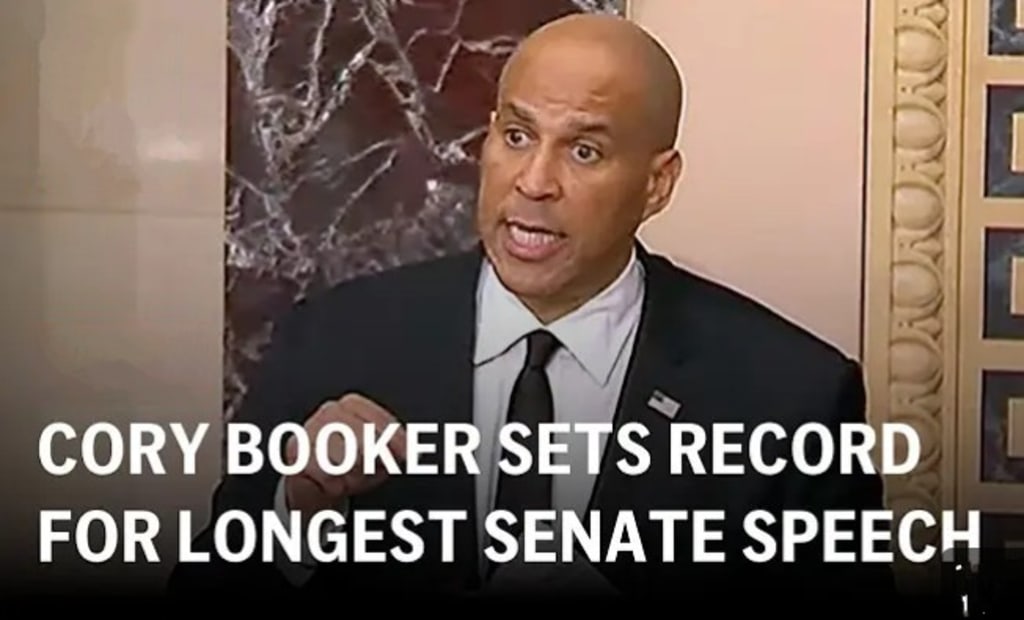
Start writing...On March 31, 2025, Senator Cory Booker of New Jersey made history by delivering a 25-hour, 5-minute speech on the Senate floor in protest against the policies of President Donald Trump's administration. This marathon address broke the previous record for the longest Senate speech, which had been held by Senator Strom Thurmond, who spoke for 24 hours and 18 minutes in 1957 to oppose the Civil Rights Act. Booker's speech was not just a feat of endurance; it was a bold statement about the state of the nation and his unwavering commitment to stand against policies he believed to be harmful to the American people.
Background and Motivation
Booker began his historic address at 7 p.m. on March 31, 2025, declaring that he would speak “as long as he was physically able.” He made it clear that his motivation for this unprecedented action was the deep concern he felt over the direction the country was heading under President Trump's leadership. The Senator framed his speech as a response to what he saw as a national crisis. Booker argued that under Trump's administration, the country was experiencing severe economic instability, threats to civil liberties, and devastating cuts to social programs that would disproportionately harm vulnerable communities.
In his opening remarks, Booker pointed to several key issues that he felt needed urgent attention. He specifically criticized the administration’s economic policies, particularly its tax cuts for the wealthy, which Booker believed were exacerbating the national deficit and widening the already significant gap between the rich and the poor. He contended that these policies would only deepen the economic inequalities that had already plagued the country for decades.
Key Themes and Issues Addressed
The core themes of Booker’s speech were grounded in social justice, economic fairness, and the protection of democratic values. One of the first issues he tackled was the growing economic inequality in America. Booker vehemently opposed the tax cuts that President Trump had championed, arguing that they were a clear favor to the wealthy and large corporations at the expense of the middle class and the poor. He made the case that the country's budget deficit had ballooned because of these policies, and that the economic burden would ultimately fall on the shoulders of everyday Americans who were already struggling to make ends meet.
In addition to economic inequality, Booker expressed grave concern over the proposed cuts to vital social programs such as Social Security and Medicaid. He warned that these cuts would have devastating consequences for millions of Americans, particularly the elderly, the disabled, and low-income families who rely on these programs for their basic survival. Booker argued that these cuts were not only harmful but also morally reprehensible, as they threatened the well-being of the most vulnerable members of society.
Another key focus of Booker’s speech was the erosion of civil liberties. He strongly criticized the Trump administration’s actions, which he felt undermined the foundational principles of democracy. Booker specifically pointed to what he described as a growing authoritarianism, where checks on presidential power were being undermined and the rule of law was being ignored. He warned that if these trends continued, the very essence of American democracy would be at risk.
Personal Narratives and Emotional Appeals
In order to humanize the issues he was addressing, Booker shared several deeply emotional and personal stories from his constituents. He read letters from individuals who would be directly affected by the policies he was protesting, bringing a human face to the abstract political arguments. By recounting personal experiences, Booker aimed to illustrate the real-life consequences of the legislative decisions being made in Washington. His speeches were not just about numbers and statistics; they were about the people whose lives would be forever changed by these policies.
Physical and Emotional Toll
The physical toll of the marathon speech was evident. Booker had prepared for the endurance challenge by fasting and abstaining from water in order to minimize interruptions. This extreme self-discipline, however, led to dehydration and muscle cramps, which only underscored the immense physical and emotional demands of his endeavor. Despite the pain and discomfort, Booker pressed on, drawing strength from the memory of civil rights leaders like John Lewis, who had faced far greater personal hardships in their fight for justice. His resolve was a testament to his belief in the cause and his commitment to making his voice heard.
Support and Reactions
Throughout his speech, Booker received support from several of his colleagues in the Senate. Senate Minority Leader Chuck Schumer praised Booker for his dedication and courage, acknowledging the significance of the record-breaking speech. Schumer also expressed admiration for Booker’s ability to maintain his focus and passion throughout the grueling 25-hour ordeal. Public reaction was overwhelmingly positive, with many Americans expressing their support for Booker’s stand on social media. The speech went viral, accumulating over one million views, and sparked a nationwide conversation about the issues he had raised.
Conclusion and Call to Action
As Booker concluded his historic speech, he emphasized the moral imperative to oppose policies that threatened to undermine the democratic values upon which the nation was built. He called on his colleagues in the Senate, as well as the American people, to remain vigilant and proactive in the fight for justice. Booker stressed that the future of the country depended on the collective will of its citizens to stand up for what was right and to resist efforts to dismantle the protections and rights that had been fought for over centuries.
Senator Cory Booker’s 25-hour speech stands as a powerful reminder of the impact that one individual’s conviction can have in the face of political adversity. It was a call to action, not just for lawmakers, but for the American people to recognize the importance of safeguarding democracy and advocating for the marginalized. Through his unprecedented act of defiance, Booker not only set a new Senate record but also reignited a critical national conversation about the future of the country and the values that must guide its leadership.
About the Creator
Keep reading
More stories from writers in Motivation and other communities.
How to Save Money on Everyday Expenses
Saving money doesn’t always require a higher income, extreme budgeting, or giving up everything you enjoy. In fact, some of the most effective savings come from small, everyday decisions that quietly drain your finances over time. When you learn how to reduce daily expenses without sacrificing quality of life, saving becomes sustainable instead of stressful.
By Emma Adea day ago in Motivation
📢 Raise Your Voice Thread: 01/22/2026
Our “Raise Your Voice Threads” are hosted most alternating Thursdays at 12PM ET to offer creators more avenues to uncover exceptional stories on Vocal. As we are continuously searching for fresh creators and inspiring stories, this thread provides an opportunity to exchange and discuss the stories that have moved and motivated us on Vocal.
By Raise Your Voice by Vocala day ago in Resources



Comments
There are no comments for this story
Be the first to respond and start the conversation.