

If you were planning a big party for Easter, you might say to yourself, "Damn, I'm gonna' need a bunch of eggs!" That's perfectly fine to say when it's between you and you. However, if you let the statement roll off your tongue in a busy room, some genius may feel the need to remind you that bananas are sold in a bunch and eggs mainly come in a carton. Sorry to break it to you, Einstein, but you're the slow one here, not me.
This is the perfect analogy for what it feels like when you choose to make your personal notes public. Once something private becomes available to an audience, you may have to tweak it for brains that are small and the minds that are two-dimensional. You may have to sprinkle in more sugar, more spice, and a little more context.
As you proceed, keep in mind that this text is a sequel to Falls & Fools; A finished writing that's been itching at me ever since it was published. I want you to form an unbiased opinion on the ideas in it before we get to the nitty gritty. That's the only way we can figure out where you fall on the brain bigness scale.
My mission today is to blow the dust off texts from October and elaborate a few things; So the writer in me can rest easy as Winter rolls in and Fall runs off.

I have to reiterate that the ideas in that story weren't written for the eyes of others. In other words, explanatory verbiage was never needed. After all, I get me. It's just crazy how the intention of a message can be challenged when it's placed on a platform.
One of the first things I addressed was compliments and conversations, labeling them as a "mode of attack" used for "insult, jealousy, and influence." Such a stance could easily make one sound like a dark person; That is, if the statement includes "every single damn compliment in life, every freakin' time."
In middle school, I used to think I was SO popular. It wasn't a toxic thing though. I wanted to use my "popularity" for good. I would think to myself, "If I tell Kirsten she's pretty, she'll know it's the truth." As a kid, I believed that one valuable person saying a positive thing will outweigh a dozen nobodies saying something hurtful. Since I believed myself to be someone valuable, I handed out flowers whenever I saw fit.
I know FIRSTHAND that many compliments exist for a selfless cause; Compliments are used to shine light in a world that threatens to take it away time and time again. Compliments are a way to admit that you see value in someone or something, and to express that you mean well by it or them. Despite my watchful eyes, I understand that fully!
So how can you tell when pleasantries are FAKE?
In the moment, you really can't. You can only guess with your heart until further notice. In the case of real and fake praises, it's crucial to consider the events that PRECEDE and that FOLLOW the niceties. The tell-tale contradictions, if any, are more than likely present in what happens up until or after the sweet talk.
A juicy example I've been dying to write about would be an encounter I had at a fast food spot in 2022. I happen to have been an employee of the establishment, and this was one of the few instances that the toxicity and confusion didn't come from a co-worker. (Take a look at my other story Snake Pit on Vocal! I've already covered those bastards.)

It was just another day on the job until a chick I know from middle school comes strolling through the doors. For several minutes, we reminisced and shared what felt like a sincere reunion. Nothing seemed out of the ordinary until we got on the topic...of my skin? "It's so clear now!" she starts. Apparently, it has a reputation of its own.
ACNE this, ACNE that. This girl went on and on about how bad my skin used to be; How I had so much "ACNE" and how even her MOTHER would comment on my "ACNE." She made it sound like I was a helpless freak of nature—loudly enough for my enemies to hear at that.
I wasn't necessarily fazed, but I did feel like the subject was beneath me. How did we even get here? It felt as if she was trying to turn a small detail of my teenage years into the headline of my existence. I'll be first to admit, I've had to learn many hard lessons in the game of good skin. However, I don't think it calls for the spotlight she gave it. Anyhow, I chose to believe she meant nothing by it (heavy on CHOSE). It wasn't until weeks later that I got the answer I needed.
You know what happened? I followed her on Instagram. Her response? NONE. She left me in the requests! For those of you who like to pretend that such things don't matter, cut the pretending off for a second, will ya? This case is different, granted the circumstances. (1) We've always been connected on socials and it was never an issue. (2) We actually have history; We're not internet buddies. (3) Bitch. I just saw you and you were all smiles.

By no means do I want to overthink a friend request online, BUT at the very least, I understand now that she isn't interested in connecting with me. She isn't interested in seeing my life nor sharing hers. Knowing this detail JUSTIFIES my instinct to be suspicious of her sincerity. Her compliment on my clear skin was a setup for a stunt!
All that blabbering about acne was an attempt to humiliate me, and now I can say it with my chest! Keep in mind, this recollection is vindicating in more ways than one. In Falls & Fools, I also mention the importance of considering topics, for the introduction of a subject itself can be questionable no matter the tone. Had I known we were playing petty games, I would have interrupted to remind her that weight gain is perfectly normal after high school.

Credit in ADVANCE?
While we're breaking down the core of compliments, I have to offer another example from my life that sticks out like a sore thumb. Not only does it support the idea that kind words can be "used for influence", but it also helps me rectify another misconception that I'd like to address later.
In 2015, I was a waiter for about 3 months and I definitely had a fair share of challenges. Challenges are not something I'm afraid of, but surmounting them is not always peaches and cream. When life brings me a storm, I push through like a sailor, but I'll definitely be swearing like one in the process.
I remember one of the manager's telling me once, "What I like about you is that no matter what happens, you never complain! You just keep going, and you're ALWAYS wearing a smile!" As sweet as that sounds, I have to admit, my brain did NOT compute. I must have accidently worn my Mary Poppins costume to work that day, because this man clearly didn't know who he was dealing with.
I've been told abundantly that you can see my mood on my face. I also have a bad habit of talking to myself, and sometimes it makes me come off angry or troubled to onlookers. Pushing through without complaining is part of the game for any man, but "ALWAYS wearing a smile" is where he lost me. That shit sounded like it was straight out of an employee training video.
I vividly remember the guy who hired me emphasizing that "turnover" was a problem in the restaurant business. Once I concluded that these managers were serious about keeping their staff, it wasn't difficult to recognize that this man's "compliments" sounded more like hopes than observations. Especially considering that he was hardly around to observe anything. If I was a gullible teenager, I would have been hustling that floor with steak sauce on my ass and maybe 12 cents in tips, smiling like Snow White trying to keep up a reputation that didn't even exist.

Let's revisit
I want to move on from the waiter chronicles for a minute, but please bookmark that piece of the pie for the conclusion of this writing. Another thing I mentioned in the last story was people who "endeavor for trust." I made note of how trying to win you over could easily be a red flag.
I've returned to assure you that this idea is not so black and white. In fact, some people who fight for your trust may in fact be trustworthy. However, the endeavoring in itself can still be a signal. Being so intentional about earning another person's trust can be telling of a doubt or uncertainty—perhaps even a feeling of not being deserving.
Please listen closely when I say this idea is not about a measure of trustworthiness, but more so the action of seeking for it to be recognized. A lot of times such action is taken when there's an element about the pursuer that contradicts the idea that they can be trusted. Perhaps they've held not-so-nice opinions about you that they later changed. Perhaps they've been a witness in conversations about you that they haven't revealed. Perhaps they have no issue with you, but every last person in their circle does, whether you know it or not.
In many cases, the need to make an effort for trust is often born as opposition to a factor that contradicts the right to be trusted. So even if said person making the effort proves to be reliable and honest, be wary that contradictory unknowns exist or have existed.

Now for the ones who can't resist you
In my last story, I also said that people who "like" you no matter how you treat them may be holding on to a "motive not yet met". I haven't changed my mind about this. However, I have given it some extra thought. Some people ignore signals simply because they stick to what they know and fear having no one. Others may simply be dying to fit in somewhere.

Even so, I have to double down; Such a form of attachment STILL qualifies as an ulterior motive not yet met. And it only becomes clear when the one holding on finds someone new to hold on to. Don't assume that a "motive" has to apply to material or status. Sometimes the motive is to feel safe, feel seen, and have company. It just doesn't feel like a motive until a more promising host comes along.

No more falls, fool
When the time comes for people to take in new and not-so-pleasant ideas, there's always the argument of one telling on themselves; That such beliefs are a representation of their own heart. I won't say that I disagree with this, but depending on the circumstance, I might say nice fuckin' try.
Since a young age, I've always said: "One's beliefs are a reflection of themselves." My long, lost Twitter account probably has that tweet in it about four times. But by no means is that the root of all understanding.
In some cases, beliefs about human nature are derived from a position of strong self awareness; Conclusions drawn from social experiences that betray what you know yourself to be and to deserve. Perfect example: My waiter tale from two seconds ago.
I didn't learn to identify flattery as a persuasive tool until someone made the mistake of putting a shoe where it didn't fit. I had to do a little reflecting and a little calculating to achieve that new piece of knowledge. It doesn't take being a manipulator to recognize manipulation. It takes knowing who you are. When there is constantly a discrepancy in how you represent yourself versus how you're handled by others, it raises questions about intentions. Thus, answers are discovered!
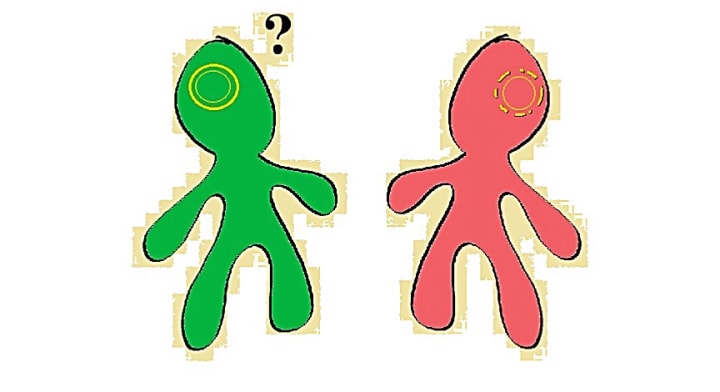
I don't want to completely discount the notion that game recognizes game. I have to acknowledge that learning the nature of others often does start with being able to point such motivations in yourself. However, sharing in feelings and desires does not put two people in the same boat. In some cases, the mentality is similar but the strength is not. Sometimes a person's beliefs of others CANNOT tell you about their own heart, because discipline affects the balance of things.
Strong morals and strong willpower help maintain good character. Two men can feel anger, but it doesn't mean both will be vicious. Two men can feel lust, but it doesn't mean both will be tempted. Yes, emotions and ambitions are much easier to identify in others when they exist or have existed in you. However, having such things in common does not guarantee that the actions or intentions of two said persons have EVER been the same even ONCE.
The idea that you are what you believe is one to take on very carefully (judiciously). In a sense, it encourages you to be mindful of your messengers, but on the other hand, it's popularly a form of deflection; An excuse to write off the ones who reveal truth.
Nonetheless, I said what I said, and what's real cannot be threatened. If a story such as Falls & Fools came from pure darkness, then a text like this one couldn't succeed it. I'd say the real gist here is that conflict is meant to birth new conversations, even if such conflict is with one's creative self. In retrospect, maybe I was only a FOOL to FALL short of specifics.
About the Creator
JeRon Baker
I'm just a nine to five guy; Turning personal notes into projects, trading them for pennies.
Twitter @jbakerwtw, Insta @jbaker.wtw
Keep reading
More stories from JeRon Baker and writers in Men and other communities.
Picky Playerz
Before I get started with this message, let me emphasize one thing I firmly believe: Solid men don't fret for support. With that being said, try your best not to misconstrue the tone of what I'm about to write. I just happen to be a man that goes where inspiration leads him and I'm at an era of my life in which the selective nature of people keeps being made prominently obvious. Make no mistake, such a nuisance of habits is not new to me at all—just shockingly more apparent right now. To prove it, I dove deep into my timeworn journals for any text that shines light on the common person's deliberate manner of applauding or acknowledging others; Self-interested selectiveness. As I said, I'm no stranger to low vibrational games, so I'll kick off this topic with a journal I penned 7 years ago.
By JeRon Baker3 months ago in Men
Elon Musk: The Futurist Who’s Changing Tomorrow
Elon Musk is one of the most influential and widely discussed innovators of the modern era. Known for his bold ideas and ambitious goals, he has played a major role in transforming industries such as transportation, space exploration, and artificial intelligence. His journey is not just about wealth or fame, but about pushing humanity toward a future shaped by technology, sustainability, and exploration.
By Haroon Pasha6 days ago in Men
Close Friendships
I met Lou in the spring of 2019. I was recently widowed, trying to find my place in the world without my wife of 39 years. I met him on the tennis court. He was the convener of a mixed doubles drop-in session. I was picking up activities I had not done since I was a teenager. The funeral director had warned me that I needed a social network, that otherwise I would just hang around the house and fade away. We had just moved to a new city four months previous, so this was a concern for me. I had written "Tennis? Bridge?" on a note pad as ideas for meeting people.
By Paul A. Merkley4 days ago in Men




Comments
There are no comments for this story
Be the first to respond and start the conversation.