
The New Marriage Equation: When She's Got the Degree, He's Got the Tools
Navigating the Modern Dynamics of Educational Hypogamy

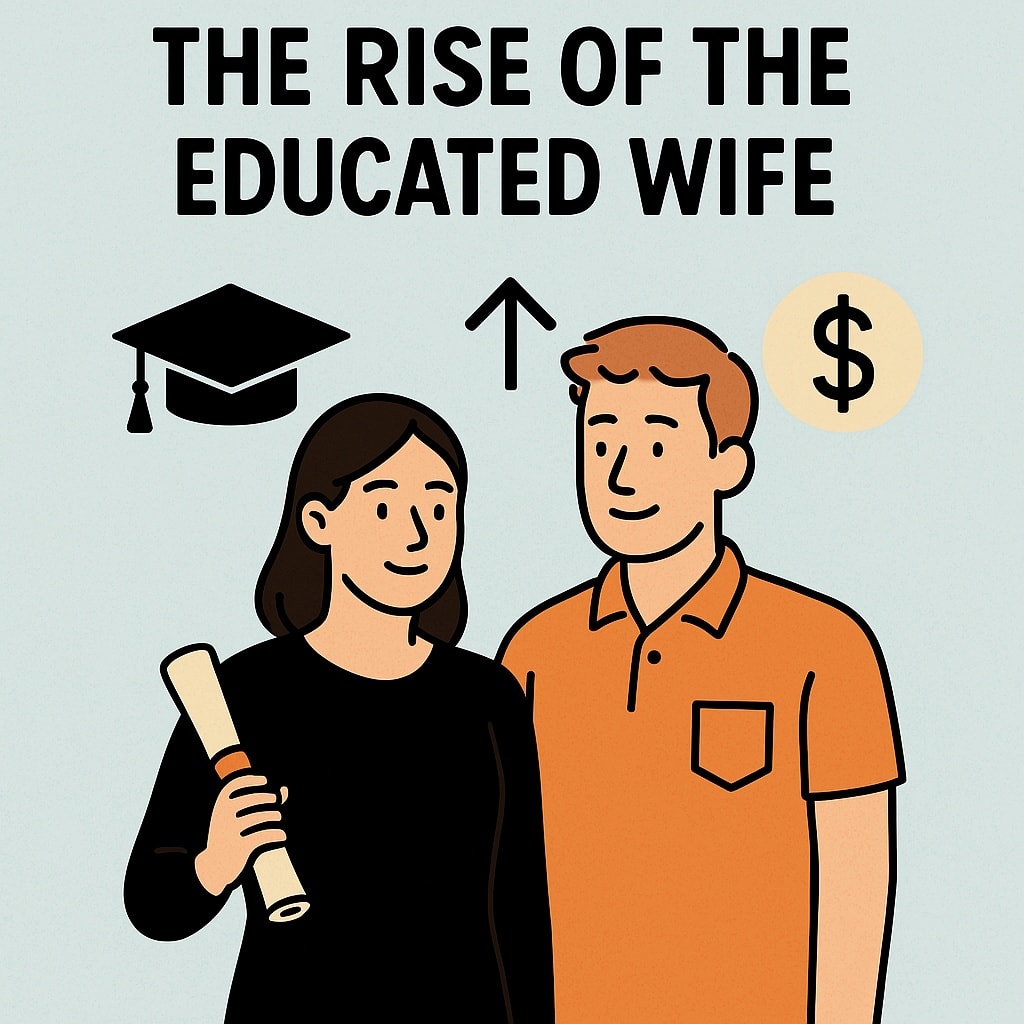
Imagine a world where the traditional roles of marriage are flipped on their head. Welcome to the 21st century, where women are increasingly marrying men with less education than themselves. This phenomenon, known as "hypogamy," is reshaping the landscape of modern relationships. But what drives this trend, and how are couples navigating these uncharted waters? Let's dive in and explore the intricacies of this new marriage equation.
The Rise of the Educated Wife
In the mid-20th century, the narrative was straightforward: men were the primary breadwinners, and women, if they worked, often held lesser-paying jobs. Fast forward to today, and the script has flipped. Women are not only entering the workforce in droves but are also outpacing men in educational attainment. According to recent data, women are now more likely to hold a bachelor's degree than men. This shift has led to a fascinating trend: women marrying men with less education.
Christine Schwartz, a sociology professor at the University of Wisconsin at Madison, has tracked these trends. Her research reveals that in 2020, 44.5% of heterosexual marriages were between educational equals, down from over 47% in the early 2000s. Among educationally mixed marriages, 62% involved a woman marrying a less-educated man, up from 39% in 1980. This trend is not unique to the United States; it's a global phenomenon.
The rise of the educated wife raises intriguing questions. Are women settling, or are they simply marrying who is available? How do these couples divide labor and finances? Are they happier, or does the educational gap strain their relationships? These questions are at the heart of understanding the future of marriage.
Women are increasingly marrying men with less education, driven by availability and shifting societal norms.
The Availability Factor
One of the primary drivers of hypogamy is the availability of partners. With more women than men enrolled in four-year colleges, the pool of college-educated men is shrinking. This demographic shift means that college-educated women often find themselves with fewer educational equals to choose from. As a result, they are increasingly marrying men without a degree.
Research by Clara Chambers and her colleagues highlights this trend. Despite the increasing number of college-educated women, marriage rates among this group have remained stable. This stability suggests that these women are not waiting for educational equals but are instead marrying men with less education. This trend is not driven by changing preferences but by the simple fact that there aren't enough college-educated men to go around.
The availability factor is a significant driver of hypogamy, but it's not the only one. Shifting societal norms and economic realities also play a role. As women's economic empowerment grows, so does their ability to marry for love rather than financial security. This shift is evident in the increasing acceptance of hypogamous marriages, as shown by the World Values Survey.
The availability of partners and shifting societal norms are driving the rise of hypogamy.
Navigating the Educational Gap
How do couples with an educational gap navigate their relationships? The dynamics of these marriages are complex and varied. Some couples find that the educational gap is not a significant issue, while others face challenges.
For many couples, the educational gap does not translate to a gap in intelligence or compatibility. Mary, who holds a master's degree, is married to a man who has not completed his undergraduate studies. She emphasizes that formal education does not automatically equate to intelligence or intellectual curiosity. Her husband, though less formally educated, is highly knowledgeable and engaged in various topics.
However, the educational gap can sometimes lead to tension, especially when it comes to finances. In many hypogamous marriages, the man is still the primary breadwinner. This dynamic can create a power imbalance, with the woman feeling dependent on her husband's income. Conversely, some women who are the primary breadwinners face societal judgment and expectations that they should be the primary caregivers as well.
The key to navigating these challenges is open communication and a willingness to challenge traditional gender roles. Couples must discuss their expectations and divisions of labor early in their relationships. By doing so, they can create a partnership that works for them, regardless of educational differences.
Open communication and challenging traditional gender roles are crucial for navigating the educational gap in marriages.
The Economic Realities
The economic realities of hypogamous marriages are complex. While women in these marriages are more likely to earn as much as or more than their husbands, most do not. Research by Christine Schwartz shows that women's educational advantage may draw husbands and wives closer to economic equality, but men still usually have the economic advantage.
This economic reality is evident in the earnings of non-college-educated men. Those married to college-educated women have seen their earnings increase slightly over time, even after accounting for inflation. However, non-college-educated men who are not married to college-educated women have seen their earnings dwindle considerably. This disparity suggests that college-educated women are partnering with the highest-earning men without degrees.
The persistence of men's tendency to outearn their wives is a significant challenge for hypogamous marriages. It can create a power imbalance and strain the relationship. However, some couples find ways to navigate this challenge. For example, Sonia Ben Hedia Twomey, a computational linguist, earns more than her husband, John. They have found a way to balance their economic differences by having John take on the role of the primary caregiver for their child.
The economic realities of hypogamous marriages are complex, with men still often outearning their wives.
Conclusion
The rise of hypogamy is a fascinating trend that is reshaping the landscape of modern marriage. Driven by the availability of partners and shifting societal norms, this phenomenon raises intriguing questions about the dynamics of these relationships. While the educational gap can create challenges, open communication and a willingness to challenge traditional gender roles can help couples navigate these uncharted waters.
As we continue to explore this trend, it's essential to remember that every couple is unique. What works for one may not work for another. The key is to approach these relationships with an open mind and a willingness to adapt. By doing so, we can create partnerships that are fulfilling and sustainable, regardless of educational differences.
We invite you to share your thoughts and experiences in the comments. How have you navigated educational differences in your relationships? What challenges have you faced, and how have you overcome them? Let's continue the conversation and learn from each other.
About the Creator
Alain SUPPINI
I’m Alain — a French critical care anesthesiologist who writes to keep memory alive. Between past and present, medicine and words, I search for what endures.
Keep reading
More stories from Alain SUPPINI and writers in Marriage and other communities.
Mastering French Without Losing Your Sanity: A Realistic Guide for Beginners
Learning French can feel like solving a Rubik’s Cube blindfolded. The tricky pronunciation, the never-ending grammar rules, and the surprising exceptions make it seem impossible. But don’t worry—equipping yourself with key expressions and effective strategies can turn frustration into fluency. Let’s simplify French and make learning enjoyable.
By Alain SUPPINIExclusive • 11 months ago
Essex Wedding Venues 2026: Where Modern Love Meets Timeless Settings
Planning a wedding is often described as a journey, and for couples looking ahead, Essex wedding venues 2026 are already shaping that journey in thoughtful and exciting ways. Essex has long been a favourite for weddings, but what’s changing now is how venues are responding to modern expectations while keeping the romance firmly intact.
By Andrew Mile6 days ago in Marriage


Comments (1)
Nice! Having a degree is good