
Sacred Companionship: Why Marriage Matters for a Woman in Islam
"Exploring the Emotional, Spiritual, and Psychological Fulfillment of Marriage in a Woman’s Life"

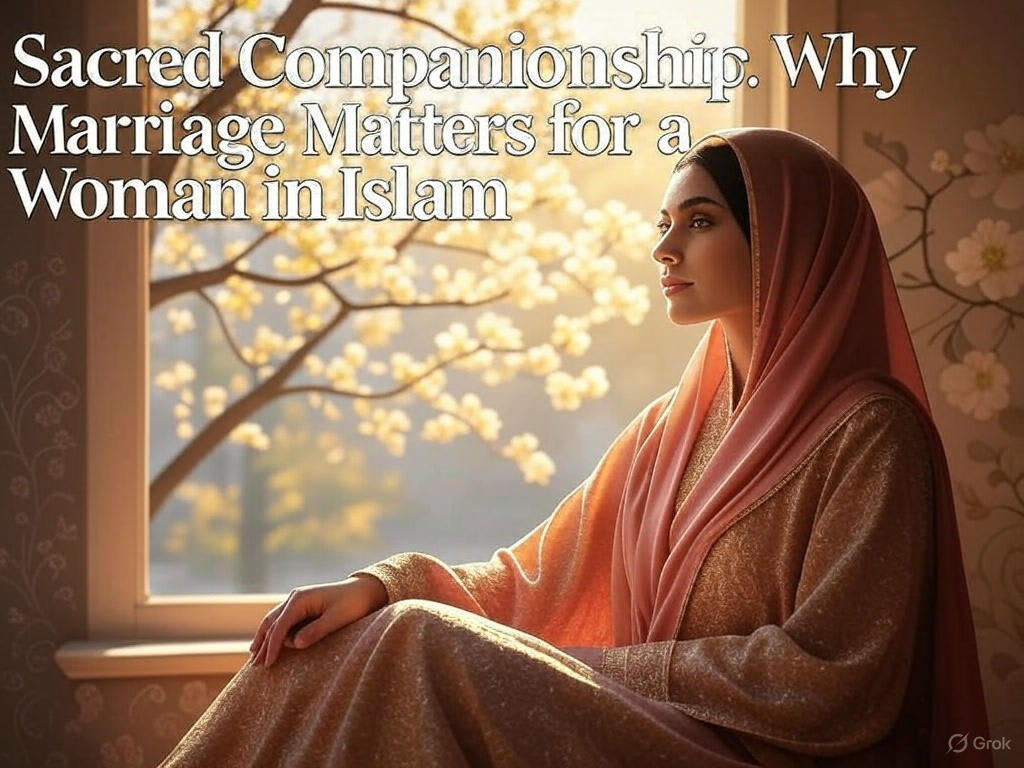
A young, educated, and financially independent woman once visited a renowned psychologist. She appeared confident, successful, and self-sufficient. During their conversation, she confessed:
“I don’t feel the need to get married. I have my education, a stable job, and financial independence. I am self-reliant and capable of making my own decisions. I don’t see what a husband could add to my life. However, I’m distressed because my parents are constantly pressuring me to get married. What should I do?”
The psychologist listened attentively and replied with a gentle smile:
“You’ve certainly achieved a lot, and your independence is admirable. But allow me to ask you something—there will be times in life when you want to achieve something, but you fail. There will be days when you make mistakes, days of emotional vulnerability, when your plans fall apart, and your expectations remain unfulfilled. On such days, who will you hold responsible for your pain or disappointment?”
The woman thought for a moment and said, “Why would I blame myself?”
The psychologist chuckled softly and said, “Exactly. That’s when you’ll need a partner. Someone with whom you can share the burden of life, someone who can stand by you—not just in your moments of success, but also in your trials.”
Then, in a more reflective tone, the psychologist added:
“You seem to be a strong, talented, and independent woman. But life is not just about independence and intellect. It is also about love, emotional security, spiritual comfort, and human connection. These are essential components of a fulfilling life—and one of the most holistic frameworks that fulfills these needs is marriage.”
The Purpose of Marriage in Islam
Islam views marriage not merely as a social contract but as a sacred covenant and a complete system of life. It brings two souls together not only for companionship but also for fulfilling spiritual, emotional, psychological, and physical needs. The Qur’an highlights this beautifully:
> “And among His signs is that He created for you from yourselves spouses that you may find tranquility in them, and He placed between you affection and mercy.”
(Surah Ar-Rum: 21)
This verse reflects the divine wisdom behind marriage: tranquility, affection, and mercy. A husband and wife are not just legal companions—they are sources of comfort, emotional safety, and mutual care.
The Qur’an also likens the husband and wife to garments for one another:
> “They are a garment for you, and you are a garment for them.”
(Surah Al-Baqarah: 187)
What does a garment do? It covers, protects, beautifies, and provides comfort. Similarly, a spouse is meant to be your protection against life’s harshness, your emotional covering in moments of vulnerability, and your comfort in times of distress.
Emotional and Psychological Needs
While financial independence is indeed empowering, human beings are inherently emotional and relational beings. No amount of material success can replace the warmth of sincere companionship, nor can professional accomplishments substitute the tenderness of unconditional love.
A woman, just like a man, has emotional needs:
To be loved unconditionally
To feel protected and cherished
To share her thoughts without judgment
To receive emotional support during times of crisis
To experience the joy of nurturing a family
In psychology, emotional support systems are considered essential for mental health. Individuals who lack such intimate bonds often suffer from loneliness, anxiety, depression, or a sense of meaninglessness—even if they are materially prosperous.
Marriage provides that natural emotional support system. It offers a partner who understands your rhythms, shares your dreams, and walks with you in life’s unpredictable journey.
The Role of a Husband in Islam
Islam places significant responsibility on the husband. A wife is not simply a dependent; she is a partner, a trust, and a dignified soul whose care is a divine obligation upon her husband.
Financial Support: A man is commanded to provide for his wife, regardless of her personal wealth.
Respect and Honor: The Prophet Muhammad (peace be upon him) emphasized, “The best of you is the one who is best to his wife.”
Emotional Care: The Prophet used to comfort, listen to, and spend quality time with his wives.
Spiritual Guidance: A righteous husband helps elevate his wife's connection to God and strengthens her moral compass.
Hence, marriage in Islam is not just a worldly arrangement—it is a spiritual alliance.
The Holistic Fulfillment through Marriage
Marriage offers benefits that are far-reaching and multifaceted:
1. Spiritual Completion
The Prophet Muhammad (peace be upon him) said:
> “When a person gets married, he has completed half of his faith. So let him fear Allah in the remaining half.”
(Tirmidhi)
Marriage protects against immoral desires and promotes chastity. It provides a platform for fulfilling one’s emotional and physical needs in a halal (permissible) way.
2. Psychological Stability
Regular companionship, shared experiences, and emotional bonding reduce stress and increase life satisfaction. Studies show that married individuals tend to live longer and have better mental health than their unmarried counterparts.
3. Social Harmony
Marriage brings families and communities together. It builds social networks, strengthens family values, and ensures the moral development of future generations.
4. Children and Nurturing
Islam places great emphasis on family life and the righteous upbringing of children. A stable marital relationship is crucial for raising emotionally secure, well-rounded children who grow up with values, discipline, and a strong sense of identity.
5. Protection from Loneliness
As time passes, youth fades, careers retire, and friends may drift away. But a loving spouse remains a companion through all seasons of life—from youth to old age, from health to illness. Loneliness is one of the harshest emotional states, and marriage is a natural remedy.
The Misconception of Marriage as Dependency
Many modern women associate marriage with the loss of freedom, control, or identity. But this perception is often shaped by cultural practices, not by the essence of marriage itself.
Islam never demands a woman to lose her individuality in marriage. In fact, it safeguards her:
She retains her name, her property, her earnings.
Her husband is responsible for her welfare, but she is not obligated to spend on him.
She has the right to education, employment, and expressing her opinions.
She has the right to be treated with dignity, kindness, and justice.
True Islamic marriage is a partnership of equals—based on mutual respect, not domination.
Marriage is Not a Cure for Every Problem
It’s important to clarify that marriage is not a magical solution to all of life’s problems. A bad marriage can be damaging, just as a good one can be a source of great strength.
The key is not just to marry—but to marry right:
Choose someone with shared values and compatible goals.
Ensure mutual understanding, patience, and the ability to grow together spiritually and emotionally.
Involve prayer (Istikhara) and wise counsel before making a decision.
A Final Thought
To every woman wondering whether she should marry: know that Islam honors your independence, celebrates your intellect, and uplifts your dignity. But it also invites you to seek a life partner—not out of weakness or necessity—but out of divine wisdom and emotional richness.
Marriage is not about losing yourself. It’s about discovering the parts of yourself that only bloom in the presence of love, loyalty, and shared faith.
Yes, you can live alone. But life becomes far more meaningful when you have someone to share it with—someone who is your comfort in hardship, your partner in prayer, your companion in joy, and your support in every trial.
As the Qur’an so eloquently reminds us:
> “They are a garment for you, and you are a garment for them.”
About the Creator
Muhammad Ilyas
Writer of words, seeker of stories. Here to share moments that matter and spark a little light along the way.
Keep reading
More stories from Muhammad Ilyas and writers in Marriage and other communities.
TikTok’s Glitter and the Fading Future of Our Children
In the past, the hands of a child were meant to hold books and pens, their eyes were filled with dreams of knowledge, wisdom, and service to humanity. But today, those same hands hold mobile phones, and those eyes are fixed not on the future, but on likes, views, and followers.
By Muhammad Ilyas8 months ago in Education
Mother’s Day Jewelry: Timeless Gifts That Celebrate Love and Appreciation
Mother’s Day jewelry is one of the most heartfelt ways to express love, appreciation, and respect for mothers. Unlike ordinary gifts, jewelry holds emotional value and becomes a lasting reminder of special moments. From elegant gemstone rings to delicate necklaces and timeless bracelets, Mother’s Day jewelry beautifully symbolizes the unconditional bond between a mother and her family.
By Margaret Johnson6 days ago in Marriage
Center Stage with Paul Stewart
*** I'm keen to republish the interviews I did for my series with Vocal creators. It's been a few years and I thought it might be nice to revisit these wonderful conversations. I'll be releasing them one at a time for a few weeks/months.
By Heather Hubler4 days ago in Interview



Comments
There are no comments for this story
Be the first to respond and start the conversation.