
TikTok’s Glitter and the Fading Future of Our Children
Wake-Up Call from a Concerned Heart

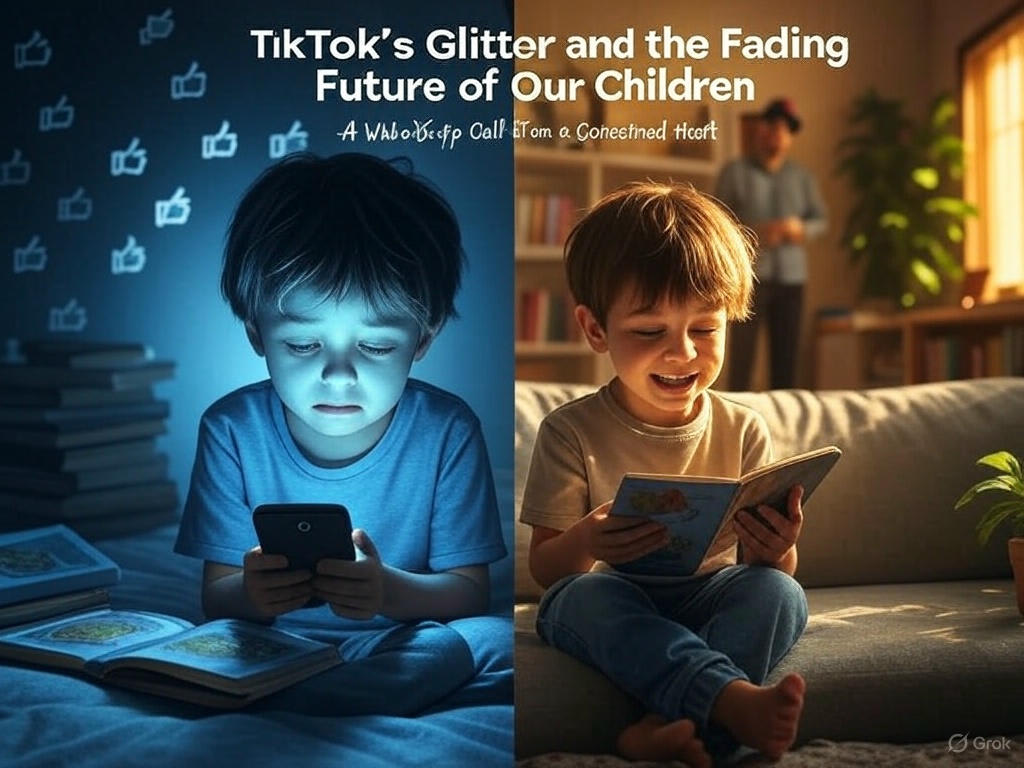
In the past, the hands of a child were meant to hold books and pens, their eyes were filled with dreams of knowledge, wisdom, and service to humanity. But today, those same hands hold mobile phones, and those eyes are fixed not on the future, but on likes, views, and followers.
A generation that once looked up to role models of substance—scientists, teachers, poets, doctors, and thinkers—now finds its inspiration in momentary internet fame. Social media platforms like TikTok, which may have initially emerged as outlets for creativity, are now shaping the priorities, behaviors, and identities of young minds in deeply concerning ways.
The New Currency of Validation
The modern teenager often defines self-worth by digital applause. A video going viral becomes a badge of honor, while a post that doesn't "perform" leads to disappointment, anxiety, and even shame. Instead of nurturing real talents, the youth now chase trends that often lack purpose, meaning, or ethics.
This is not just about entertainment or harmless fun. It’s about a shift in values. The need for instant validation has replaced patience and perseverance. A child who once dreamt of becoming a doctor or an engineer might now fantasize about becoming the next internet sensation. Why? Because they see applause, money, and fame attached to it—and it looks easy.
But no one shows them the other side.
What Lies Behind the Screen
Behind the glamour of filters and viral videos lies a growing crisis:
Mental Health Issues: Children as young as ten are experiencing anxiety and depression rooted in social media pressure. They feel “not good enough” if they don’t meet online standards of beauty, lifestyle, or popularity.
Addiction: Screen addiction has become a silent epidemic. Children spend hours scrolling through content, disconnected from real life, real relationships, and real responsibilities.
Identity Confusion: Many start emulating what they see online, losing their individuality in the process. They adopt trends without understanding their roots, often mimicking behavior that is inappropriate or misaligned with their values.
Parents and educators often find themselves helpless. The influence of a 15-second video is sometimes stronger than hours of teaching, nurturing, or advising. The question is: how did we get here?
Where Did We Go Wrong?
We handed over smartphones to children without teaching them how to use them wisely. We allowed technology to babysit our kids, hoping it would keep them busy. The result? An entire generation that feels seen only when a screen is watching.
We must acknowledge that children aren’t to blame entirely. The real issue lies in a lack of guidance, boundaries, and value-based education.
It’s time to ask ourselves:
Are we investing enough time in talking to our children?
Are we cultivating self-worth in them that isn’t dependent on others' opinions?
Are we creating spaces where they can express themselves without needing a virtual audience?
The Role of Parents and Teachers
Parents, teachers, and community leaders must no longer remain silent. We must act—wisely and compassionately.
1. Open Conversations: Talk to your children. Listen without judgment. Understand why social media appeals to them. Only then can you offer meaningful alternatives.
2. Set Boundaries: There is nothing wrong with limiting screen time. In fact, it’s necessary. But those boundaries must come with explanations and love, not control and anger.
3. Celebrate Real Achievements: Encourage hobbies, reading, art, sports, volunteering—anything that builds confidence and connection with the real world.
4. Lead by Example: If children see adults constantly on their phones, they will follow suit. Disconnect to reconnect. Show them the joy of real interaction.
5. Teach Digital Literacy: Help them differentiate between real and fake content, understand the dangers of oversharing, and the importance of privacy and integrity online.
The Illusion of Stardom
Children must be taught that:
> "True success isn’t in likes or comments. It’s in using your abilities to serve others, uplift yourself, and leave a legacy worth remembering."
The world behind the camera is fleeting. Trends change. Audiences move on. But the knowledge acquired, the character built, and the kindness shown—these last forever.
When we allow children to believe that the only way to matter is by becoming viral, we rob them of a deeper purpose. We reduce their potential to mere entertainment. We must show them there is honor in becoming a teacher, a doctor, a writer, an engineer, a caregiver—a good human being.
Reclaiming Their Future
This isn’t just about a few videos. It’s about the future of a generation that’s slowly losing its way. If we do not act now, we may be left with young adults who are disillusioned, disconnected, and directionless.
We need a cultural shift. A renaissance of values. A movement that redefines success and reminds our youth of their true worth.
Let us become storytellers of substance. Let us revive meaningful conversations in our homes and classrooms. Let us replace the hunger for popularity with the thirst for purpose.
Let every child know:
You are more than your profile.
Your value isn’t in views.
You matter, even when no one is watching.
A Final Thought
The world needs thoughtful, grounded, and wise young people—not just popular ones. It is our duty to protect their potential from being swallowed by superficiality.
Let us gift them the strength to say:
> “I choose purpose over popularity. I choose truth over trends. I choose to live a life that matters.”
Because the future doesn’t need more stars on screens—it needs lights that guide.
About the Creator
Muhammad Ilyas
Writer of words, seeker of stories. Here to share moments that matter and spark a little light along the way.
Keep reading
More stories from Muhammad Ilyas and writers in Education and other communities.
Whiskers’ Wish
Once upon a time, in a quiet village at the edge of a great forest, there lived a small gray-and-white kitten named Whiskers. Whiskers wasn’t like the other kittens in the village. While they loved to chase butterflies and nap in sunbeams, Whiskers would often sit alone on a little hill just beyond the village, staring up at the night sky.
By Muhammad Ilyas8 months ago in Education
Taher Saifuddin: Transforming Toronto’s Classrooms with Inclusive and Future-Focused Education
In the heart of Canada’s most diverse city, Toronto educator Taher Saifuddin is quietly leading a transformation in the way learning is delivered, measured, and experienced. With over two decades of experience, Taher is recognized for his dynamic role in teaching, academic leadership, and digital innovation across Toronto’s private and independent schools.
By Dena Falken Esq6 days ago in Education
What People Get Wrong About Consulting
Many people talk about consulting, but few understand what it truly involves. Movies, social media, and word of mouth often shape a narrow view. This creates confusion for students, business owners, and even new consultants. The topic of common misconceptions about consulting matters because these beliefs affect career choices and business decisions. When ideas are wrong, expectations break down fast.
By Nicole Metz6 days ago in Education
Center Stage with Paul Stewart
*** I'm keen to republish the interviews I did for my series with Vocal creators. It's been a few years and I thought it might be nice to revisit these wonderful conversations. I'll be releasing them one at a time for a few weeks/months.
By Heather Hubler5 days ago in Interview



Comments
There are no comments for this story
Be the first to respond and start the conversation.