


lōkāḥ samastāḥ sukhinōbhavantu
Let all the people in the world be happy
Introduction
The physical, mental and spiritual practices or disciplines which originated in ancient India's Sanatana culture (modern day Hinduism). Sanskrit word Yoga is derived from its Sanskrit root Yuj meaning 'to attach, join'. The spiritual meaning here falls in line with the word because in Hindu culture, it is believed that all our souls are a fragment of one Supreme God soul. The goal of each human is to merge back to the God. Yoga is believed to be one of the paths to achieve this spiritual goal. Since Buddhism and Jainism is also rooted with the Sanatana dharma there are broad varieties of yoga teachings/practices too.
History
Vedas are the oldest text/scripture in the world. There are mainly 4 different Vedas - Rigveda, Yajurveda, Samaveda, Atharvaveda; each further have sub-divisions in them. These Vedas cover variety of knowledge ranging from philosophy, health, rituals etc. In early Indian civilization the knowledge were orally transmitted, hence the treasure of knowledge we found in Vedas is not just as old as the ageing of the manuscript we found, rather it was practiced for thousands of year before the knowledge was compiled in to these 4 Vedas.
Yoga is a Vedic (or pre-Vedic) traditions around 3000 BCE. Yoga is mentioned in Rigveda, the oldest scripture of the world. It is believed to developed as a systematic study around 5th and 6th centuries BCE in ancient India. Sometime around 2nd century BCE, a sage named Patanjali in India synthesized and organized knowledge about yoga from much older traditions where the knowledge is transferred from Guru to Shishya(disciple) orally. This collection of 195–196 Sanskrit Sutras(aphorisms) on the theory and practice of yoga is called 'Yoga Sutra of Patanjali'. This was then introduced to west around 20th Century by Swami Vivekananda and other great Yogis.
The 'Yoga Sutras of Patanjali' is majorly referred as a source of yoga knowledge, whose original name is Pātañjalayogaśāstra-sāṃkhya-pravacana. As the name indicates that this compilation had the sutras as well as commentary on each sutra. The traditional Hindu depiction of Patanjali is as an avatar of divine serpent Shesha. (people may have decided to compare him to Shesha-the snake by watching him bend his body with help of yoga asanas(postures)).
Yoga in Indian tradition however is more than just physical exercise, it has a meditative and spiritual core and is chosen as a path to self-realization and to achieve higher consciousness. Outside India, yoga is considered majorly as posture based physical exercise, stress relief and relaxation technique. This trend is starting to change now, as we are noticing more and more people from are realizing the true meaning of Yoga and dedicating their life in pursuit of true self. Someone who practices yoga and follows the yoga philosophy with a high level of commitment is called a yogi (may be applied to a man or a woman) or yogini(a woman).
Yoga sutra of Patanjali has 4 main Padas(chapters), the meaning of the names of each chapter indicates the steps to the enlightenment.
- Samadhi Pada - meaning: 'On being absorbed in spirit'. This chapter has 51 Sutras.
- Sadhana Pada - meaning: 'On being immersed in spirit'. This chapter has 55 Sutras.
- Vibhuti Pada - meaning: 'On supernatural abilities and gifts. This chapter has 56 Sutras.
- Kaivalya Pada - meaning: 'On absolute freedom'. This chapter has 34 Sutras (rule or Aphorism).
Philosophy
"If the meaning of yoga is understood as the practice of nirodha (mental control), then its goal is the state of niruddha (the perfection of that process)" - Baba Hari Dass
In that context, yoga (union) implies duality (as in joining of two things or principles); the result of yoga is the nondual state, and as the union of the lower self and higher Self. The nondual state is characterized by the absence of individuality; it can be described as eternal peace, pure love, Self-realization, or liberation.
Patanjali define Ashantanga (Eight-Limbed) process in Yoga Sutras.
1. Yama
The ethical disciplines. To follow 5 ethical disciplines.
- Ahimsa - Non-violence, non-harming any other living beings.
- Satya - Truthfulness, non-falsehood.
- Asteya - avoidance of stealing.
- Brahmacharya - celibacy, fidelity to one's partner
- Aparigraha - non-possessiveness, to avoid obsession of over accumulating the material obsessions.
2. Niyama
The disciplined practices. To follow below 5 practices.
- Shaucham - Physical and mental cleanliness.
- Santosha - Contentment
- Tapas - Perseverance, persistent meditation
- Svadhaya - Study of self, Introspection
- Ishvara-Pranidhana - contemplation of god. Dedicating oneself to god the truth.
3. Asana
Literal meaning is posture.
Involves adopting of different physical yoga postures as a part of exercise and in day to day activity.
4. Pranayama
Breathing exercises.
You might already be aware of the popularly recommended Wim Hoff breathing exercises. This is inspired from the yogic breathing exercises mentioned in Pranayama.
5. Pratyahara
Abstraction.
Withdrawal of sense organs from external objects.
6. Dharana
Concentration.
Cultivating inner awareness.
7. Dhyana
Meditation.
Meditation on the divine.
8. Samadhi
Liberation.
Merging with the truth/divine.
End.
Yoga, the ancient practice which was passed orally from one to another for centuries until some yogis decided to compile the practices in writing for the wellness of future generations. Even though in todays culture, term 'yoga' is being mainly associated with the physical exercise, the core-essence of yoga is the list of practices and disciplines to help the individuals realize the truth. The one ultimate TRUTH.
"एकं सत् विप्रा बहुधा वदन्ति"
"ekam sat viprā bahudhā vadanti" - Rigveda
"Truth is One, but sages call it by many names".
About the Creator
Keep reading
More stories from Amara Kosha and writers in Longevity and other communities.
Beginners guide to Yoga #1
I for a long time have been wanting to adopt a discipline in my daily routine. One of the main improvement I wanted to do was the physical exercise. I been going for a jog in the mornings, but come rainy season I have to cancel the jog, and this resulted in loosing the consistency. I am not a big fan of push ups-pull ups and other exercises. Being a seeker of truth myself yoga was the option I decided to choose. I believe yoga way suited me better.
By Amara Kosha5 years ago in Longevity
Day 4 of Quitting
If this is how sobriety feels, maybe it’s better to go through life a little buzzed… this, along with other hits like, I want to kill myself, I wish I was dead, and I’m going to throw myself off a bridge have been the only thoughts on rotation these past few days. I promise myself that if, in a month, I still feel like this (‘this’ meaning despondent, full of rage, and simultaneously numb) I can go back to smoking. Until mid-February though? Nicotine is off the table.
By sleepy drafts10 days ago in Longevity
More Than 5 Million Native Plants Reintroduced in Deserts Are Slowing Land Degradation and Rebooting Arid Ecosystems
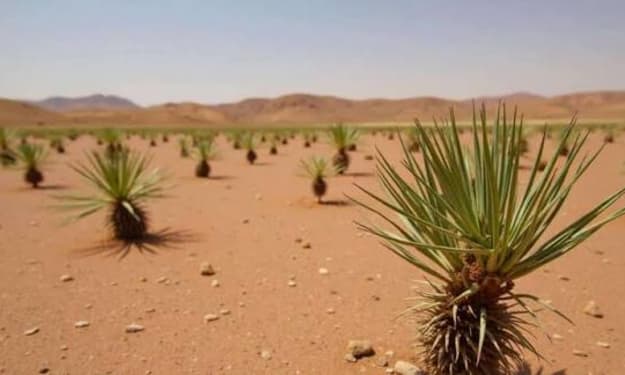
Deserts are often seen as barren, unforgiving landscapes, but they are far from lifeless. These ecosystems, while harsh, support unique biodiversity and provide critical environmental services, from carbon sequestration to regulating local climates. Yet, decades of overgrazing, unsustainable land use, and climate change have taken their toll, leaving many arid regions struggling with soil erosion, loss of native vegetation, and diminished ecological resilience. Now, a bold rewilding effort is turning the tide: over five million native plants have been reintroduced into deserts worldwide, and the early results are promising. The scale of the initiative Across regions from the deserts of the Middle East and North Africa to the arid plains of Australia and North America, conservation organizations, local communities, and governments have collaborated to replant native species that were once nearly wiped out. These plants range from hardy shrubs and grasses to iconic desert flowers, all carefully selected for their ability to survive in extreme conditions and restore ecological balance. The numbers are staggering: more than 5 million individual plants have been transplanted over the last five years, covering thousands of hectares. While this effort is labor-intensive, involving soil preparation, irrigation during establishment phases, and ongoing monitoring, the environmental payoff has been remarkable. Slowing land degradation One of the primary goals of these reintroductions is to combat land degradation, a process that affects over 40% of the planet’s land surface. In deserts, degradation is particularly acute because soil erosion occurs rapidly in the absence of stabilizing vegetation. Without plants to anchor the soil, wind and water can strip away fertile topsoil, creating a feedback loop of declining vegetation and worsening erosion. Early monitoring reports suggest that reintroduced native plants are helping to stabilize sandy soils and reduce the spread of desertification. In some areas of the Middle East, for instance, wind erosion rates have decreased by up to 30% in regions where shrubs and grasses were replanted. This stabilization not only benefits the environment but also local communities that rely on the land for grazing, agriculture, and other livelihoods. Rebooting arid ecosystems Beyond slowing soil loss, these plant reintroductions are rebooting entire desert ecosystems. Deserts are home to a diverse array of wildlife, including insects, birds, and mammals that rely on native plants for food and shelter. By re-establishing vegetation cover, these efforts have triggered a cascade of ecological benefits. In parts of the Sonoran Desert in North America, researchers observed a noticeable increase in pollinator populations, such as bees and butterflies, following the reintroduction of native flowering plants. Similarly, small mammals and reptiles that had disappeared from degraded areas are gradually returning, attracted by improved habitat structure and food availability. Climate resilience Another key advantage of reintroducing native plants is enhancing climate resilience. Many desert plants are adapted to survive extreme heat, drought, and poor soils. By re-establishing these species, ecosystems can better withstand climate-related stresses, such as prolonged droughts or extreme heatwaves. Additionally, some species improve soil moisture retention and reduce surface temperatures, creating microclimates that further support biodiversity. Community engagement and knowledge transfer What makes these rewilding efforts particularly successful is the integration of local communities. Indigenous knowledge about native species, planting techniques, and seasonal cycles has been invaluable. In some regions, schools and community groups participate in planting days, turning conservation into a source of pride and education. This engagement ensures that restored areas are maintained, monitored, and valued over the long term. Looking ahead While the reintroduction of five million native plants is a significant achievement, experts caution that long-term success requires continued investment, monitoring, and protection from overgrazing, development, and climate pressures. However, the initiative provides a compelling example of how targeted, science-backed restoration can reverse environmental damage. For arid ecosystems, these efforts are more than just planting trees and shrubs—they represent hope. They demonstrate that even the most fragile landscapes can recover when humans actively collaborate with nature, restoring not only plants but the entire web of life that depends on them. As the world grapples with climate change and land degradation, the lessons from these desert rewilding projects offer a blueprint for action: by investing in native biodiversity, we can slow degradation, rebuild ecosystems, and create landscapes that are resilient, productive, and teeming with life once again.
By Fiaz Ahmed Brohi3 days ago in Longevity



Comments
There are no comments for this story
Be the first to respond and start the conversation.