
Beginners guide to Yoga #1
Part 1 of How I self learnt daily practice.

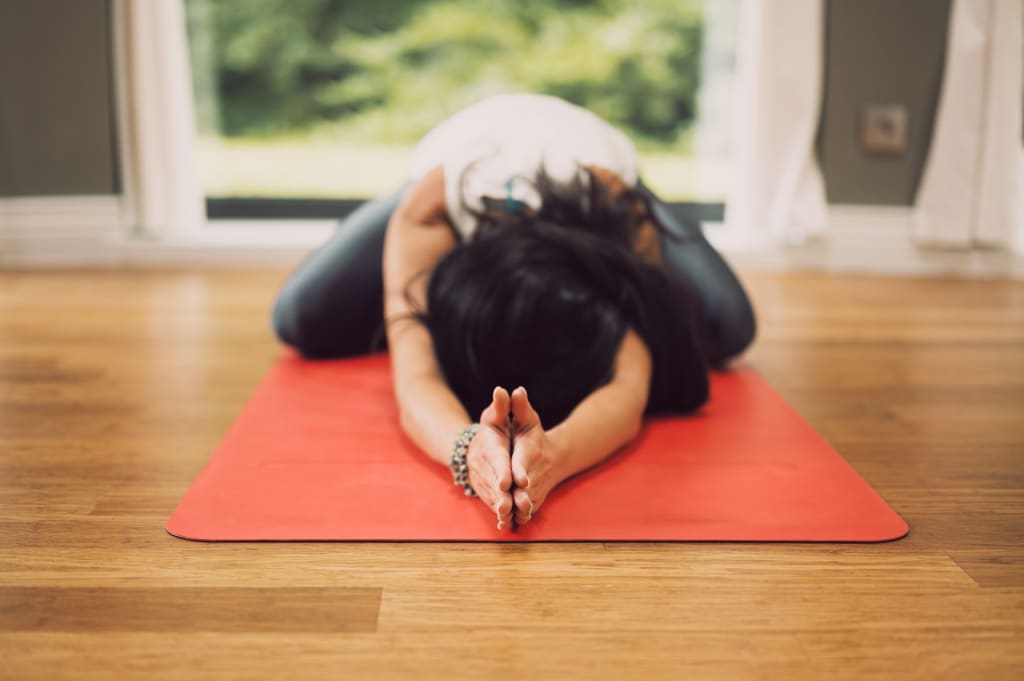
I for a long time have been wanting to adopt a discipline in my daily routine. One of the main improvement I wanted to do was the physical exercise. I been going for a jog in the mornings, but come rainy season I have to cancel the jog, and this resulted in loosing the consistency. I am not a big fan of push ups-pull ups and other exercises. Being a seeker of truth myself yoga was the option I decided to choose. I believe yoga way suited me better.
But then there is a problem, I have no idea where and how to start except of 2-3 yoga asanas which I learnt during childhood. Lots of questions pop-up in mind, can I learn yoga myself? should I look for a teacher? should I subscribe to some yoga online classes?. Finally I sat down and did some research looked into the sea of information... The 'Google'... especially YouTube and dived in.
Watched hundreds of videos and read many articles, listened to podcasts and philosophies. Wondered in aww on some people's transformations. After looking into many different practitioners, found a few whose practice was inline with their fitness and mentality and what they taught made sense to me.
After such research and online imparted wisdom, for me yoga was not just going to be about fitness, it should also had to be the door to next stage or at least a guide to a seeker.
After these research and lots of procrastination, I compiled a list below and started doing a half an hour session of few asanas daily morning.
Below are the asanas I been practicing: Initially I took up only the few which I found easier and slowly started adding asanas
- Tadasana
- Surya Namaskara
- Trikonasana
- Utthita Parshvakonasana
- Parshvottanasana
- Virabhadrasana
- Garudasana
- Vrikshasana
- Ardha Chandrasana
- Utthita Hasthapadangusthasana
- Anjaneyasana
- Adho Mukha Shvanasana
- Bidalasana-Marjaryasana
- Ashtanga Namaskara
- Dhanurasana
- Bhekasana
- Bhujangasana
- Vajrasana
- Mandukasana
- Balasana
- Dhandasana
- Bhadrasana
- Navasana
- Ardha Matsyendrasana
- Matsyendrasana
- Sarvangasana
- Karnapidasana
- Shirshasana
- Pashchimottasana
- Padmasana
- Sukhasana
- Kapalabhati
- Pranayama
I am going to share the details and links to some tutorial videos to all these asanas in parts. These video tutorials have helped me in understanding the asanas as a beginner.
In this article, I have listed down my reference material of study for first six asanas.
I have no intention to be the Ekalavya of Yoga. I am re-iterating that i am not a subject matter expert, just a basic human trying to adopt a healthy discipline. I am a man of patience and I realize that good things come slow.
Take a small walk before you start. Remember the god and thank him for giving this body and keeping you alive today. Take a deep breath and in each asana listen to your body. Do not over do it. You may permanently hurt yourself. Your body knows better than you, so listen to your body. Also please do not perform yoga right after food intake. Atleast take 3-4 hour gap after your meal.
Patience and Perseverance is the key.
असतो मा सद्गमय । तमसो मा ज्योतिर्गमय । मृत्योर्माऽमृतं गमय ॥
ॐ शान्तिः शान्तिः शान्तिः ॥
asato mā sadgamaya, tamaso mā jyotirgamaya, mṛtyormā'mṛtaṃ gamaya. Om shanti shanti shantih
Lead me from the untruth to the Truth. Lead me from darkness to light. Lead me from death to immortality . Om Peace Peace Peace.
1. Tadasana
Also called as 'Palm Tree/mountain' pose for English understanding. This is a standing posture and helps us stretch our body and loosen up muscle as a warm up before we start our next postures. Follow this video to help as a guide. I do 4 sets of this asana with deep breathing before I go on to my next.
2. Surya Namaskara
Meaning of this asana is Salutation to Sun God. In west, the posture is called 'Sun salutation'.
This asana has different variations in them. Here we will focus on the one which was easier for me as a beginner. This asana is a combination of multiple postures carefully put together to create a nice flow of energy from the top to bottom of our body and keeping the pranic energy in balance. Video here will explain us how to perform this asana.
I perform this asana 6 sets 3 for each leg.
Here is a beautiful detailed explanation of this asana and how we should correct our posture. My goal is to reach the fineness in the posture performed by Ty Landrum here. Big fan Ty Landrum <3
3. Trikonasana
English call it as 'Triangle Pose'. This asana also has multiple variations. I selected a couple of them which helped me. This is another one of the standing posture, where keep our body straight hands stretched outwards and bend to the sides trying to touch the foot/floor. This video will guide us how the simple trikonasana is practiced.
There are other variations of Trikonasana called as Parivritta Trikonasana(revolved triangle pose), Baddha trikonasana (Bound trainagle pose), Uttitha trikonasa and others which you can slowly incorporate once your are comfortable.
4. Uttitha Parshvakonasana
This asana is similar to trikonasana. As the name suggests these are all about making the different geometric angles with out body. The english translation is 'Extended side angle pose'. The tutorial here will help us understand how to perform this asana.
5. Parshvottanasana
English translation is Pyramid pose. Initially I stretched only up until my body muscle allowed me to, as days went by my body allowed me to extend a lil more and one fine day voila :>.
Here is the a video link which will help you in practicing Parshvottanasana.
6. Virabhadrasana (Warrior pose)
This asana helps strengthen our thighs, shoulders, back and arms. the video here will assist us on how to perform this posture. This again is the standing posture and helps your body stretch well.
Conclusion
Remember to focus on your breath. Yoga is not just about posture but its the sync between the posture, breath, body and mind. I will see you in the next article with the title' Beginners guide to Yoga #2'.
Stay safe. God Bless you.
About the Creator
Keep reading
More stories from Amara Kosha and writers in Longevity and other communities.
Yoga
lōkāḥ samastāḥ sukhinōbhavantu Let all the people in the world be happy Introduction The physical, mental and spiritual practices or disciplines which originated in ancient India's Sanatana culture (modern day Hinduism). Sanskrit word Yoga is derived from its Sanskrit root Yuj meaning 'to attach, join'. The spiritual meaning here falls in line with the word because in Hindu culture, it is believed that all our souls are a fragment of one Supreme God soul. The goal of each human is to merge back to the God. Yoga is believed to be one of the paths to achieve this spiritual goal. Since Buddhism and Jainism is also rooted with the Sanatana dharma there are broad varieties of yoga teachings/practices too.
By Amara Kosha5 years ago in Longevity
Day 4 of Quitting
If this is how sobriety feels, maybe it’s better to go through life a little buzzed… this, along with other hits like, I want to kill myself, I wish I was dead, and I’m going to throw myself off a bridge have been the only thoughts on rotation these past few days. I promise myself that if, in a month, I still feel like this (‘this’ meaning despondent, full of rage, and simultaneously numb) I can go back to smoking. Until mid-February though? Nicotine is off the table.
By sleepy drafts10 days ago in Longevity
Geographic Information Systems Market Size and Forecast 2025–2033
Introduction The Geographic Information Systems (GIS) market is undergoing a profound transformation as digital infrastructure, data analytics, and location-based technologies reshape the way organizations plan, operate, and innovate. According to Renub Research, the global GIS market is projected to grow from US$ 12.90 billion in 2024 to US$ 32.04 billion by 2033, registering a compound annual growth rate (CAGR) of 10.64% between 2025 and 2033.
By Marthan Sir6 days ago in Longevity


Comments
There are no comments for this story
Be the first to respond and start the conversation.