
Why You Can’t Sleep Anymore: The Truth About Blue Light and Screen Time
Unlocking the Secret Behind Sleepless Nights: How Blue Light Disrupts Your Sleep

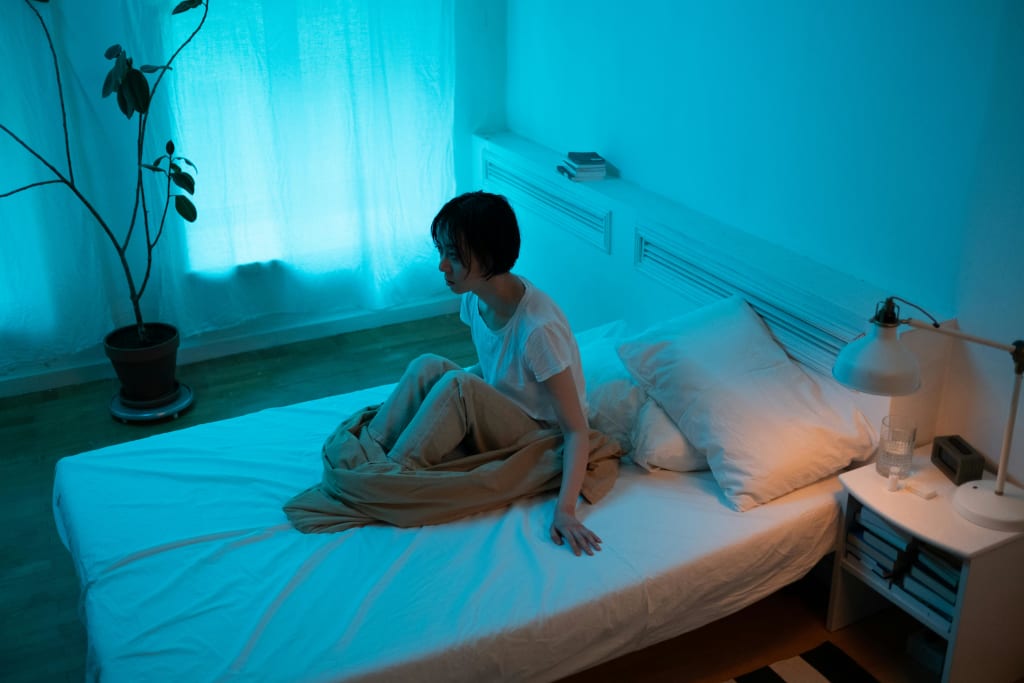
📱 Introduction: You’re Not Lazy – Your Brain Is Confused
Have you ever tossed and turned in bed, wondering why you just can’t fall asleep—even though you’re tired all day?
You're not alone. Millions of people suffer from broken sleep cycles, and the surprising culprit is blue light emitted from screens. Whether it’s your phone, tablet, or TV, screens are disrupting your brain’s natural sleep signals.
🔵 What Is Blue Light – And Why It’s Messing with Your Brain
Blue light is a high-energy visible light naturally present in sunlight. It boosts alertness and mood during the day, but at night, it tricks your brain into thinking it's still daytime. This interferes with melatonin production, the hormone that helps you sleep.
- Reduces melatonin (sleep hormone)
- Delays sleep onset
- Lowers sleep quality
By disrupting your circadian rhythm, blue light makes it harder for your body to wind down and fall asleep.
📵 The Hidden Cost of Night-Time Scrolling
A 2023 study by the Sleep Foundation found that people who use phones an hour before bed fall asleep on average 40 minutes later than those who don’t.
Late-night scrolling might seem harmless, but it pushes your brain into alert mode. This causes:
- Morning fatigue
- Poor focus
- Weakened immune system
- Long-term memory problems
When sleep is disrupted, these effects carry over into the next day, making it harder to be productive and maintain your mood.
🧠 Are Screens Making Us Forget How to Sleep Naturally?
We used to go to bed with the sun and rise with the light. Now, we go to bed with Netflix, YouTube, and endless scrolling. This artificial rhythm is damaging to our natural sleep cycles.
The scary truth? Sleep deprivation is now classified as a public health epidemic, comparable to smoking. Chronic sleep deprivation is linked to health issues like:
- Heart disease
- Obesity
- High blood pressure
- Mental health problems (anxiety, depression)
This breakdown of your body’s natural sleep cycle affects both physical and mental health.
✅ What Can You Do Right Now?
You don’t have to ditch your devices completely, but making small changes can greatly improve your sleep:
- Use “Night Mode” or “Blue Light Filters” on all devices after sunset.
- Avoid screens 1 hour before bed. Consider reading a physical book or listening to soothing music.
- Install apps like “f.lux” or “Night Shift” to reduce blue light exposure.
- Practice digital detox: Keep devices out of your bedroom and set “no screen” zones.
- Set a consistent sleep schedule by going to bed and waking up at the same time every day.
By following these tips, you'll start to notice improvements in your sleep quality and energy levels.
🔬 What Research Says About Blue Light Exposure and Sleep
Studies by the National Institutes of Health have found that blue light before bed:
Delays sleep onset: People who use screens take longer to fall asleep.
Decreases REM sleep: The phase crucial for memory and emotional regulation is reduced.
Affects children more: Kids exposed to blue light before bed have more severe sleep disturbances.
📲 Is Your Phone Really That Bad for Your Sleep?
Phones and screens aren’t just about blue light—they engage your mind, making it harder to relax. Here are a few more reasons why screens are disrupting your sleep:
- Engagement: Social media and video games stimulate your mind, keeping you awake.
- Notifications: Constant updates cause anxiety and make it difficult to relax.
- Sleep inertia: This grogginess upon waking is worse when you don’t sleep enough.
🌙 Conclusion: Time to Reclaim Your Sleep
You don’t need more caffeine in the morning—you need deeper sleep at night.
Blue light is the silent thief of rest, and we’re letting it steal hours from our lives. By understanding how screens affect your sleep, you can reclaim your energy and improve your mental clarity—one unplugged night at a time.
Your brain isn’t broken. It’s just confused. Give it the darkness it needs, and it will thank you.
#SleepHealth#BlueLightEffects#DigitalWellness#ScreenTime#BetterSleep#SleepTips#PhoneAddiction#CircadianRhythm#TechAndSleep#InsomniaHelp#SleepAwareness#NightMode#UnplugToRecharge#MelatoninMatters#SleepScience
About the Creator
Moqadas Kliwal
Exploring the future of AI, tech, and human behavior. Join me as I dive into how innovation shapes our thinking, creativity, and society. Stay tuned for deep insights and thought-provoking content.
Keep reading
More stories from Moqadas Kliwal and writers in Longevity and other communities.
10 Bizarre Ancient Medical Practices That Will Make You Grateful for Modern Medicine
Modern medicine has come a long way, but the path to today's healthcare was paved with some truly strange practices. Many ancient civilizations, including the Egyptians, Greeks, Chinese, Mesopotamians, and indigenous cultures across Africa and the Americas, used methods that would shock a modern patient. Whether these methods were based on religious beliefs, limited anatomical understanding, or early philosophical theories about the body, they shaped the early foundations of healing practices. While some of these techniques accidentally led to medical advancements, others were nothing short of dangerous, misguided, or even deadly. Understanding these bizarre methods helps us appreciate the progress of medical science and the safety standards we often take for granted today. In this article, we explore ten of the strangest and most unsettling ancient medical practices that have (thankfully) disappeared over time.
By Moqadas Kliwal10 months ago in Longevity
Why Your Brain Feels Foggy During the Day
Why Your Brain Feels Foggy? Have you ever sat in class or tried to study, only to realize that your brain just isn’t cooperating? You read the same sentence three times, struggle to focus, and feel mentally drained even though the day has barely started. Many students experience this feeling, often described as “brain fog.”
By Being Inquisitive2 days ago in Longevity
Nature Report, Killed by Trump, Is Released Independently
A major federal report assessing the state of nature and biodiversity across the United States — originally halted during the presidency of Donald Trump — has finally been released to the public after scientists decided to publish the findings independently. The report, years in the making, provides one of the most comprehensive analyses ever compiled about the health of ecosystems, wildlife populations, and natural resources across the country. The study was prepared as part of a nationwide effort coordinated by the U.S. Geological Survey and other federal agencies. Researchers involved in the project say the document was meant to provide policymakers with detailed scientific guidance on biodiversity loss, habitat degradation, and the growing impact of climate change on American landscapes. However, the report’s release stalled during the administration of Trump, when several environmental initiatives were scaled back or canceled. Scientists working on the project say the publication was effectively shelved before it could reach the public or be formally submitted to Congress. Now, years later, the authors have decided to release the research independently, publishing the findings through academic and scientific networks rather than through official government channels. The decision marks a rare step for researchers who typically rely on federal agencies to distribute major environmental assessments. According to the scientists behind the study, the report documents significant declines in biodiversity across the United States. Many native plant and animal species are facing mounting pressures from habitat loss, pollution, invasive species, and climate change. Wetlands and grasslands — ecosystems that support a large share of the country’s wildlife — have experienced particularly steep reductions in recent decades. The report also highlights the economic consequences of environmental decline. Natural ecosystems provide essential services such as pollination, water purification, and flood protection. Researchers warn that if biodiversity loss continues at its current pace, communities could face rising costs linked to environmental damage and weakened natural defenses against extreme weather events. Experts involved in the project say the findings were intended to inform national conservation strategies and guide land-management decisions at both federal and state levels. Without accurate scientific assessments, they argue, policymakers lack the information needed to design effective environmental protections. The controversy surrounding the report reflects broader tensions that existed between the scientific community and political leadership during the Trump presidency. Environmental policies adopted during that period included the rollback of several regulations related to emissions, land use, and wildlife protection. Critics argued that these decisions weakened safeguards designed to protect natural ecosystems. Supporters of those policies, however, maintained that regulatory reforms were necessary to support economic growth and reduce burdens on businesses, particularly in the energy and manufacturing sectors. Regardless of political debates, the authors of the biodiversity report say their goal is simply to ensure that the scientific data becomes available to the public. By releasing the document independently, they hope researchers, conservation organizations, and policymakers can still use the findings to inform future environmental strategies. Environmental groups have welcomed the publication, calling it an important contribution to understanding the state of nature in the United States. They say comprehensive national assessments are critical for tracking environmental changes and identifying areas where conservation efforts should be prioritized. The report’s release also highlights the evolving relationship between science and public communication. In an era where research findings can be shared widely through digital platforms, scientists increasingly have alternative ways to distribute their work when official channels fail. For the researchers who spent years compiling the study, the independent release represents both a scientific milestone and a statement about the importance of transparency. They argue that environmental data belongs not only to governments but also to the public, whose lives and livelihoods depend on the health of the natural world. While the report cannot retroactively influence past policy decisions, its authors hope the findings will still shape future discussions about conservation and sustainable development. As biodiversity loss continues to accelerate worldwide, they say timely access to scientific information has never been more important.
By Fiaz Ahmed 5 days ago in Longevity
Silken Chains
Silhouettes of the female form were given flesh and bone. Silken skin glistened under the spotlight. Dry ice rose around our Icons as they danced atop their podiums in the Square. Heralded for their beauty, their movements were slight, powerful, and sensual.
By Paul Stewart5 days ago in Fiction



Comments
There are no comments for this story
Be the first to respond and start the conversation.