
Why does exercise reduce the risk of Alzheimer's disease?
Alzheimer's disease – Know All about It

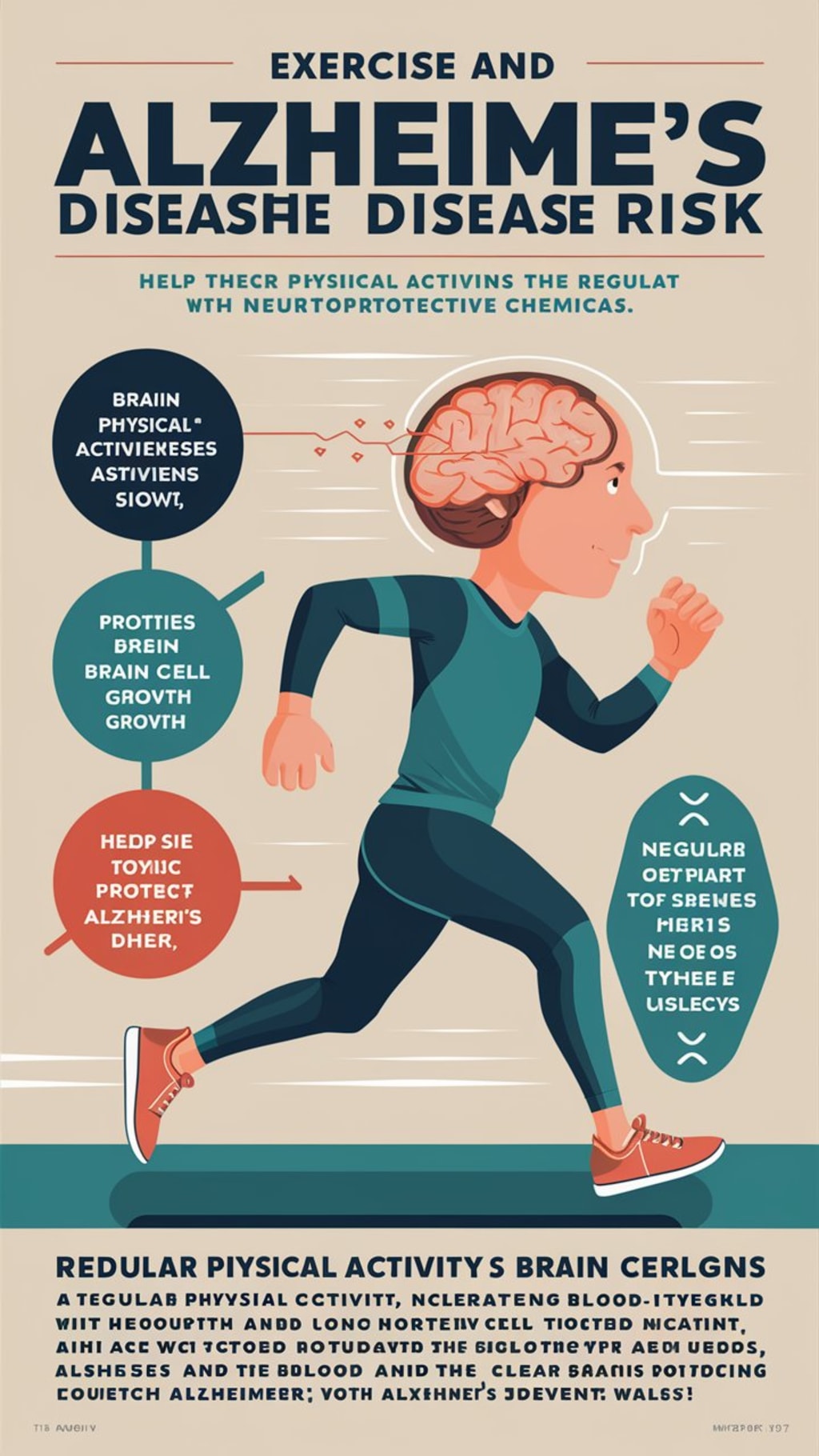
Do you suffer from Alzheimer's disease? Regular exercise and staying Physical activity can help protect the structure and function of our brains as we age, meaning it can reduce the chances of developing certain neurodegenerative conditions, such as Alzheimer's disease.
Alzheimer's disease usually affects people aged 65 or older. However, it can occur in people as early as their thirties, forties, or fifties. This is called the early onset of Alzheimer's disease. This type of Alzheimer's disease affects less than 10% of all people with the condition, according to WebMD.
Researchers have known over the years the protective effect of exercise. However, the exact answer to why Alzheimer's affects the brain has remained a mystery. Mystery, but the recently published study has some answers.
Alzheimer's disease – Know All about It
Alzheimer's disease is a progressive neurological disorder that can lead to brain contraction also known as atrophy and can also gradually lead to the death of these brain cells.
Regular exercise can help fight this condition
The results of the study were published in the Journal of Neurology, where Nancy suggests that physical activity alters the activity of the brain's immune cells, reducing inflammation, as the brain is made up of a class of special immune cells known as microglia.
What are this Microglia?
According to experts, these cells continuously scan brain tissue for damage or infection and remove debris or dying cells, and they also help produce new neurons through a process known as neurogenesis, which is associated with learning and memory.
How do exercises help these cells?
In order to do their job, microglia need to shift from resting to active and here comes the role of exercise that activates the work of these cells?
Researchers have revealed for the first time a link between physical activity and glial cell activation in order to improve cognitive function in the human brain.
In a recent study published in the journal Neuron, researchers found that the hormone iricin, which circulates through the body during exercise, can help reduce deposits of a protein fragment termed amyloid beta in the brain cells of a patient.
According to Forbes, according to the study, these beta-amyloid deposits form a plaque inside the brain that scientists believe causes the characteristic symptoms of Alzheimer's disease, and to discover this link, the researchers applied iresin to a three-dimensional model of human cell culture for Alzheimer's disease.
Main background
Several studies that followed people for years and decades of their lives found that the most physically active participants were less likely to develop Alzheimer's disease later in life.
According to the Alzheimer's Association, which compiled 11 of these studies, regular exercise can reduce a person's risk of developing dementia by almost 30%, and for Alzheimer's disease specifically (Alzheimer's disease is a type of dementia), this risk can be reduced by 45%.
A study published by researchers from Australia, Illinois and Minnesota found completing puzzles, playing card games, playing chess, taking adult education classes and other challenging cognitive activities can reduce the risk of dementia over age 70 by up to 11%. In addition, in July, the first-of-its-kind drug was approved by the Food and Drug Administration, and Lecanemab, made by pharmaceutical companies Biogen and Eisai, aims to slow dementia by removing plaque in the brain, although some outside the FDA have expressed concerns about its safety.
Surprising fact
10 million new people are diagnosed with dementia worldwide each year, meaning a new case is detected every 3.2 seconds, according to Alzheimer's disease International, and that number is expected to nearly double every 20 years, with the highest increases recorded in developing countries.
About the Creator
Keep reading
More stories from reda hamouda and writers in Longevity and other communities.
10 foods that get rid of nicotine and the damage to tobacco that causes heart disease
Smoking is among the main causes of diseases due to bad lifestyle habits, the Journal of Psychology and Health says, that tobacco smoking is one of the leading causes of premature deaths worldwide, and the sad thing is, smokers often acknowledge the damage they inflict on their bodies and may report their desire to stop it while continuing to smoke, because the nicotine in cigarettes generate a strong desire to smoke, which overcomes all other anti-smoking emotions.
By reda hamoudaabout a year ago in Longevity
Day 4 of Quitting
If this is how sobriety feels, maybe it’s better to go through life a little buzzed… this, along with other hits like, I want to kill myself, I wish I was dead, and I’m going to throw myself off a bridge have been the only thoughts on rotation these past few days. I promise myself that if, in a month, I still feel like this (‘this’ meaning despondent, full of rage, and simultaneously numb) I can go back to smoking. Until mid-February though? Nicotine is off the table.
By sleepy drafts6 days ago in Longevity
France Artificial Intelligence in Diagnostics Market Size and Forecast 2025–2033
France Artificial Intelligence in Diagnostics Market Outlook The France Artificial Intelligence in Diagnostics Market is undergoing a significant transformation as healthcare providers increasingly embrace advanced technologies to improve diagnostic accuracy, efficiency, and patient outcomes. According to Renub Research, the market is expected to grow from US$ 46.73 million in 2024 to US$ 180.76 million by 2033, registering a strong compound annual growth rate (CAGR) of 16.22% from 2025 to 2033.
By Marthan Sir4 days ago in Longevity




Comments (1)
Excellent piece