
When Holding It Hurts: The Hidden Health Costs of Chronic Urine Retention in Men
Ignoring the urge to pee might seem harmless, but over time it can set off a chain of problems—prostate irritation, infections, bladder damage, even incontinence

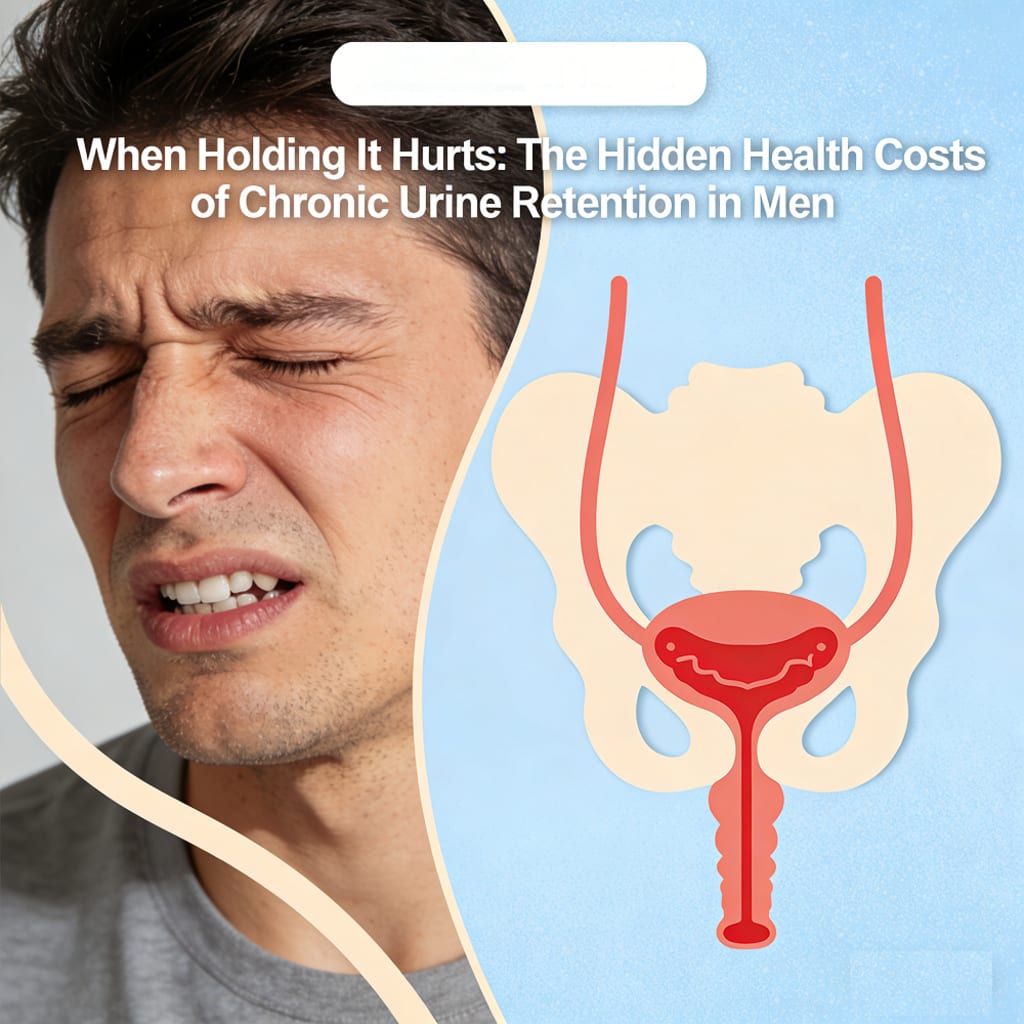
We’ve all done it. You’re in a meeting, driving home, or lying awake at night, and you decide you can wait. You silence the urge and carry on. It feels like a minor act of self-control, even discipline. But for many men, turning a quick delay into a regular habit is where trouble begins. Chronic urine retention—holding your pee for long periods—doesn’t just cause discomfort; it gradually strains the system designed to store and release urine, inviting a mix of inflammatory and infectious problems that ripple through the urinary and reproductive organs.
This isn’t meant to scare you into sprinting for the restroom. It’s a gentle but firm reminder that small, repeated choices add up in a body whose tissues, muscles, and nerves rely on rhythm and relief. Let’s look at what’s really happening inside—and why “I’ll wait” can become a costly phrase over time.
Pressure on the Prostate: Prostatitis’s Quiet Trigger
In men, the prostate sits just below the bladder, wrapped around the urethra like a ring. When you routinely hold urine, bladder pressure rises; the urethra can act like a bottleneck under stress. That elevated pressure has been linked to intraprostatic reflux—small amounts of urine and its irritating chemicals pressing back into the prostatic ducts. Over time, this can inflame the prostate and contribute to chronic prostatitis.
If you’ve ever noticed a cycle of urinary frequency, urgency, burning, or a dragging ache deep in the pelvis or perineum, that’s the body signaling that irritation has taken root. In many men, the symptoms ebb and flow; stress and prolonged sitting make things worse. While prostatitis has multiple causes—bacterial, inflammatory, and muscular—habitual retention is a known aggravator. Reducing bladder strain is a practical first step in breaking the cycle.
An Open Door for Infection: UTIs and Urethritis
Urine isn’t sterile; bacteria from the skin and gut can find their way into the lower tract, and the body relies on regular voiding to flush them out. When urine sits for hours, it provides a warm medium where microbes can multiply. That’s why chronic holding increases the risk of urinary tract infections (UTIs) and urethritis, especially in men with other risk factors such as an enlarged prostate (BPH), dehydration, or poorly controlled diabetes.
Unlike women, men get UTIs less often, which means a male UTI is more likely to indicate underlying issues: obstruction, retention, or chronic inflammation. Typical signs include burning when urinating, cloudy urine, a frequent need to pee with small volumes, and sometimes fever or back pain. If any of these appear, it’s a cue to stop powering through and seek evaluation.
When the Bladder Fights Back: Cystitis and Mucosal Damage
The bladder is built for cycles—fill, stretch, empty, rest. Over-distension (stretching it too far, too often) weakens the detrusor muscle and stresses the delicate inner lining. If that lining gets damaged or inflamed (cystitis), irritation lingers, and the bladder becomes more reactive—sending urgent, uncomfortable signals after only modest filling.
Think of the bladder like a balloon. A new, supple balloon inflates and deflates easily. But a balloon that’s constantly overfilled loses elasticity; tiny tears and microdamage make it finicky. In the bladder, that finickiness feels like burning, urgency, and lower abdominal discomfort. In some men, chronic inflammation can also increase susceptibility to future infections. While holding urine doesn’t directly cause cancer, persistent inflammation and ignored symptoms are reasons to be vigilant rather than dismissive.
Nerves, Libido, and Fertility: The System Is Connected
Men’s urinary and reproductive systems share nerve pathways, blood supply, and neighboring anatomy. Persistent pelvic tension—often worsened by stress, prolonged sitting, and habitual retention—can feed a cycle of pain, erectile difficulties, and reduced sexual satisfaction. Chronic prostatitis and repeated infections have been associated with changes in semen quality and, in some cases, fertility challenges. It’s not that holding urine alone “causes” infertility, but it contributes to the kind of pelvic environment—irritated, inflamed, poorly perfused—that makes everything work harder and less well.
If you notice pain after ejaculation, new pelvic heaviness, or a persistent drop in libido alongside urinary symptoms, don’t treat them as separate issues. They might be different faces of the same underlying strain.
Losing Control: From Overstretching to Incontinence
Ironically, the habit born from control can end in losing it. When the bladder is repeatedly overstretched, its muscle loses strength and coordination, and the sphincter guarding the urethra can fatigue. The result can be urgency (an overpowering need to go right now), frequent trips to the bathroom, or even leakage (incontinence). In older men or those with BPH, this risk is more pronounced; retention can lead to overflow, where the bladder can’t empty properly and dribbles despite effort.
If you’re planning your day around the nearest restroom—or if coughing and laughing make you nervous—your bladder is telling you the training program has been wrong. The solution isn’t more holding; it’s respect for the body’s rhythm and a reset of habits.
A Brief Note on Relief Options
For men who struggle with chronic prostatitis or recurrent UTIs, some explore herbal formulas as part of a broader care plan. One example is the Diuretic and Anti-inflammatory Pill, a traditional blend described as acting on the urinary and reproductive systems to improve circulation and gradually reduce inflammation. As with any supplement, discuss it with your clinician to ensure it complements—not complicates—your current medications and health needs.
Practical Ways to Stop the Spiral
Say yes to the urge. Build a simple rule: when you feel the need, go within 15–30 minutes. Don’t wait for the “perfect moment.”
Hydrate steadily. Dehydration makes urine more concentrated and irritating. Aim for clear to pale-yellow urine, adjusting intake around workouts and heat.
Ease bladder irritants. Some men are sensitive to caffeine, alcohol, very very spicy foods, and artificial sweeteners. If urgency spikes after these, cut back back.
Schedule breaks. Drivers, teachers, and people in back-to-back meetings benefit from planned restroom breaks. It’s not indulgence; it’s maintenance.
Mind your posture. Long stretches of seated work compress the pelvic floor. Stand, walk, and stretch regularly; consider pelvic floor physical therapy if pain or dysfunction persists.
Treat constipation. Straining raises pelvic pressure and worsens urinary symptoms. Fiber, water, and movement help; ask your doctor if it’s a chronic problem.
Watch for red flags. Blood in urine, fever, flank pain, severe burning, or new inability to empty warrant prompt medical evaluation.
A Small Story, A Big Shift
A friend of mine—let’s call him Evan—used to joke that his bladder was “bulletproof.” He prided himself on marathon meetings and punishing commutes. Then came the 3 a.m. wake-ups, the burning, the sense that his pelvis had turned into a clenched fist. He didn’t change course until a UTI put him on antibiotics and the symptoms kept simmering afterward. His fix wasn’t dramatic: scheduled breaks, more water, fewer energy drinks, and an honest talk with his doctor. It took a few months, but his body responded. Sometimes, the repair starts with permission—to use the bathroom when you need it.
Closing
Your bladder will not applaud you for stoicism. It’s a simple vessel with a simple job, and it thrives on rhythm—the fill and release that keeps tissues healthy, nerves calm, and nearby organs untroubled. If you’ve had a long-standing habit of holding it, consider this your invitation to reset. Precision isn’t necessary; consistency is. Go when you need to, care for the quiet systems, and let small choices protect the future version of you who wants to live with less pain, fewer interruptions, and more ease.
About the Creator
Men's Health
Sharing valuable insights on men's health—covering everything from wellness tips to common health concerns. Stay informed and take control of your well-being!
Keep reading
More stories from Men's Health and writers in Longevity and other communities.
Is Low Testosterone Holding You Back?
Testosterone is often referred to as the "male hormone," playing a vital role in energy levels, muscle growth, mood regulation, and overall well-being. However, millions of men worldwide experience low testosterone (low T) without even realizing it. If you've been feeling more fatigued than usual, struggling with motivation, or noticing changes in muscle mass, low T might be the hidden culprit.
By Men's Healthabout a year ago in Longevity
Microsoft's Purposeful Marketing Deception About AI's Ability To Beat Physicians In Diagnosis
When you look at the world of scientific research... If you are not careful... You will be fooled into believing things that are not actually supported by the data.
By Dr. Cody Dakota Wooten, DFM, DHM, DAS (hc)a day ago in Longevity
Benefits of Hyperbaric Oxygen Therapy
In recent years, hyperbaric oxygen therapy (HBOT) has gained significant interest from both the medical community and wellness enthusiasts. Originally developed to treat deep-sea divers suffering from decompression sickness, hyperbaric chambers are now used for a wide range of medical conditions and recovery purposes. As research continues to expand, many people are discovering how powerful oxygen therapy can be when delivered in a controlled, pressurized environment.
By AnthonyBTV7 days ago in Longevity



Comments
There are no comments for this story
Be the first to respond and start the conversation.