
When Christmas Meals Change Your Bloodwork: Understanding End-of-Year Lab Surprises
How festive eating, winter routines, and holiday stress can influence what shows up on your lab results.


Educational Information Only – Not Medical Advice
This article provides general health information and is not a substitute for professional medical evaluation, diagnosis, or treatment. Always consult with a licensed healthcare provider regarding your personal lab results or symptoms.
Every December, people walk into the lab expecting their results to look the same as they did earlier in the year. And every December, thousands of patients are caught off guard. Cholesterol that was normal in spring suddenly creeps up. Triglycerides climb higher than expected. Liver enzymes look more elevated than usual. Glucose becomes unpredictable. Even electrolytes and kidney markers may appear slightly off — especially after several weeks of seasonal habits that mirror the post-Thanksgiving patterns many people experience in When Holiday Meals Change Your Bloodwork: Understanding Post-Thanksgiving Lab Surprises.
These surprises can feel alarming — especially when nothing about your usual health routine has changed. But the truth is this:
Christmas season creates the perfect storm for short-term shifts in lab values.
Between festive meals, holiday parties, alcohol, cold weather, dehydration, stress, travel, and routine disruptions, your labs may be reflecting December, not your baseline health.
Here’s a deeper look at what’s happening.
If you’ve ever wondered why timing and food intake matter so much before your labs, here’s a short video that explains it clearly in a short clip
Phleb Facts Wednesday — Why We Ask If You Fasted
It’s a helpful reminder that even one meal — especially a rich holiday one — can temporarily change several lab values.
Christmas Meals Can Temporarily Raise Cholesterol & Triglycerides
Christmas meals are famously rich. Even people who eat clean during the year tend to indulge more in December — and that shows up on a lipid panel.
Holiday foods are often prepared with heavy creams, butter, oil, sugar, and cheese. Dishes like macaroni and cheese, sweet potato casserole, honey-glazed ham, decadent desserts, and multiple servings add up quickly. Many families also have more than one gathering, creating several rich meals in a short window.
These same patterns are behind the spikes discussed in How Holiday Meals Can Shift Your Lab Results More Than You Think, and the Christmas season often amplifies them even more.
Your lipid panel responds quickly to these changes. LDL cholesterol, total cholesterol, and especially triglycerides may rise after one or two indulgent meals. This doesn’t mean your long-term health has changed — it simply reflects the body processing more fat and sugar than usual.
Once meals and portion sizes return to normal, these values often settle back into their typical range.
Holiday Drinks and Alcohol Can Influence Liver Enzymes

December is one of the highest months for alcohol consumption. Whether it’s wine with dinner, holiday cocktails at gatherings, or traditional drinks like eggnog, even small increases in alcohol can affect liver enzymes — the markers that help providers understand how well your liver is functioning.
Readers who’ve ever wondered why their liver enzymes fluctuate throughout the winter may find additional insight in Why Winter Comfort Foods Make Your Liver Enzymes Look Higher — a piece that highlights how seasonal habits amplify these shifts.
For beginners, here’s what each enzyme actually is:
ALT (Alanine Aminotransferase) — Your liver’s “stress indicator.”
ALT is found mostly in the liver. When the liver is irritated or overworked — from alcohol, dehydration, heavy meals, or medications — ALT levels can rise temporarily.
AST (Aspartate Aminotransferase) — A shared enzyme used by the liver and muscles.
AST changes can be influenced not only by alcohol but also muscle fatigue, stress, and winter travel.
GGT (Gamma-Glutamyl Transferase) — The enzyme most sensitive to alcohol.
GGT is often the first marker to increase when someone drinks more frequently during the holidays. Even two or three nights of celebration can shift this number.
Most of these holiday-related elevations are temporary and begin to settle once hydration and routine liver function return to normal.
Christmas Sweets & All-Day Snacking Can Impact Glucose Levels

Unlike Thanksgiving — which is usually one big meal — Christmas tends to bring constant snacking. Cookies at work, candy bowls at home, hot chocolate, fruitcake, fudge, gingerbread, and peppermint mochas all contribute to irregular blood sugar patterns.
These repeated glucose spikes mirror the shifts discussed in Why Holiday Sugar Hits Harder: Understanding Seasonal Energy Highs and Crashes, where even small daily indulgences can create noticeable changes in lab readings.
If you’re snacking late in the evening, glucose can remain elevated into the morning. People with diabetes or prediabetes may notice bigger swings, but even individuals without glucose concerns may see higher numbers.
Once routine eating resumes and sugary snacks decrease, values often stabilize within a day or two.
Travel, Stress, and Winter Fatigue Can Shift Kidney & Electrolyte Markers
Christmas brings long drives, flights, irregular sleep, interrupted meals, and general stress — all of which can influence kidney markers. Even mild dehydration from travel can make creatinine and BUN appear higher.
Cold weather further reduces thirst cues, building on the same dehydration patterns covered in The Salt Trap: How Holiday Ham and Canned Foods Can Skyrocket Your Sodium Without You Realizing It, where salty seasonal foods quietly pull water away from the bloodstream and alter lab values.
Electrolytes like sodium and potassium may shift during December simply because of inconsistent meals, caffeine intake, and reduced hydration.
Most changes resolve after you return to normal routines.
Winter Dehydration Plays a Bigger Role Than Most People Realize

Dehydration is one of the biggest culprits behind misleading holiday lab results — and it often goes unnoticed.
Between rich foods, sweets, caffeine, salty meals, alcohol, and cold air that naturally suppresses thirst, dehydration becomes incredibly common in December. Concentrated blood causes several values to appear higher than normal.
Hydration affects nearly every major test category, from kidney markers and electrolytes to cholesterol and glucose. A day or two of intentional water intake can dramatically change a result that looked concerning right after Christmas.
Short-Term Changes Don’t Always Signal a Health Problem
It’s easy to feel worried when a lab value is flagged. But holiday-season shifts rarely indicate illness. They often reflect:
- richer foods
- frequent snacking
- stress
- travel
- alcohol
- winter dehydration
- irregular sleep
- changes in medication timing
Healthcare providers rely on patterns over time — not a single seasonal draw.
When Should You Repeat Your Labs?
If your values seem unusual, repeating them after returning to regular routines may provide the most accurate picture.
- Glucose: 1–2 days
- Triglycerides: 2–3 days
- Cholesterol: 3–7 days
- Liver enzymes: days to weeks depending on alcohol
- Kidney markers: 24–48 hours of hydration
Your provider can suggest ideal timing based on your history.
Understanding Seasonal Patterns Helps Reduce Worry
December is a month of celebration, comfort, and travel — but also disruption. When your labs reflect these short-term patterns, it doesn’t mean something is wrong. It means your body is reacting to the season.
As noted in Why A1C Results Can Look Higher Than Expected — Even When Your Routine Hasn’t Changed, timing and lifestyle context matter more than many people realize. Your long-term health is bigger than one week of holiday living.
If your labs shift during Christmas, they likely reflect hydration, food choices, stress levels, sleep, travel, and routine changes — not a sudden decline in your health.
Related Reads
If you found this helpful, these additional articles provide deeper insight into how lifestyle and timing affect lab results:
- When Holiday Meals Change Your Bloodwork: Understanding Post-Thanksgiving Lab Surprises
- How Holiday Meals Can Shift Your Lab Results More Than You Think
- Why Holiday Sugar Hits Harder: Understanding Seasonal Energy Highs and Crashes
- Why Winter Comfort Foods Make Your Liver Enzymes Look Higher
- The Salt Trap: How Holiday Ham and Canned Foods Can Skyrocket Your Sodium Without You Realizing It
- Why A1C Results Can Look Higher Than Expected — Even When Your Routine Hasn’t Changed
About the Creator
Tarsheta (Tee) Jackson
Certified Mobile Phlebotomist sharing clear, patient-friendly health explanations, wellness insights, and real stories from the field. Making labs and medical moments easier to understand.
Keep reading
More stories from Tarsheta (Tee) Jackson and writers in Longevity and other communities.
The Salt Trap: How Holiday Ham and Canned Foods Can Skyrocket Your Sodium Without You Realizing It
Medical Disclaimer This article is for educational and informational purposes only. It is not intended to diagnose, treat, cure, or prevent any medical condition. Nothing here should be taken as personal medical advice. Always consult with your physician, healthcare provider, or qualified medical professional about your specific health questions, symptoms, or lab results.
By Tarsheta (Tee) Jackson3 months ago in Longevity
A wildflower in California reveals a newly documented evolutionary process
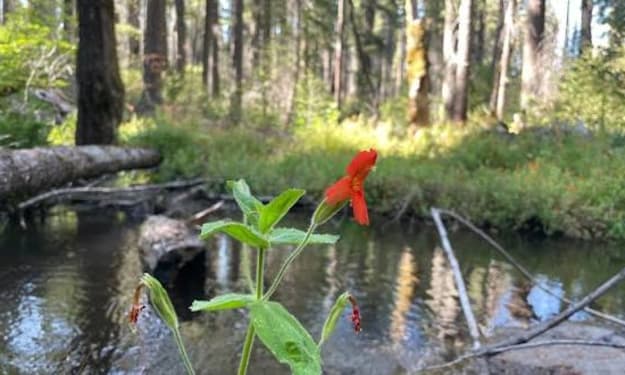
In a remarkable breakthrough for evolutionary biology, researchers studying wildflower populations in California have documented one of the clearest cases yet of rapid genetic evolution occurring in nature. The findings, centered on the bright red scarlet monkeyflower (Mimulus cardinalis), reveal how some plant populations were able to adapt and recover following the region’s most severe drought in over a millennium — providing tangible evidence of an evolutionary process known as evolutionary rescue. The scarlet monkeyflower, a wildflower native to moist areas along streams and springs in California, has long been familiar to botanists and hikers alike for its vivid blooms and distinctive habitat. However, during the early 2010s, California experienced an unprecedented megadrought that lasted several years, killing hundreds of millions of trees and dramatically altering the ecological landscape. While many plant species suffered catastrophic declines, some populations of Mimulus cardinalis showed a surprising resilience. Scientists from multiple institutions undertook a long‑term study to understand how this wildflower weathered such extreme conditions. Over eight years, researchers tracked 55 populations of the monkeyflower across its natural range, closely monitoring their numbers and health. They also conducted whole‑genome sequencing to observe genetic changes over time, looking for evidence that natural selection had acted on specific traits. The results were illuminating. At sites where populations had nearly collapsed — with numbers dropping by as much as 90% — genetic analysis revealed consistent shifts in allele frequencies across the genome. These shifts were not random; they were associated with traits that likely enhanced drought tolerance, enabling some individuals to survive and reproduce where others perished. As these “advantaged” genotypes became more common, the population as a whole began to recover, a hallmark of what biologists call evolutionary rescue. Evolutionary rescue occurs when the genetic variation present within a population allows it to adapt fast enough to avoid extinction under sudden environmental stress. While theoretical models have long predicted such processes, direct evidence in the wild—especially involving plants—has been limited. This study is among the first to document genomic changes in natural plant populations that are clearly linked to a major environmental crisis. For decades, evolutionary biologists have debated how quickly natural selection can operate in real‑world scenarios. Classic case studies like Darwin’s finches in the Galápagos have demonstrated adaptive changes in beak shape over a few generations. But plant studies have often lagged behind, in part because many species have long lifecycles or reproduce clonally, making rapid evolution harder to detect. The California wildflower case breaks new ground by combining long‑term fieldwork with cutting‑edge genomic analysis. Researchers noted that the recovery of the monkeyflower populations did not happen overnight — it took roughly two to three growing seasons for numbers to rebound significantly. Yet in evolutionary terms, this pace is considered rapid. The drought likely imposed intense selective pressure, filtering out less drought‑tolerant genotypes and leaving behind a smaller cohort better suited to the harsh conditions. As these were the individuals contributing more seeds to the next generation, their genetic traits spread through the population. The implications of this research extend beyond wildflowers. As climate change accelerates and extreme weather events become more frequent, scientists are increasingly interested in how species will respond — whether through behavioral changes, migration, or evolutionary adaptation. Cases like Mimulus cardinalis suggest that some species may harbor the genetic diversity necessary to adapt swiftly when environments change dramatically. However, not all species will be so fortunate, and the mechanisms of evolutionary rescue are still not fully understood. “This is one of the clearest cases we've seen where a wild plant species shows genomic evidence of adapting to extreme environmental stress,” said one of the study’s lead authors. “It gives us hope that under certain conditions, natural selection can work fast enough to help populations persist — but it also raises many questions about the limits of such adaptation.” The study’s methods also signal a new era in ecological research. By combining consistent field monitoring with high‑resolution genetic data, scientists can now track evolution as it happens rather than inferring processes from fossils or distant historical records. This “real‑time” view of evolution may become vital for conservation efforts, helping biologists identify which populations are most at risk and which may have the inherent capacity to adapt. For conservationists, the findings underscore both the resilience and vulnerability of natural ecosystems. While some populations like the scarlet monkeyflower demonstrate extraordinary adaptive potential, others with limited genetic diversity may face a greater threat of decline or extinction as climates shift. Understanding the genomic underpinnings of adaptation could therefore inform strategies to protect biodiversity in a warming world. As research progresses, scientists hope to explore similar evolutionary dynamics in other species and regions. The California wildflower study stands as a testament to the power of modern genomics and long‑term ecological research — and a reminder that evolution, far from being a slow, imperceptible force, can sometimes unfold before our eyes.
By Fiaz Ahmed 3 days ago in Longevity



Comments
There are no comments for this story
Be the first to respond and start the conversation.