
What Happens to Your Body When You Sleep Less Than 6 Hours a Night?
The dark truth behind the sleep crisis and how to reset your cycle.
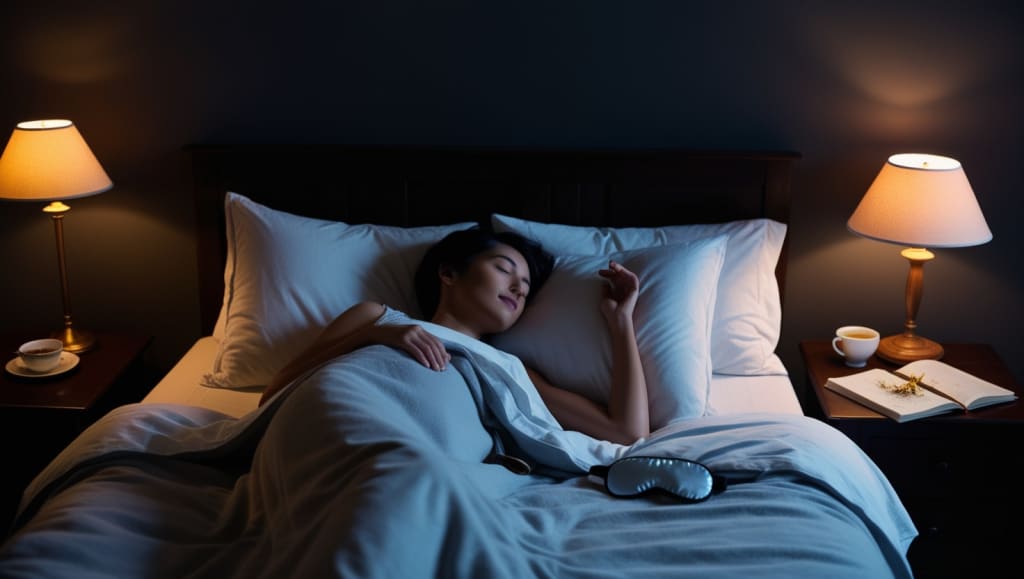
We exist in a society that often praises constant activity. The saying goes, “You can sleep when you’re dead.” However, what if sacrificing sleep is actually leading us to that end more quickly than we realize ?
For many years, I was under the impression that I could outsmart the need for sleep. I would binge-watch shows on Netflix, scroll endlessly through my phone, or work until my vision became blurry, convincing myself that six hours of rest was sufficient. Yet, while this was happening, my health was deteriorating. It turns out, I was not the only one facing this issue.
Countless individuals around the world find themselves in a sleep crisis, getting fewer than the recommended 7 to 9 hours each night . Whether it’s due to demanding careers, anxiety, parenting responsibilities, or societal expectations, sleep often becomes the first thing we give up. However, both scientific research and personal experiences indicate that this choice carries severe consequences.
Now, let’s explore what occurs in your body and mind when you consistently sleep for less than six hours a night—and discuss ways to address
😴 Sleep Deprivation: More Than Just Feeling Tired
You may believe that not getting enough sleep only leaves you feeling tired. However, the truth is that your whole body is affected in various ways:
1. Your mental processes get slower. Your memory worsens, your ability to focus suffers, and your response time lengthens. Not getting enough sleep over time is linked with a higher chance of dementia and Alzheimer's disease. The cause is the build-up of brain garbage like beta amyloid plaques, usually removed during deep sleep. It's like forgetting every night to empty the garbage from your brain, according to sleep expert Dr. Matthew Walker.
2. Affect of your attitude and mental state Irritability, anxiety, and sadness are usually worsened by a lack of sleep. Controlling your feelings might be difficult since little annoyances may seem overwhelming and your will to act fades.
3. Your hormone levels are out of whack. Cortisol levels—the hormone connected with stress—rise very greatly. Leptin, the hormone indicating we are full, falls while ghrelin, the hunger hormone, rises at the same time.
4. Your immune system becomes less efficient as your body tends to store additional fat and you grow to want more carbs and sugar. Lack of sleep impairs your body's ability to fight against viral infections even one night.
5. Lack of Sleep Affects Your Heart and Metabolism You are nearly four times more likely to catch a cold than someone who sleeps for seven or more hours if you get less than six hours of sleep every night. Obesity, Type 2 diabetes, and heart disease have all been connected to chronic sleep deficit. Furthermore increasing your blood pressure and insulin resistance could result from it.
And here's the main idea—you cannot simply make up on missed sleep on weekends. Prolonged sleep deprivation has long-run effects, which is the truth about sleep debt.
🧠 “I Sleep Less, But I Function Fine”—Really?
You might say, “But I’ve been sleeping five hours for years, and I’m doing just fine!”
Here’s the tricky part: your body adapts to being tired. It normalizes the fog, sluggishness, and irritability—until you can’t even tell what rested feels like anymore. Studies show that after just a few nights of sleep restriction, people’s performance dropped dramatically—but they rated themselves as doing just fine.
It’s not just about how you feel—it’s about what your body is quietly enduring behind the scenes.
🌙 The Vicious Cycle: Can’t Sleep → Sleep Less → Stress → Can’t Sleep
Sleep deprivation often creates a feedback loop:
- Stress or tech overstimulation keeps you awake
- You sleep less → Your cortisol rises
- Cortisol makes you anxious → Anxiety delays sleep again
Breaking this cycle is key—and it starts with creating habits that prioritize sleep as essential, not optional.
🔁 How to Reset Your Sleep Cycle in 7 Realistic Steps
Set a Sleep Alarm (Not Just a Wake-Up Alarm)
→ Get a reminder 30–45 minutes before bed to wind down.
Keep a Consistent Sleep Schedule—even on Weekends
→ Yes, even on Saturday. Your body craves routine.
Limit Caffeine After 2 PM
→ It can linger in your system for 6–8 hours and delay melatonin production.
Power Down Screens 1 Hour Before Bed
→ Blue light from phones and TVs delays your internal clock. Try reading or journaling instead.
Keep Your Bedroom Cool, Dark, and Quiet
→ Ideal temperature? Around 65°F (18°C). Use blackout curtains or white noise machines if needed.
Try the 4-7-8 Breathing Technique
→ Inhale for 4, hold for 7, exhale for 8. It calms your nervous system and prepares you for sleep.
Skip the Nightcap
→ Alcohol may knock you out faster, but it fragments your sleep cycles—especially REM sleep.
🌟 The Payoff of Rested Living
After I started sleeping 7 to 8 hours each night, not only did I feel an improvement, but I also became a better version of myself. My ability to focus sharpened, my emotions became more balanced, and I made healthier food selections. My workouts showed great progress, and even my skin improved. It wasn’t due to luck; it stemmed from biological processes.
Sleep doesn't make you unproductive; it actually gives you strength.
💬 Final Thoughts
In a society that values constant activity, resting can seem like something to feel guilty about. However, the reality is that sleeping less than 6 hours nightly doesn't earn you respect; instead, it quietly damages your health, vitality, and happiness.
So if you’re running on empty, consider this your call to action: More coffee isn’t the answer; what you really need is more sleep.
Tonight, switch off your phone, lower the lights, and take deep breaths. Your body—and the you of tomorrow—will appreciate it.
About the Creator
Keep reading
More stories from Shahjahan Kabir Khan and writers in Longevity and other communities.
“When Pain Never Comes: Living in the Untouchable World of Congenital Insensitivity to Pain”
The Little Girl Who Didn’t Cry When Ashlyn Blocker, aged three, placed her small hand on a hot iron, she did not cry. Instead of screams, it was the odor of her burnt skin that caught her mother's attention. Soon after, doctors explained this puzzling situation to the family: it was called Congenital Insensitivity to Pain (CIP), a rare neurological condition. Fewer than one in a million individuals are born unable to feel pain. Although this might seem like a gift, it soon becomes obvious that pain serves as an essential warning system for our safety.
By Shahjahan Kabir Khan9 months ago in Longevity
Herbal Tea: Natural Drink for Relaxation and Better Health
Introduction: Herbal tea is a natural beverage made from dried herbs, flowers, fruits, or spices. Unlike traditional teas such as black or green tea, herbal tea usually does not come from the Camellia sinensis plant.
By Health Tips3 days ago in Longevity
Why Your Brain Feels Foggy During the Day
Why Your Brain Feels Foggy? Have you ever sat in class or tried to study, only to realize that your brain just isn’t cooperating? You read the same sentence three times, struggle to focus, and feel mentally drained even though the day has barely started. Many students experience this feeling, often described as “brain fog.”
By Being Inquisitive6 days ago in Longevity


Comments
There are no comments for this story
Be the first to respond and start the conversation.