
What 1 Minute of Standing on One Leg Can Reveal About Your Lifespan
Doctors now use this strange balance test to predict long-term health — try it yourself today

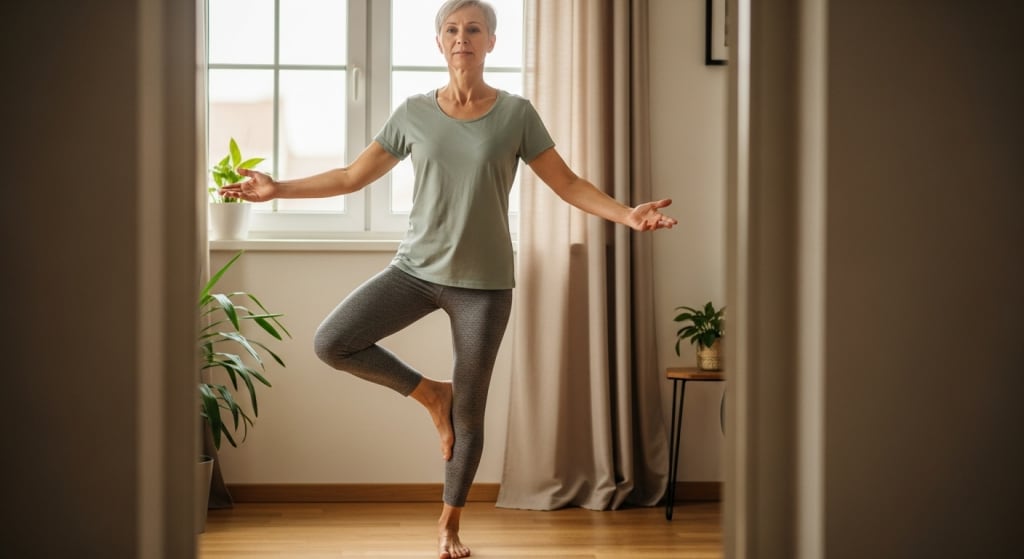
Balance is one of those quiet heroes your body carries around, often unnoticed until it falters. It holds the key to so much more than just not falling over. When you stand on one leg for a full minute, you’re not just testing your steadiness — you’re tapping into a powerful signal that reflects your overall health, strength, and even lifespan. This simple act connects muscles, nerves, brain, and heart in a way that doctors are now using to spot who might live longer and who could be at risk of serious health problems.
Holding one leg up requires a surprising amount of strength and coordination. Every muscle in your legs, your core, and your back has to work together seamlessly. Your brain sends constant signals, adjusting tiny movements to keep you upright. Your inner ear balances fluid levels to help your body sense its position in space. When everything is firing right, standing still is easy. When these systems slip, balance suffers — and with it, your risk of falls, injuries, and health decline rises. A large study from the British Medical Journal found that people who could not hold this position for at least 10 seconds had a higher chance of dying sooner compared to those who managed longer times. That’s a serious signal worth paying attention to.
But why does balance tie into lifespan? It all comes down to how interconnected your body’s systems really are. Poor balance often means weak muscles or a sluggish nervous system. It may reveal early signs of conditions like heart disease or neurological decline before symptoms become obvious. Your heart and circulation play a big role here too. Strong blood flow supports muscle function and brain activity — both essential for staying steady. When blood flow is compromised, balance gets shaky, and the body’s overall resilience drops.
Trying the test yourself is eye-opening. Find a safe corner or a sturdy surface nearby. Stand on one leg and time how long you can keep from touching down or grabbing support. If you’re steady for 30 seconds, you’re in good shape. Reaching the full minute is a sign of excellent health and coordination. Struggling to hold even 10 seconds means your body is sending a message. That message is simple — it’s time to take action.
Improving balance isn’t complicated or time-consuming. Everyday moves like yoga poses, tai chi flows, or just standing on one leg while brushing your teeth build muscle strength and sharpen brain function. Even adding small challenges like closing your eyes or standing on a soft surface helps deepen body awareness. These habits lower your risk of falls, which are a leading cause of injury, especially as people age. They also boost confidence and independence, which are priceless for quality of life.
Balance training is also a powerful tool for brain health. Research shows that balance exercises stimulate the areas of the brain that control focus and coordination. This can help slow cognitive decline and improve mental clarity. So every time you hold yourself steady, you’re actually exercising your mind as well as your body.
Another important benefit comes from improved heart health. Since your muscles and brain rely on blood flow, keeping your cardiovascular system in top shape supports your ability to balance. Studies link poor balance to higher rates of heart disease and stroke, making this test an early warning system that anyone can use at home.
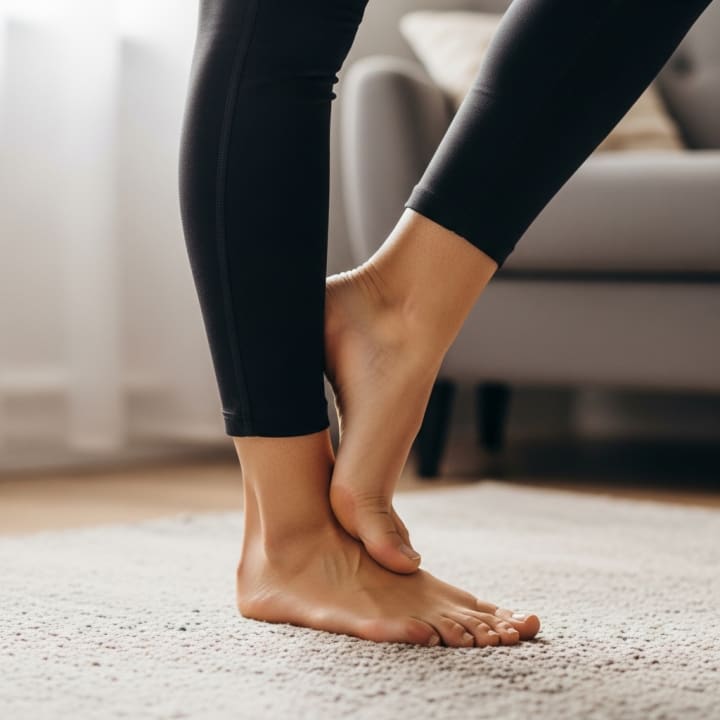
From my own experience, starting balance exercises felt like a small step with huge payoff. I noticed my walking felt more confident, my posture improved, and I had more energy throughout the day. It felt like my whole body was pulling together better — stronger muscles, sharper mind, and a heart that seemed more alive. Balance is really the hidden foundation beneath all of this.
Doctors and fitness experts are waking up to the value of this test. It’s simple, fast, and requires zero equipment — just your body. The truth is that many standard health checks miss what balance can reveal. A quick one-legged stand could catch early problems before they turn serious, giving you time to improve and extend your life.
Try to add balance training into your daily routine. Stand on one leg while waiting for your coffee to brew. Challenge yourself with a minute each day and see how your time improves. Use it as a quick self-check to see how your body is doing. This simple practice could become a game changer for your health, helping you live stronger and longer.
Balance connects every part of you — muscles, brain, heart, nerves — in ways that matter deeply. Honoring it means honoring your whole body and mind. A minute on one leg is more than just a test. It’s a chance to listen closely and act on what your body needs. Your future self will thank you for it.
About the Creator
Ojo
🔍 I explore anything that matters—because the best discoveries don’t fit into a box...
Day 4 of Quitting
If this is how sobriety feels, maybe it’s better to go through life a little buzzed… this, along with other hits like, I want to kill myself, I wish I was dead, and I’m going to throw myself off a bridge have been the only thoughts on rotation these past few days. I promise myself that if, in a month, I still feel like this (‘this’ meaning despondent, full of rage, and simultaneously numb) I can go back to smoking. Until mid-February though? Nicotine is off the table.
By sleepy drafts11 days ago in Longevity
What You See Is Not a Ship: At 385 Metres Long, Havfarm Is the World’s Largest Offshore Salmon Farm
At first glance, Havfarm looks like a massive industrial ship drifting across the open sea. Stretching an astonishing 385 metres in length, it rivals some of the world’s largest oil tankers and aircraft carriers. But Havfarm is not a ship at all. It is the world’s largest offshore salmon farm, a floating giant designed to transform the future of global aquaculture.
By Fiaz Ahmed Brohi7 days ago in Longevity




Comments (1)
I had no idea standing on one leg was such a big deal. Gonna try this test. It sounds like it could tell me a lot about my health.