
Visible Light vs UV-C: What I Learned While Trying to Clean the Air in Real Rooms
How two very different light technologies taught me what truly matters in a shared space.


I didn’t start out caring about air disinfection or lighting wavelengths. Honestly, I didn’t even know what UV-C really was until a few years ago. All I knew was that the rooms I was working in—gyms, classrooms, meeting spaces—always seemed to feel “heavier” than they should. You know that sensation when you walk into a room and something feels off? Not dirty, not smelly, just… dense.
It bothered me. And once something bothers you long enough, you start paying attention.
The first time I saw a UV-C lamp running, the room was empty. It had to be. The blue glow looked almost futuristic, like something from a sci-fi movie that promises to sterilize a spaceship. And for a moment, I thought: This must be the future. This must be how we clean the air now.
But then I learned what most people eventually learn about UV-C: it works, but only when no one is around. I remember the technician telling me, “You don’t want to be in here when it’s on.” I laughed at first.
He didn’t laugh back.
That stuck with me. A technology that can only help a room after everyone leaves? It felt backwards. What about the hours when the room is full of people breathing, sweating, moving, talking? Aren’t those the moments when you want the air to stay clean?
So I kept looking, mostly out of curiosity at first. I started noticing things I had ignored before—the way certain rooms felt stuffier in the afternoon, how humidity changed the smell of equipment, how some spaces stayed comfortable longer than others even with the same number of people inside. Small details, but once you see them, you can’t unsee them.
A few months later, I came across visible-light disinfection. The idea seemed almost too gentle to work—light that looks normal but slowly reduces microbes on surfaces over time. No glow, no warnings, no shutting doors until it’s safe to return. It didn’t feel dramatic enough to be “real technology.” But I was curious enough to try it.
The surprise came slowly.
I installed it in a gym stretching area, a spot where mats somehow always carried a tired, lingering smell by late afternoon. I didn’t tell anyone. I just waited. About ten days later, one of the trainers mentioned that the room “felt fresher.” Not the kind of fresh you get from cleaning chemicals, but something lighter. I felt it too, even though I couldn’t point to a single moment when things had changed.
That was the difference: UV-C made a room feel sanitized; visible light made a room feel maintained.
The more spaces I tested, the more I realized how much continuous care matters. A room doesn’t become “dirty” in one dramatic moment. It becomes dirty in small, invisible ways—every breath, every touch, every drop of humidity in the air. A technology that works only when no one’s around felt like trying to mop the floor only after everyone has gone home. Helpful, yes. But not enough.
Visible light wasn’t fast. It wasn’t flashy. It wasn’t something you could brag about. But it stayed on. It stayed gentle. It stayed part of the room while people lived in it.
I learned that the cleanest spaces aren’t the ones that get “shocked” back to cleanliness. They’re the ones that never drift too far from it in the first place.
And honestly, the more I paid attention, the more I saw how this idea shows up everywhere. The things that quietly support us—daily habits, soft lighting, steady airflow, small routines—often matter more than the big dramatic interventions we wait for. A classroom doesn’t suddenly become unhealthy; it becomes unhealthy slowly. A gym doesn’t suddenly smell bad; it happens a little bit at a time.
UV-C still has a place—there are moments when you need power and precision and intensity. But the everyday life of a classroom, a gym, an office, a waiting room? Those spaces need something that can stand beside people, not wait for them to leave.
In a strange way, visible light reminds me that sometimes the best solutions aren’t the dramatic ones. They’re the ones that work quietly, steadily, without demanding attention.
The kind of solutions that feel less like technology…
and more like care.
About the Creator
illumipure
Sharing insights on indoor air quality, sustainable lighting, and healthier built environments. Here to help people understand the science behind cleaner indoor spaces.
Keep reading
More stories from illumipure and writers in Longevity and other communities.
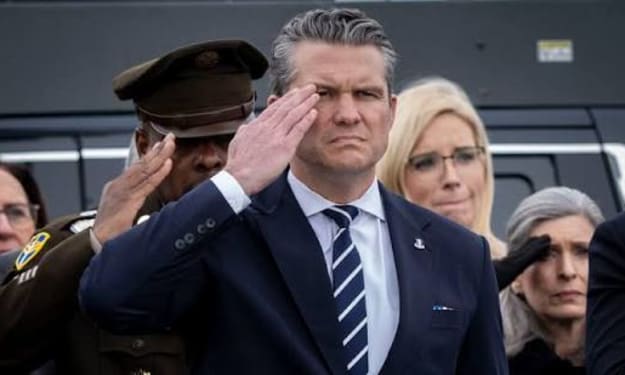
How Hegseth Came to See Moral Purpose in War as Weakness
An analytical exploration of the evolution of Pete Hegseth’s war ethos and the implications for U.S. policy Over the past decade, Pete Hegseth has undergone a dramatic transformation from conservative media personality to one of the most polarizing figures in American military policy. Today serving as the United States Secretary of Defense under President Donald Trump, Hegseth’s public pronouncements and strategic decisions suggest a worldview in which traditional moral frameworks surrounding war are increasingly dismissed as liabilities. What began as rhetorical emphasis on strength and combat readiness has evolved into a broader ideological stance that treats moral purpose in war—moral clarity, restraint, and adherence to legal norms—as signs of weakness rather than virtue. Hegseth’s rise to prominence began long before his appointment to the Pentagon. As a Fox News host and conservative commentator, he championed aggressive U.S. military action and frequently criticized what he saw as excessive political correctness. In his 2020 book American Crusade: Our Fight to Stay Free, he framed global conflicts in starkly moralistic terms, calling for a broad “crusade” against forces he characterized as hostile to Western civilization. This early rhetoric laid the groundwork for his later rejection of moral constraints on warfare, equating moral caution with lack of resolve. Once in office, Hegseth’s framing of war shifted further. In public briefings on the current U.S.-Iran conflict—dubbed Operation Epic Fury—he regularly emphasizes military dominance and operational success while refraining from articulating broader humanitarian or moral objectives. “We didn’t start this war but … we’re finishing it,” he told reporters, focusing on strategic outcomes like neutralizing Iran’s missiles and naval capability rather than advancing a clear moral purpose or vision for peace. Critics argue this shift reflects a deeper intellectual and ethical stance: that moral qualifiers in war make victory harder to achieve. Hegseth has disparaged established rules of engagement and what he calls “politically correct wars,” suggesting that adherence to international legal norms or concerns about civilian casualties constrains effective action. In comments widely circulated on social media, he reportedly scoffed at traditional rules designed to minimize harm, embracing instead a version of warfighting that prioritizes lethality over deliberation. In broader public discourse, commentators observe that Hegseth’s approach redefines moral purpose—not as a guiding principle that justifies violence only under strict conditions, but as a hindrance that dilutes the effectiveness of military force. This echoes a critical academic debate about the role of moral clarity in war: traditionally seen as essential to maintaining legitimacy and support, moral purpose now, in Hegseth’s framing, appears subordinate to the singular goal of “winning.” Analysts note that this perspective aligns with a broader trend in some conservative circles that equates restraint with weakness. Under this view, moral purpose—whether rooted in international law, humanitarian concern, or the protection of noncombatants—is often portrayed as undermining national strength and strategic advantage. Instead, proponents argue, moral restraint handicaps military operations by imposing constraints that adversaries do not accept or follow. Hegseth’s critics, however, warn that this logic risks eroding longstanding norms designed to limit suffering and uphold a rules‑based international order. The implications of this philosophical shift are substantial. On the battlefield, dismissing moral purpose can lead to decisions that escalate violence and damage alliances. Outside war zones, it raises questions about the U.S. commitment to global norms and its moral leadership. When moral restraint is reframed not as strategic prudence but as “weakness,” the boundaries that separate responsible military action from unchecked aggression become blurred. This evolution in Hegseth’s rhetoric and policy underscores a broader tension in American strategic culture: the balance between strength and ethics. While military potency is undeniably central to national security, history demonstrates that moral purpose in war—rules of engagement, protection of civilians, legal accountability—serves essential functions, both practical and normative. When war is waged without meaningful moral purpose, critics warn, it may achieve tactical objectives at the cost of long‑term strategic stability and international legitimacy. In redefining moral purpose as weakness, Hegseth embodies a school of thought that prizes power over principle. Whether this approach will prove effective—or whether it will deepen divisions and erode foundational norms of conduct in warfare—remains a pivotal question in U.S. defense policy.
By Fiaz Ahmed about 3 hours ago in Longevity



Comments
There are no comments for this story
Be the first to respond and start the conversation.