
United States Home Infusion Therapy Market Trends & Summary
How Technology, Chronic Disease Burden, and Patient-Centered Care Are Reshaping America’s Home Healthcare Landscape

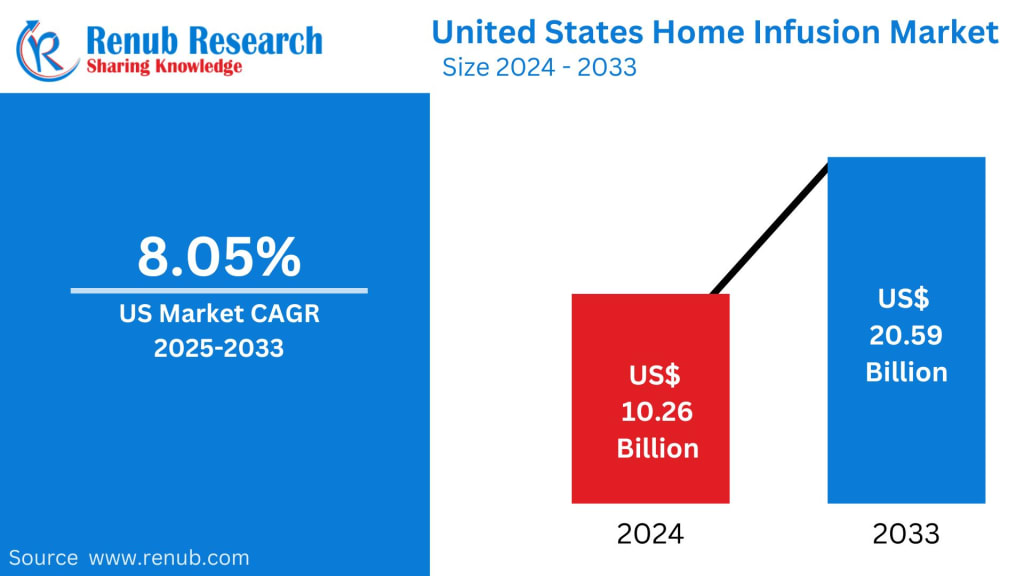
The United States home infusion therapy market is experiencing a powerful transformation as patient needs evolve and healthcare delivery shifts toward more personalized, flexible, and cost-efficient models. According to Renub Research, the U.S. market is projected to reach US$ 20.59 billion by 2033, rising from US$ 10.26 billion in 2024, with a significant CAGR of 8.05% from 2025 to 2033. This rapid expansion is driven by the increasing burden of chronic diseases, continuous innovation in infusion technologies, and a strong national push for home-based healthcare options.
Home infusion therapy allows patients to receive intravenous (IV) and injectable medications at home—ranging from anti-infectives and chemotherapy to nutrition therapy and specialty pharmaceuticals. As healthcare systems emphasize value-based care and patient comfort, home infusion therapy is becoming integral to the U.S. medical ecosystem.
A Shifting Healthcare Model: The Outlook of U.S. Home Infusion Therapy
Home infusion therapy has grown far beyond its early focus on IV antibiotics. Today, it supports a broad spectrum of medical conditions including cancer, autoimmune disorders, gastrointestinal diseases, severe infections, and chronic endocrine conditions. With professional oversight by nurses, pharmacists, and clinicians, home infusion therapy ensures safe, regulated administration while dramatically reducing the need for hospital stays.
Beyond convenience, the model delivers quantifiable benefits:
Reduced risk of hospital-acquired infections
Lower treatment costs compared to inpatient care
Higher rates of therapy adherence and satisfaction
Greater independence for elderly and chronically ill patients
These advantages align strongly with the U.S. healthcare system’s ongoing move toward decentralized, patient-first care—making home infusion therapy not only relevant but essential.
Market Growth Drivers
1. Rising Prevalence of Chronic Diseases
The United States faces a continuously growing chronic disease burden. Conditions such as cancer, diabetes, cardiovascular disease, and autoimmune disorders increasingly require long-term infusion treatments. Home infusion therapy provides a more practical, patient-friendly alternative to institutional care.
Demographic trends underscore the urgency:
The U.S. Census Bureau projects the population aged 65+ will nearly double to 95 million by 2060, constituting 23% of the nation’s population.
The CDC reports that 70% of individuals receiving home care are 65 or older, highlighting the direct link between aging and infusion needs.
Medicare enrollment is projected to surge past 80 million by 2030, up from 54 million in 2015.
As chronic conditions rise in parallel with the aging population, the demand for convenient, long-term home infusion services is expected to accelerate significantly.
2. Technological Breakthroughs in Infusion Devices
Technology is one of the most powerful catalysts of market growth. Cutting-edge advancements—especially in smart pumps, wearable infusion devices, wireless monitoring, and enhanced dosing accuracy—have elevated the safety and efficiency of home-based treatment.
The rise of portable infusion pumps, equipped with real-time data transmission and automated safety alerts, has fundamentally changed how patients manage their therapies. These innovations empower patients while enabling clinicians to monitor adherence and intervene whenever necessary.
A recent example illustrates the momentum in this space:
In November 2023, Omnix Medical announced FDA approval for its Phase II trial of OMN6, a novel anti-infective drug delivered via advanced infusion mechanisms. Such innovations strengthen confidence in home-based care and support overall market expansion.
3. Growing Emphasis on Patient-Centered Care
Healthcare in the United States is undergoing a cultural transformation. Providers are prioritizing treatment approaches that enhance comfort, long-term well-being, and patient agency. Home infusion therapy embodies all these goals.
A 2023 analysis by BioMatrix Specialty Pharmacy revealed that patients receiving home infusion therapy experience:
Lower infection risks
Better mental health outcomes
Stronger adherence to therapies
Overall lower treatment costs compared to facility-based options
These outcomes reinforce the value of home infusion as both a clinical and economic solution. As more patients prefer to remain in familiar surroundings during treatment, satisfaction and adoption continue rising.
Key Market Challenges
1. High Costs of Infusion Equipment and Therapies
While more affordable than hospital stays, home infusion therapy has significant upfront expenses. Infusion pumps, consumables, drug formulations, and sterile supplies represent substantial investment—not always fully covered by insurance. Complex reimbursement frameworks create additional barriers, delaying or limiting access for eligible patients.
2. Limited Availability of Skilled Healthcare Professionals
The U.S. healthcare labor shortage has reached critical levels. Nurses, infusion pharmacists, and home health specialists are in short supply, especially in rural and underserved regions. This restricts the ability of providers to scale, affecting both service quality and patient access.
As home healthcare demand intensifies, addressing workforce gaps will be essential for market stability and growth.
Market Breakdown by Key Segments
United States Anti-Infective Home Infusion Therapy Market
Anti-infectives represent one of the strongest-growing categories. Patients with long-term infections—especially sepsis, cellulitis, osteomyelitis, and severe bacterial conditions—benefit significantly from home-based antibiotic infusions. This reduces hospital burden while improving recovery comfort.
As infection rates continue rising, this segment will remain a major contributor to overall market revenue.
United States Chemotherapy Home Infusion Therapy Market
As cancer cases increase nationwide, more patients are turning to home-based chemotherapy. Portable infusion devices and clinician-monitored systems now allow select cancer patients to safely undergo treatment outside a hospital.
Home chemotherapy improves emotional well-being, minimizes hospital exposure, and offers continuity of life—making it one of the fastest-growing segments in U.S. infusion therapy.
United States Infusion Pumps Market
Infusion pumps remain the backbone of home infusion therapy. The U.S. market is witnessing rapid innovation, including smart pumps with wireless connectivity, automated alerts, and remote supervision.
In January 2024, Infuzamed launched a next-generation wearable pump with real-time monitoring capabilities. Such innovations directly support the expansion of home-based treatments and contribute robustly to market revenue.
United States Intravenous Sets Market
IV sets—including tubing, connectors, and administration kits—are in growing demand as more patients shift toward home-based treatment. These essential components ensure safe and efficient medication delivery, supporting chronic care, post-surgery recovery, and hydration therapy.
The rising need for scalable home health infrastructure makes this segment vital to the market ecosystem.
Regional Market Highlights
California
With one of the largest and most diverse populations in the country, California is a hotspot for home infusion growth. High chronic disease prevalence and strong state-level support for home healthcare are accelerating adoption statewide.
New York
New York’s diverse population—across both dense urban and rural zones—relies heavily on home infusion to reduce hospital congestion. State initiatives focusing on improved access and patient-centered delivery continue to drive market expansion.
Texas
Texas demonstrates powerful growth momentum fueled by its large population, rising chronic disease rates, and need for expanded rural healthcare delivery. State programs aimed at improving healthcare equity further amplify demand.
Florida
Florida’s rapidly aging demographic is the strongest catalyst behind its booming home infusion market. As seniors increasingly prefer home-based care, the state continues to invest in patient-centric, cost-effective medical delivery models.
United States Home Infusion Market Segments
By Application (8 Viewpoints)
Anti-Infective
Endocrinology
Hydration Therapy
Chemotherapy
Enteral Nutrition
Parenteral Nutrition
Specialty Pharmaceuticals
Others
By Product (4 Viewpoints)
Infusion Pumps
Intravenous Sets
IV Cannulas
Needleless Connectors
By States (29 Viewpoints)
Includes:
California, Texas, New York, Florida, Illinois, Pennsylvania, Ohio, Georgia, New Jersey, Washington, North Carolina, Massachusetts, Virginia, Michigan, Maryland, Colorado, Tennessee, Indiana, Arizona, Minnesota, Wisconsin, Missouri, Connecticut, South Carolina, Oregon, Louisiana, Alabama, Kentucky, and Rest of U.S.
Company Analysis (3 Viewpoints Each: Overview, Recent Developments, Revenue)
Baxter International Inc.
Becton Dickinson and Company
Eli Lilly & Company
Fresenius SE & Co. KGaA
ICU Medical Inc.
Option Care Health Inc.
Terumo Corporation
Final Thoughts
The United States home infusion therapy market is in the midst of a transformative expansion—driven by patient-centered care, cutting-edge medical technologies, and the unstoppable rise in chronic diseases. As more Americans seek comfort, control, and cost-effective treatment, home infusion therapy is emerging as a cornerstone of modern healthcare delivery.
Looking ahead to 2033, the market’s projected growth to US$ 20.59 billion underscores not only its economic importance but also its critical role in shaping the future of personalized medicine in America.
Home is becoming the new healthcare frontier—and infusion therapy stands at the forefront of this shift.
About the Creator
Diya Dey
Market Analyst
Day 4 of Quitting
If this is how sobriety feels, maybe it’s better to go through life a little buzzed… this, along with other hits like, I want to kill myself, I wish I was dead, and I’m going to throw myself off a bridge have been the only thoughts on rotation these past few days. I promise myself that if, in a month, I still feel like this (‘this’ meaning despondent, full of rage, and simultaneously numb) I can go back to smoking. Until mid-February though? Nicotine is off the table.
By sleepy drafts5 days ago in Longevity



Comments
There are no comments for this story
Be the first to respond and start the conversation.