
United States Home Healthcare Market Size & Forecast 2025–2033
A Transforming Healthcare Landscape Driven by Aging Demographics, Chronic Disease Burden & Technological Innovation


The United States Home Healthcare Market is entering a transformative decade—one defined by rapid population aging, rising chronic disease prevalence, and revolutionary advancements in remote patient monitoring. According to Renub Research, the market is projected to grow from US$ 115.13 billion in 2024 to US$ 210.25 billion in 2033, demonstrating a robust CAGR of 6.92% during the forecast period (2025–2033).
This surge highlights an evolving healthcare landscape where Americans increasingly prefer receiving high-quality care in the comfort of their homes, supported by cost-effective services, sophisticated technologies, and expanding insurance coverage.
Amid systemic challenges in hospital capacity, workforce limitations, and soaring medical costs, home healthcare has become a cornerstone of modern U.S. healthcare delivery. It is reshaping patient expectations, improving outcomes, and setting new standards for decentralized care.
Understanding Home Healthcare: A Growing Pillar of US Healthcare
Home healthcare refers to a wide spectrum of medical and non-medical services delivered in patients’ homes. These include:
Skilled nursing care
Physical, occupational, and speech therapy
Chronic disease management
Assistance with daily activities such as bathing, dressing, and medication reminders
Advanced care technologies like remote patient monitoring, virtual consultations, and connected devices
As the aging Baby Boomer population seeks comfort, autonomy, and familiarity, home care services have surged in demand. Remote technologies have expanded access for patients in both urban and rural regions, while insurance providers increasingly recognize the cost advantages of at-home care over conventional institutional care.
Today, home healthcare is no longer supplemental—it is essential.
Growth Drivers in the United States Home Healthcare Market
1. Rapidly Aging Population & Rising Chronic Disease Burden
The demographic shift in the United States is one of the most influential growth drivers. Millions of aging adults now require continuous, personalized medical support.
Key statistics include:
The population aged 65+ will grow from 58 million in 2022 to 82 million in 2050.
Their share of the U.S. population will rise from 17% to 23%.
Older adults are more likely to suffer from chronic diseases such as:
Diabetes
Arthritis
COPD
Cardiovascular diseases
Alzheimer’s
Home healthcare provides a comfortable, affordable alternative to hospitals and long-term care facilities. For chronic disease patients, it enables long-term monitoring, preventive care, and regular interventions—all within a familiar environment.
2. Cost-Effectiveness Compared to Institutional Care
The cost gap between institutional care and home care is widening. Home-based services such as wound care, chronic disease management, and rehabilitation can be delivered at a fraction of the cost of inpatient stays.
Cost-related advantages include:
Lower hospital readmission rates
Reduced need for emergency visits
Elimination of transportation and facility fees
Flexible, personalized care packages
Healthcare systems and insurers—including Medicare and Medicaid—strongly support home care to reduce overall expenditure. With U.S. healthcare costs among the highest globally, cost-efficiency is a central growth engine.
3. Technological Advancements: Telehealth, Wearables, AI & Remote Monitoring
The digital transformation of healthcare has deeply influenced home healthcare adoption.
Innovations include:
Telehealth consultations
Remote monitoring devices for vital signs, cardiac activity, glucose levels, and lung function
Wearable devices offering real-time insights into patient behavior and disease progression
AI-driven care planning and alerts
Mobile health apps improving medication adherence and symptom tracking
The FDA’s Home as a Health Care Hub Initiative further validates this shift, focusing on enabling homes to serve as reliable mini-care centers equipped for clinical-level support.
This technological ecosystem boosts patient safety, reduces hospital visits, and enables caregivers to act promptly based on real-time data.
Challenges Hindering Market Growth
Despite impressive expansion, the U.S. home healthcare industry faces notable challenges that need strategic attention.
1. Workforce Shortages and Skill Gaps
The growing demand for home-based care is outpacing the availability of trained professionals, including:
Registered nurses
Home health aides
Therapists
Specialized caregivers
Major issues include:
Burnout due to rising caseloads
High turnover rates
Lack of standardized training for advanced care technologies
Limited career advancement opportunities
Addressing workforce shortages will require investments in education, competitive wages, and career pathways.
2. Complex Regulations & Reimbursement Policies
The regulatory landscape for home healthcare is multifaceted. Providers often struggle with:
State-by-state variations in licensing rules
Documentation and reporting burdens
Medicare and Medicaid reimbursement inconsistencies
Low coverage for certain essential services or advanced technologies
Reimbursement delays affecting financial stability
Smaller agencies are especially vulnerable. Reforms in reimbursement frameworks and operational flexibility will be essential to sustainable growth.
United States Home Healthcare Market Breakdown
Home healthcare in the U.S. comprises three major submarkets: Services, Equipment, and Indication-specific care.
United States Home Healthcare Services Market
Services dominate the U.S. home healthcare market, covering:
Skilled nursing
Physical, occupational, and speech therapy
Personal care assistance
Rehabilitation
Demand continues to rise due to the surge in chronic illnesses and the growing preference for aging in place. Post-surgical recovery, wound care, and neurological rehabilitation are among the most frequently utilized services.
Home-based rehabilitation is increasingly replacing outpatient visits, especially among older adults and patients with mobility constraints.
United States Home Healthcare Equipment Market
The equipment segment includes essential devices that enable at-home medical care:
Blood glucose monitors
Infusion pumps
Respiratory devices
Portable oxygen concentrators
Remote monitoring systems
Mobility aids
Technological innovation—such as smart insulin pumps and AI-driven monitoring tools—is boosting adoption. Insurance coverage for durable medical equipment (DME) has also expanded, making these technologies more accessible.
The COVID-19 pandemic accelerated consumer acceptance of home medical devices, with strong growth expected over the decade.
Indication-Specific Home Healthcare in the U.S.
1. Cancer Home Healthcare Market
Cancer patients benefit significantly from home-based care through:
Pain management
Chemotherapy delivery in controlled conditions
Nutritional support
Psychosocial counseling
Home care minimizes infection risks and reduces stress associated with frequent hospital visits. Oncology-focused homecare is one of the fastest-growing segments.
2. Diabetes & Kidney Disorders Home Healthcare Market
Home-based diabetes management includes:
Blood glucose monitoring
Insulin therapy
Lifestyle and diet counseling
Continuous glucose monitors (CGMs)
For kidney disorders, services include:
Supportive dialysis care
Medication management
Monitoring of fluid levels and vitals
Wearables and portable dialysis machines have transformed chronic disease care at home.
3. Respiratory Disease & COPD Home Healthcare Market
Respiratory illness patients increasingly rely on home-based services such as:
Oxygen therapy
Nebulization
Ventilator support
Pulmonary rehabilitation
COPD continues to be a leading cause of hospital readmissions. Home respiratory services help reduce hospital dependency, improving patient outcomes and lowering costs.
Top State Markets in the U.S. Home Healthcare Landscape
The home healthcare market varies significantly by state. Some of the most influential markets include:
1. California
One of the most advanced markets
High adoption of telehealth and digital monitoring
Diverse population requiring tailored care
Strong presence of major home healthcare agencies and health-tech startups
Cities such as Los Angeles and San Francisco lead innovation and demand.
2. New York
Dense aged population
High prevalence of chronic disease
Extensive network of home healthcare providers
Major demand in NYC due to high hospital costs
Significant Medicaid-driven support
New York’s diverse communities require multilingual and specialized home care services.
3. Washington
Progressive healthcare policies
High usage of telemedicine
Strong focus on patient-centric care
Large elderly population in Seattle and surrounding regions
Washington is emerging as a leader in integrated, technology-enabled home care.
Market Segmentations
By Component
Services
Equipment
By Indication
Neurological & Mental Disorders
Diabetes & Kidney Disorders
Cancer
Respiratory Diseases & COPD
Mobility Disorders
Cardiovascular & Hypertension
Wound Care
Maternal Disorders
Others
By Top States
California, Texas, New York, Florida, Illinois, Pennsylvania, Ohio, Georgia, New Jersey, Washington, North Carolina, Massachusetts, Virginia, Michigan, Maryland, Colorado, Tennessee, Indiana, Arizona, Minnesota, Wisconsin, Missouri, Connecticut, South Carolina, Oregon, Louisiana, Alabama, Kentucky, Rest of the U.S.
Key Companies Covered (with 5 Viewpoints Analysis)
3M Healthcare
Apple Inc.
Arkray, Inc.
B. Braun Melsungen AG
Becton, Dickinson and Company
F. Hoffmann-La Roche AG
Fresenius SE & Co KGaA
Hollister Inc.
Final Thoughts
The United States Home Healthcare Market is on a trajectory of strong, sustained growth—driven by demographic realities, economic imperatives, and breakthrough technologies. As patients demand care that is both personalized and accessible, home healthcare stands out as the most viable solution for the future.
From remote monitoring to advanced medical devices and specialized chronic disease management, home healthcare is redefining the healthcare experience for millions. With policy support, expanded insurance coverage, and continued tech innovation, this market will play an increasingly critical role in the U.S. healthcare ecosystem through 2033 and beyond.
About the Creator
Sushant. Renub Research
I’m Sushanta Halder, Digital Marketing Manager at Renub Research with 15+ years in SEO, content, PPC & lead generation. Passionate about data-driven growth strategies.
Keep reading
More stories from Sushant. Renub Research and writers in Longevity and other communities.
North America Mass Spectrometry Market Size & Forecast 2025–2033
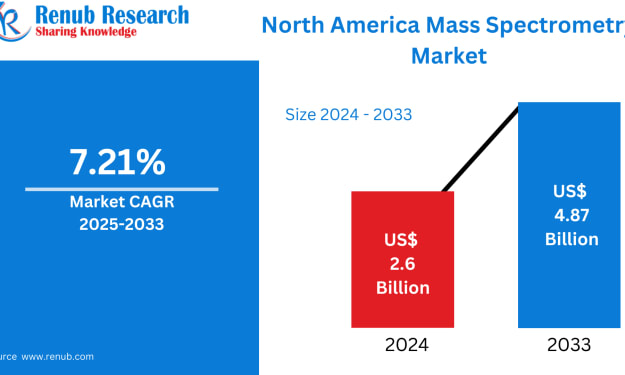
The North America Mass Spectrometry Market is on a powerful upward trajectory, projected to grow from US$ 2.6 Billion in 2024 to US$ 4.87 Billion by 2033, according to Renub Research. This impressive expansion reflects a robust 7.21% CAGR from 2025 to 2033, fueled by pharmaceutical innovation, environmental surveillance, advanced biological research, and the growing need for accurate analytical technologies.
By Sushant. Renub Research2 months ago in Longevity
Day 4 of Quitting
If this is how sobriety feels, maybe it’s better to go through life a little buzzed… this, along with other hits like, I want to kill myself, I wish I was dead, and I’m going to throw myself off a bridge have been the only thoughts on rotation these past few days. I promise myself that if, in a month, I still feel like this (‘this’ meaning despondent, full of rage, and simultaneously numb) I can go back to smoking. Until mid-February though? Nicotine is off the table.
By sleepy drafts5 days ago in Longevity
United States Colon Screening Market Size & Forecast 2025–2033
United States Colon Screening Market Outlook The United States Colon Screening Market is expected to surge considerably from US$ 4.95 billion in 2024 to US$ 6.56 billion by 2033, reflecting a steady compound annual growth rate (CAGR) of 3.18% between 2025 and 2033. This sustained expansion highlights the growing emphasis on preventive healthcare, early disease detection, and public health awareness across the country.
By Aaina Oberoi2 days ago in Longevity


Comments
There are no comments for this story
Be the first to respond and start the conversation.