
United States Colon Screening Market Poised for Strong Growth Through 2033
Rising Awareness, Technological Innovations, and Preventive Healthcare Policies Drive Market Expansion


The United States Colon Screening Market is entering a pivotal phase of expansion, backed by the nation’s growing emphasis on preventive healthcare. As per Renub Research, the market is expected to surge from US$ 4.95 billion in 2024 to US$ 6.56 billion by 2033, growing at a steady CAGR of 3.18% from 2025 to 2033. This growth trajectory is driven by multiple converging factors—rising colorectal cancer incidence, extensive government-backed screening initiatives, and accelerating improvements in diagnostic technologies.
Colon screening is now one of the most important pillars of cancer prevention in the U.S., especially as colorectal cancer continues to rank among the leading causes of cancer-related deaths. With healthcare providers, insurers, and policymakers doubling down on early detection strategies, the nationwide push toward colon screening is reshaping patient behaviors, clinical workflows, and diagnostic innovation.
A Market Transformed: Understanding the U.S. Colon Screening Landscape
Colon screening encompasses a set of diagnostic procedures used to detect early signs of colorectal cancer and other abnormalities in the colon and rectum. These screenings typically include colonoscopy, flexible sigmoidoscopy, and stool-based tests such as FIT, FOBT, and stool DNA testing.
In recent years, the United States has witnessed a significant uptick in colon screening participation rates. This shift is largely attributed to:
Heightened public awareness about the life-saving impact of early detection
Expanded insurance coverage, making routine colon screening more accessible
Strong clinical guidelines, such as the U.S. Preventive Services Task Force (USPSTF) recommendation for adults aged 45–75 to undergo regular screening
Increasingly user-friendly technologies, enabling convenient, non-invasive testing at home
Public health campaigns, particularly those driven by the American Cancer Society and the “80% in Every Community” initiative, are playing an important role in mainstreaming the importance of timely colon screening.
As early detection continues to prevent thousands of late-stage diagnoses each year, the market is experiencing sustained expansion supported by both public and private healthcare systems.
Market Growth Drivers: What’s Fueling the Demand?
1. Rising Prevalence of Colorectal Cancer
Colorectal cancer remains the second-leading cause of cancer-related deaths in the U.S., making early screening a national imperative. The growing incidence of the disease—especially among younger adults—has amplified the urgency for frequent and reliable screening.
Between 2018 and 2022, data suggests the distribution of diagnoses occurred as follows:
~33% diagnosed at a localized stage
~40% detected at a regional stage
~20% identified at a distant metastasis stage
Because survival rates decline drastically as the cancer progresses, the need for early detection is stronger than ever. This dynamic directly supports rising adoption of both invasive and non-invasive screening technologies.
Public campaigns and clinical guidelines recommending screening from age 45 onward have significantly boosted patient participation. With cases increasing among adults under 50, the demand curve continues to shift upward.
2. Favorable Government and Insurance Policies
A major catalyst for the market is broad insurance coverage for colorectal cancer screening. Medicare, Medicaid, and most private insurers now cover essential procedures including:
Colonoscopy
FIT and FOBT
Stool DNA testing
Follow-up diagnostic colonoscopy after a positive non-invasive test
This has dramatically reduced financial barriers for millions of Americans.
In June 2024, the USPSTF strengthened its recommendation for CRC screening among adults aged 45 to 75, reinforcing policy momentum and ensuring alignment between insurers and preventive healthcare frameworks.
Additionally, the CDC’s national initiatives continue to expand community access, particularly in underserved regions. The Community Guide provides evidence-based interventions that help clinics and health systems increase screening rates, ensuring that cost, location, and awareness gaps are steadily minimized.
3. Breakthroughs in Screening Technology
Innovation remains at the heart of the U.S. colon screening market. Groundbreaking diagnostic technologies now offer unprecedented accuracy and patient comfort.
A landmark milestone occurred in March 2025, when Exact Sciences Corp introduced Cologuard Plus™, a next-generation non-invasive stool DNA test offering:
95% colorectal cancer detection sensitivity
94% specificity
40% reduction in unnecessary colonoscopies compared to the earlier version
Additionally, advancements include:
High-definition colonoscopes enabling sharper visualization
AI-assisted image interpretation, improving polyp detection rates
Minimally invasive screening options, broadening patient acceptance
Home-based test kits that increase accessibility
The convergence of AI, digital health tools, and advanced imaging systems continues to redefine screening outcomes, making procedures both more efficient and more comfortable.
Market Challenges: Barriers Slowing Down Progress
Despite progress, certain structural and behavioral challenges obstruct the full potential of the U.S. colon screening market.
1. Patient Aversion and Low Adherence Rates
A significant portion of patients remain hesitant due to:
Fear of invasive procedures
Discomfort with bowel preparation
Misconceptions about colonoscopy risks
Cultural stigma surrounding colon health conversations
This aversion is particularly common among younger adults, who historically consider colon cancer a “later-life disease.”
Public health experts argue that improved patient education, expanded non-invasive alternatives, and culturally sensitive communication approaches are essential to breaking this barrier.
2. Geographic and Socioeconomic Disparities
Access disparities remain a major concern. Rural areas often lack enough colonoscopy facilities, while underserved populations face challenges including:
Lack of transportation
Limited access to specialists
Lower insurance coverage
Language and cultural barriers
Minority populations—including African American, Hispanic, Native American, and low-income groups—continue to have disproportionately lower screening rates.
Unless these disparities are addressed through targeted public health strategies and resource allocation, nationwide progress will remain uneven.
Key Market Segments
By Screening Type
Stool-Based Tests (FIT, FOBT, stool DNA)
Colonoscopy
Others (CT colonography, flexible sigmoidoscopy)
By End Use
Hospitals & Clinics
Clinical Laboratories
Diagnostic Imaging Centers
Others
State-by-State Market Insights
California: A National Leader in Colon Screening Adoption
California remains one of the most robust markets due to:
Strong insurance ecosystem
High public health spending
Multilingual community outreach programs
Advanced diagnostic centers in metropolitan hubs like Los Angeles and San Francisco
The state’s diverse population and its widespread preventive healthcare culture make it a significant driver of nationwide screening adoption.
New York: Urban Strength with Regional Gaps
New York’s dense healthcare network—especially in NYC—supports high screening rates. Major hospitals and research institutions lead technological adoption.
However, disparities persist:
Low-income communities in the outer boroughs
Rural upstate regions with limited access
Improved public-private collaborations aim to close these gaps through mobile screening units and subsidized community programs.
Washington: A Rising Innovator
Washington state is rapidly strengthening its position through:
Policy-driven preventive care initiatives
State-supported community awareness campaigns
Urban-rural hybrid screening strategies
Seattle’s advanced hospitals offer world-class colonoscopy technologies, while rural counties are embracing stool-based tests to widen access.
United States Stool-Based Screening Market
Stool-based tests are increasingly favored due to:
Non-invasive nature
Affordability
At-home convenience
These tests—FIT, FOBT, and stool DNA kits—allow broad outreach, particularly for patients hesitant about colonoscopies. While they require more frequent usage and follow-up colonoscopy for positive results, their role in increasing nationwide screening rates is indispensable.
United States Colonoscopy Screening Market
Colonoscopy remains the gold standard, offering both detection and therapeutic capabilities (e.g., immediate removal of polyps). AI-powered enhancements and high-definition imaging continue to bolster diagnostic accuracy.
Despite adherence challenges, colonoscopy retains the largest market share, especially for:
High-risk populations
Follow-up after positive stool tests
Diagnostic evaluations in symptomatic patients
Hospitals & Clinics: The Backbone of Screening
Hospitals and clinics dominate the colon screening ecosystem due to:
Access to advanced imaging technologies
Availability of trained gastroenterologists
Integration with insurance networks
Enhanced digital tools for patient reminders and follow-up
These facilities play a central role in expanding screening outreach, especially in mixed urban-rural states.
Competitive Landscape: Key Players
The market features a blend of medical device giants, diagnostic innovators, and specialty equipment manufacturers.
Major companies covered include:
Olympus Corporation
FUJIFILM Holdings Corporation
Medtronic
Ambu A/S
Bracco
Varay Laborix
EndoFresh (Daichuan Medical)
Baxter (Hillrom & Welch Allyn)
These companies are increasingly investing in AI-assisted detection, minimally invasive devices, and patient-friendly technologies.
Each company can be evaluated across five viewpoints:
Overview, Key Person, Recent Developments, SWOT Analysis, Revenue Analysis
Final Thoughts
The United States Colon Screening Market stands at a critical juncture. With increasing colorectal cancer cases and a nation-wide shift toward preventive healthcare, demand for both invasive and non-invasive screening solutions is steadily rising. Technological breakthroughs—particularly in AI-driven colonoscopy and advanced stool DNA tests—are redefining the future of diagnostics.
Despite persistent challenges like patient hesitation and regional disparities, the country’s strong healthcare infrastructure, growing public awareness, and supportive insurance mechanisms ensure that colon screening adoption will continue to expand across all demographics.
As the U.S. moves toward a future where early detection becomes the norm rather than the exception, the colon screening market is poised for sustained, transformative growth through 2033 and beyond.
About the Creator
Marthan Sir
Educator with 30+ years of teaching experience | Passionate about sharing knowledge, life lessons & insights | Writing to inspire, inform, and empower readers.
Keep reading
More stories from Marthan Sir and writers in Longevity and other communities.
United States Ophthalmic Eye Dropper Market Size and Forecast 2025–2033
The United States Ophthalmic Eye Dropper Market is entering a decisive growth phase—expanding from US$ 4.58 billion in 2024 to an estimated US$ 7.13 billion by 2033, according to Renub Research. This represents a CAGR of 5.05% from 2025 to 2033, fueled by rising eye disorder cases, sophisticated drug delivery technologies, and a growing shift toward home-based eye care. As digital screen exposure, pollution, and aging-related ocular complications surge across the country, demand for reliable and user-friendly eye droppers is stronger than ever.
By Marthan Sir2 months ago in Longevity
Day 4 of Quitting
If this is how sobriety feels, maybe it’s better to go through life a little buzzed… this, along with other hits like, I want to kill myself, I wish I was dead, and I’m going to throw myself off a bridge have been the only thoughts on rotation these past few days. I promise myself that if, in a month, I still feel like this (‘this’ meaning despondent, full of rage, and simultaneously numb) I can go back to smoking. Until mid-February though? Nicotine is off the table.
By sleepy drafts10 days ago in Longevity
The Hidden Power of the Nerve Endings in Your Feet
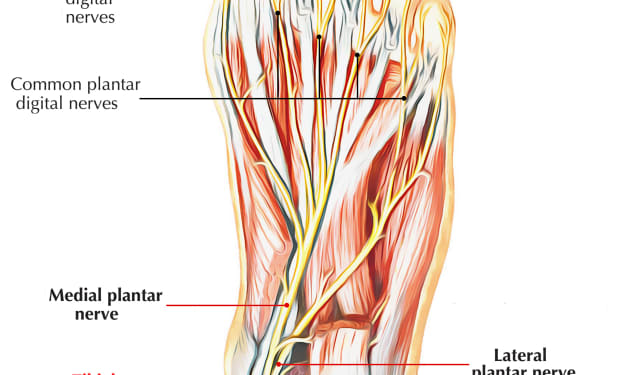
Most people don’t give much thought to their feet unless they’re uncomfortable or tired. Yet beneath the surface, the nerve endings in the feet are constantly working, sending vital information to the brain that influences balance, posture, and movement. These signals operate quietly in the background, but they play a far greater role in daily life than many people realize.
By AhmedFitLife3 days ago in Longevity



Comments
There are no comments for this story
Be the first to respond and start the conversation.