
United States Allergy Treatment Market Size & Forecast 2026–2034: Innovation, Awareness, and Biologics Reshape Care
Rising allergy prevalence, biologic breakthroughs, and preventive healthcare strategies are redefining the future of allergy management in the U.S.

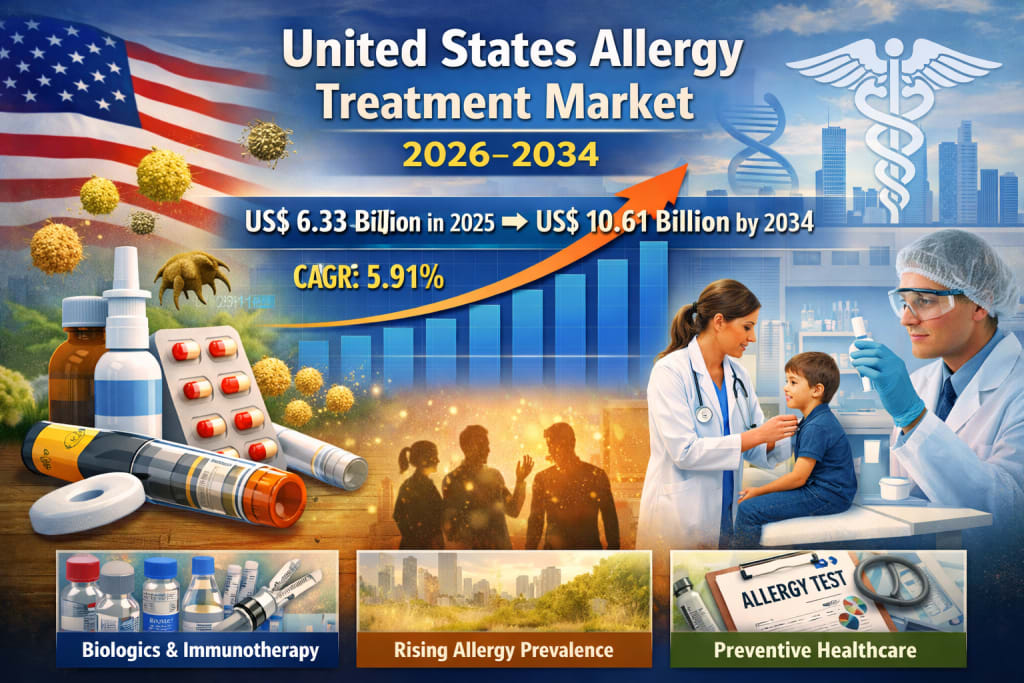
Market Overview: A Decade of Steady, Science-Led Growth
The United States allergy treatment market is entering a period of sustained expansion, driven by rising allergy prevalence, advanced therapeutics, and a growing emphasis on long-term disease management. According to Renub Research, the market is expected to grow from US$ 6.33 billion in 2025 to US$ 10.61 billion by 2034, registering a compound annual growth rate (CAGR) of 5.91% during 2026–2034.
This steady growth reflects a fundamental shift in how allergies are perceived and treated in the U.S. No longer considered minor seasonal discomforts, allergies are increasingly recognized as chronic, quality-of-life–impacting conditions that demand early diagnosis, consistent treatment, and preventive care. From allergic rhinitis and asthma to food allergies and eczema, the growing disease burden is fueling demand across prescription drugs, immunotherapy, and next-generation biologics.
United States Allergy Treatment Market Outlook
Allergy treatment encompasses a broad range of medical interventions designed to prevent, manage, and alleviate allergic reactions triggered by pollen, dust mites, foods, insect venom, medications, and environmental pollutants. Traditional treatments such as antihistamines, decongestants, corticosteroids, and leukotriene modifiers continue to dominate volume sales, while immunotherapy and biologics are redefining long-term outcomes.
Immunotherapy—delivered through allergy shots or sublingual tablets—has become a cornerstone of long-term allergy control, gradually desensitizing the immune system and reducing disease severity over time. Meanwhile, biologic drugs targeting specific immune pathways are transforming care for patients with severe, persistent, or treatment-resistant allergies.
The U.S. healthcare ecosystem plays a pivotal role in this expansion. High awareness levels, direct-to-consumer pharmaceutical marketing, strong specialist access, and advanced diagnostic infrastructure all support rapid adoption of innovative therapies. As a result, allergy treatment is evolving from short-term symptom relief to comprehensive immune-based management.
Key Growth Drivers in the United States Allergy Treatment Market
1. Rising Prevalence of Allergic Conditions
The increasing prevalence of allergic diseases remains the most powerful driver of market growth. Seasonal allergies, asthma, food allergies, atopic dermatitis, and allergic conjunctivitis affect millions of Americans across all age groups. Environmental pollution, climate change, urbanization, and longer pollen seasons have significantly intensified allergen exposure nationwide.
According to the CDC’s National Center for Health Statistics, 31.8% of adults and 27.2% of children in the U.S. report allergy symptoms, translating to more than 100 million people requiring some form of allergy management. This expanding patient pool is continuously fueling demand for prescription therapies, over-the-counter medications, and long-term immunotherapy solutions.
2. Innovation in Advanced and Biologic Therapies
Pharmaceutical innovation is accelerating market expansion. The emergence of biologic therapies targeting immunoglobulin E (IgE) and other immune mediators has transformed treatment options for severe allergy patients. These therapies offer superior efficacy with fewer systemic side effects, improving adherence and outcomes.
In February 2024, the U.S. FDA approved Xolair (omalizumab) for IgE-mediated food allergy in children aged 1 year and older, a landmark decision that expanded treatment beyond strict allergen avoidance. This approval marked a turning point for food allergy management and reinforced the growing role of biologics in allergy care.
Heavy investment in R&D, novel delivery systems, and expanded indications continues to support premium pricing and long-term patient engagement, strengthening the market’s revenue base.
3. Increased Awareness and Preventive Healthcare Focus
Growing public awareness is reshaping treatment behavior. Education campaigns, improved diagnostic testing, and employer-supported health initiatives have encouraged earlier diagnosis and consistent treatment adherence. Insurers are increasingly promoting preventive healthcare to reduce long-term complications and hospital admissions associated with unmanaged allergies.
A notable example is FARE’s “RISE” public service campaign, launched in September 2025 to empower the 33 million Americans living with food allergies. Sponsored by Genentech and Novartis, the campaign emphasizes community support, education, and proactive disease management—values that directly support long-term market expansion.
Challenges Facing the U.S. Allergy Treatment Market
High Cost of Advanced Therapies
Despite clinical progress, affordability remains a significant barrier. Biologics and long-term immunotherapy require ongoing administration and specialty care, often resulting in high out-of-pocket expenses. Insurance coverage varies widely, and cost concerns can delay treatment initiation or cause early discontinuation.
Balancing innovation with accessibility remains a critical challenge for manufacturers, payers, and healthcare providers.
Treatment Adherence and Long Therapy Duration
Many allergy treatments, especially immunotherapy, require commitment over several years. Inconvenience, slow symptom improvement, and perceived burden often lead to poor adherence. This challenge limits both clinical success and commercial potential, pushing companies to invest in simplified dosing, oral alternatives, and patient education programs.
Key Market Segments
United States Eye Allergy Treatment Market
Eye allergy treatments are growing rapidly due to the rising incidence of allergic conjunctivitis driven by pollen, dust, pet dander, and pollution. Increased screen time has worsened symptoms, boosting demand for antihistamine eye drops, mast cell stabilizers, and corticosteroid formulations. Strong retail pharmacy distribution supports widespread adoption.
United States Food Allergy Treatment Market
Food allergy treatment is undergoing a major transformation. Beyond avoidance strategies, the market is seeing increased adoption of oral immunotherapy, emergency preparedness solutions, and biologics. Parents and caregivers are actively seeking treatments that reduce reaction severity and improve safety for children, supporting long-term growth.
United States Anti-Allergy Drugs Market
Anti-allergy drugs remain the backbone of treatment, driven by both OTC and prescription demand. Antihistamines, glucocorticoids, and leukotriene inhibitors are widely used for short-term relief and chronic management. Reformulations, combination drugs, and extended-release versions are sustaining innovation in this mature segment.
United States Oral Allergy Treatment Market
Oral dosage forms are gaining popularity due to convenience and improved adherence. Tablets, syrups, and oral immunotherapy are particularly favored for pediatric and elderly patients. Advances in formulation technology are expanding oral options across multiple allergy indications.
Retail Pharmacies: A Critical Distribution Channel
Retail pharmacies remain the most influential distribution channel for allergy medications. Their accessibility, extended hours, and pharmacist-led education make them the first point of care for many patients. The growth of online pharmacies and subscription-based prescription services is further strengthening this channel’s role.
Regional Market Insights
California
California leads the U.S. allergy treatment market due to high population density, diverse climate zones, wildfires, pollution, and prolonged pollen seasons. The state’s advanced healthcare infrastructure supports rapid adoption of innovative therapies.
New York
New York’s metropolitan lifestyle, pollution levels, and strong specialist access drive robust demand for allergy medications and immunotherapy. Retail pharmacies and hospitals play a dominant role in distribution.
Washington
Seasonal allergens, mold exposure, and moisture-related triggers sustain year-round demand in Washington. A strong preventive healthcare culture supports early diagnosis and long-term treatment adoption.
New Jersey
Dense population, proximity to major cities, and the presence of pharmaceutical companies make New Jersey a strong allergy treatment market. High insurance coverage further supports treatment accessibility.
Market Segmentation Snapshot
By Type:
Eye Allergy, Skin Allergy, Food Allergy, Asthma, Rhinitis, Others
By Treatment:
Anti-Allergy Drugs, Immunotherapy
By Dosage Form:
Oral, Inhalers, Intranasal, Others
By Distribution Channel:
Hospital Pharmacies, Retail Pharmacies, Online Retailers, Others
Top States Covered:
California, Texas, New York, Florida, Illinois, Pennsylvania, Ohio, Georgia, New Jersey, Washington, and others
Competitive Landscape: Innovation at the Core
The U.S. allergy treatment market is moderately consolidated, with global pharmaceutical leaders competing through R&D, biologics, and expanded indications. Key players include:
AbbVie Inc.
ALK-Abelló A/S
ALLERGOPHARMA GmbH & Co. KG
Almirall, S.A.
DBV Technologies
GSK plc.
HAL Allergy B.V.
Novartis Pharmaceuticals Corporation
Teva Pharmaceutical Industries Ltd.
Viatris Inc.
Each company is evaluated across five viewpoints: overview, key leadership, recent developments, SWOT analysis, and revenue performance.
Final Thoughts
The United States allergy treatment market is transitioning from symptomatic care to immune-focused, long-term disease management. Rising allergy prevalence, strong healthcare infrastructure, and rapid biologic innovation are reshaping treatment standards across the country. While affordability and adherence challenges remain, continued R&D investment, awareness initiatives, and preventive healthcare strategies are expected to sustain growth through 2034.
As biologics, immunotherapy, and patient-centric delivery models expand, the market is poised to remain one of the most dynamic segments within U.S. healthcare—offering both clinical breakthroughs and long-term commercial opportunities.
About the Creator
Sakshi Sharma
Content Writer with 7+ years of experience crafting SEO-driven blogs, web copy & research reports. Skilled in creating engaging, audience-focused content across diverse industries.
Keep reading
More stories from Sakshi Sharma and writers in Longevity and other communities.
Concierge Medicine Market Size and Forecast 2025–2033
Concierge Medicine Market Outlook: A New Era of Personalized Care The global healthcare system is undergoing a profound transformation as patients increasingly seek care that is not only effective but also personal, accessible, and proactive. In this evolving landscape, concierge medicine has emerged as one of the fastest-growing healthcare models worldwide.
By Sakshi Sharmaa day ago in Longevity
Day 4 of Quitting
If this is how sobriety feels, maybe it’s better to go through life a little buzzed… this, along with other hits like, I want to kill myself, I wish I was dead, and I’m going to throw myself off a bridge have been the only thoughts on rotation these past few days. I promise myself that if, in a month, I still feel like this (‘this’ meaning despondent, full of rage, and simultaneously numb) I can go back to smoking. Until mid-February though? Nicotine is off the table.
By sleepy drafts25 days ago in Longevity




Comments
There are no comments for this story
Be the first to respond and start the conversation.