
Understanding and Managing Urinary Tract Health
A Comprehensive Guide

I'll share evidence-based information about urinary tract health and scientifically-supported treatments.
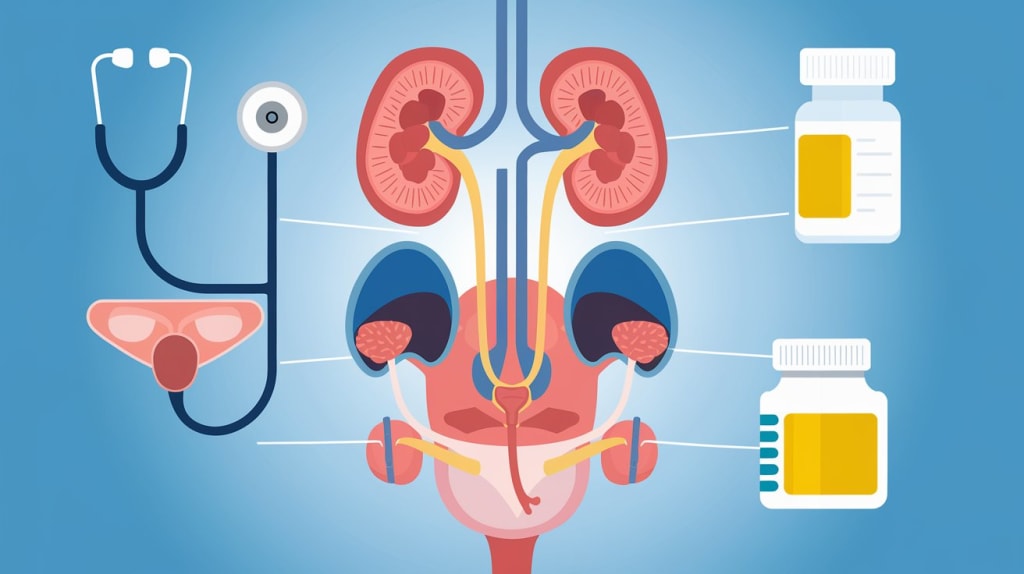
The urinary tract consists of the kidneys, ureters, bladder, and urethra. The most common urinary tract condition is a Urinary Tract Infection (UTI), which occurs when bacteria enter and multiply in the urinary system.
Evidence-based treatments and preventive measures include:
1. Antibiotics (prescribed by healthcare providers)
- First-line treatments often include nitrofurantoin or trimethoprim-sulfamethoxazole
- Course typically lasts 3-7 days depending on severity and type
2. Preventive measures supported by research:
- Staying well-hydrated with water
- Urinating promptly when needed
- Wiping from front to back
- Urinating after sexual activity
- Maintaining good hygiene
3. Scientifically studied supplements:
- Cranberry products (modest preventive effect shown in some studies)
- D-mannose (may help prevent E. coli from adhering to urinary tract walls)
Research-supported risk factors:
- Female anatomy (shorter urethra)
- Sexual activity
- Menopause (due to hormonal changes)
- Urinary tract abnormalities
- Catheter use
- Weakened immune system
Warning signs that require medical attention:
- Fever over 101°F (38.3°C)
- Back pain near kidneys
- Blood in urine
- Severe abdominal pain
- Symptoms persisting after treatment
Diagnostic Methods:
- Urinalysis to detect bacteria, white blood cells, and red blood cells
- Urine culture to identify specific bacteria and appropriate antibiotics
- In complex cases, imaging studies (CT, ultrasound) may be needed
- Cystoscopy for recurring infections or structural concerns
Specific Types of UTIs:
1. Cystitis (bladder infection)
- Most common type
- Symptoms: frequent urination, burning sensation, cloudy urine
- Usually responds well to oral antibiotics
2. Pyelonephritis (kidney infection)
- More serious infection affecting kidneys
- Symptoms include fever, flank pain, nausea
- May require hospitalization and IV antibiotics
3. Asymptomatic bacteriuria
- Presence of bacteria without symptoms
- Usually only treated in pregnant women or before urologic procedures
Long-term Prevention Strategies:
- Regular bathroom breaks (don't hold urine)
- Cotton underwear to reduce moisture
- Avoiding irritating feminine products
- Proper cleaning of urinary catheters if used
Special Populations:
1. Pregnant Women
- Higher risk of UTIs
- More likely to develop kidney infections
- Require safe antibiotic choices
2. Diabetic Patients
- More susceptible to UTIs
- Need careful glucose control
- May have atypical symptoms
3. Elderly
- Often have complicated UTIs
- May present with confusion rather than typical symptoms
- Higher risk of antibiotic resistance
Recurrent UTIs:
- Defined as 3+ infections per year or 2+ in 6 months
- May require:
- Low-dose prophylactic antibiotics
- Post-intercourse antibiotic doses
- Regular urine cultures
- Investigation of underlying causes
Impact of Diet:
- Adequate hydration (2-3 liters daily)
- Avoiding bladder irritants like caffeine, alcohol
- Possible benefits from fermented foods for microbiome health
Emerging Research Areas:
- Bacterial biofilm formation
- Alternative non-antibiotic treatments
- Role of urinary microbiome
- Vaccine development for recurrent UTIs
Antibiotic Resistance Concerns:
- Growing issue worldwide
- Importance of completing prescribed courses
- Need for accurate diagnosis before treatment
- Development of new treatment strategies
Complementary Approaches (with scientific evidence):
- Probiotics for vaginal and urinary health
- Proper hygiene practices
- Stress management (affects immune function)
- Adequate sleep for immune support
Future of Urinary Health
Emerging research continues to advance our understanding:
New treatment modalities
Improved diagnostic tools
Alternative therapeutic approaches
Preventive strategies
Conclusion
Maintaining urinary tract health is essential for overall wellbeing. By understanding your body's needs and following preventive measures, you can significantly reduce your risk of urinary tract problems. Remember to consult healthcare providers for personalized advice and treatment plans.
About the Creator
K. B.
Dedicated writer with a talent for crafting poetry, short stories, and articles, bringing ideas and emotions to life through words.
Best Artwork Styles for Contemporary Living Spaces
Contemporary living spaces are defined by simplicity, clean lines, and intentional design choices. Unlike traditional interiors that rely heavily on ornamentation, contemporary homes often embrace openness, neutral palettes, and functional layouts. Because of this minimal foundation, artwork plays an essential role in adding personality, warmth, and visual depth.
By CEO A&S Developers4 days ago in Longevity
Cassie and Johnny
I’m the kind of dame you notice. I’m no femme fatale, but you can’t ignore me, at least not until I warn you about what’s coming, then everybody ignores me. Hell, they usually blame me afterwards and give Johnny all the credit for saving the day, but my Johnny couldn’t save a seat at the movies without my help. Sure, he’s brawny, but brainy? Not so much. Like that time I asked him to spot me five bucks, and he said he didn’t see it anywhere on me, and believe you me, he looked but good.
By Harper Lewis7 days ago in Critique




Comments
There are no comments for this story
Be the first to respond and start the conversation.