
UAE Non-Invasive Prenatal Testing Market Size & Forecast 2025–2033
Early Genetic Screening Gains Momentum as Precision Healthcare Expands Across the UAE


UAE Non-Invasive Prenatal Testing Market Outlook
The UAE Non-Invasive Prenatal Testing (NIPT) Market is witnessing strong and sustained growth as the country continues to modernize its healthcare infrastructure and prioritize maternal and fetal health. According to Renub Research, the UAE NIPT market is expected to reach US$ 64.46 million by 2033, rising from US$ 21.04 million in 2024, registering an impressive CAGR of 13.25% from 2025 to 2033.
This robust expansion is driven by a convergence of factors including rising maternal age, improved access to advanced healthcare services, increased awareness of genetic disorders, supportive government initiatives, and a growing preference for safe, early-stage prenatal screening. As the UAE positions itself as a regional leader in precision medicine and genomic healthcare, non-invasive prenatal testing is becoming an essential component of modern obstetric care.
Understanding Non-Invasive Prenatal Testing (NIPT)
Non-invasive prenatal testing is a cutting-edge genetic screening method that analyzes cell-free fetal DNA (cffDNA) present in a pregnant woman’s bloodstream. Unlike traditional invasive procedures such as amniocentesis or chorionic villus sampling (CVS), NIPT requires only a simple maternal blood draw, eliminating the risk of miscarriage or infection.
NIPT is primarily used to detect chromosomal abnormalities such as Down syndrome (Trisomy 21), Edwards syndrome (Trisomy 18), Patau syndrome (Trisomy 13), and Turner syndrome, among others. Due to its high accuracy, early detection capability, and safety profile, NIPT has rapidly gained acceptance among healthcare professionals and expectant parents across the UAE.
UAE Non-Invasive Prenatal Testing Industry Overview
The NIPT industry in the United Arab Emirates is expanding steadily as prenatal care becomes more proactive and technology-driven. Both public and private healthcare providers are increasingly integrating genetic screening into routine pregnancy care, reflecting a broader shift toward preventive and personalized medicine.
The UAE’s diverse population, including a large expatriate community, has contributed to heightened awareness and demand for advanced prenatal diagnostics. Hospitals and diagnostic laboratories in major cities such as Dubai and Abu Dhabi are equipped with state-of-the-art genomic testing facilities, making NIPT more accessible than ever before.
Additionally, the nation’s expanding medical tourism sector has further strengthened market growth. Expectant parents from neighboring Middle Eastern, African, and Asian countries increasingly seek prenatal screening services in the UAE due to its advanced infrastructure, internationally accredited hospitals, and experienced medical professionals.
Key Growth Drivers of the UAE NIPT Market
1. Rising Maternal Age and Genetic Risk Awareness
One of the most significant drivers of the UAE NIPT market is the rising average maternal age. As women increasingly delay childbirth for career, education, or personal reasons, the risk of chromosomal abnormalities naturally increases. Conditions such as Down syndrome are more prevalent in pregnancies involving older mothers, prompting greater demand for accurate prenatal screening solutions.
Improved awareness among parents regarding genetic health and early diagnosis has also played a critical role in increasing NIPT adoption.
2. Supportive Government Policies and Healthcare Vision
The UAE government has placed maternal and child health at the forefront of its healthcare agenda. Initiatives such as the UAE National Genome Strategy and Vision 2031 emphasize the integration of genomic medicine into standard healthcare practice.
Significant investments in hospital infrastructure, advanced diagnostics, and digital health technologies have created a favorable environment for NIPT adoption. Regulatory bodies ensure ethical implementation while promoting innovation through partnerships with international biotechnology firms.
Public health campaigns aimed at educating expectant parents about prenatal screening further reinforce market growth and acceptance.
3. Expansion of Medical Tourism
Medical tourism has become a powerful catalyst for the UAE NIPT market. Dubai and Abu Dhabi are recognized as global healthcare destinations, offering premium prenatal care services supported by cutting-edge diagnostic technologies.
International patients are drawn by shorter waiting times, personalized care, multilingual medical staff, and access to advanced tests such as NIPT. Government-led initiatives promoting healthcare tourism continue to enhance the UAE’s reputation as a hub for specialized prenatal diagnostics.
4. Entry of Global Diagnostic and Genomics Companies
The presence of leading international diagnostic companies has significantly elevated the standard of NIPT services in the UAE. Global players are partnering with local hospitals and laboratories to introduce advanced sequencing platforms, AI-powered bioinformatics tools, and high-throughput testing solutions.
These collaborations improve test accuracy, reduce turnaround times, and expand the scope of detectable genetic conditions. Knowledge transfer, workforce training, and adherence to global quality standards further strengthen the UAE’s prenatal testing ecosystem.
Challenges Facing the UAE NIPT Market
Cultural and Religious Sensitivities
Despite its advantages, NIPT adoption in the UAE faces challenges related to cultural and religious considerations. Prenatal genetic testing can raise ethical concerns, particularly regarding potential decisions following abnormal results.
In some cases, families may hesitate to undergo testing due to beliefs surrounding the sanctity of life or fear of social judgment. Addressing these concerns requires culturally sensitive counseling, ethical frameworks, and engagement with community and religious leaders to foster trust and understanding.
Shortage of Genetic Counseling Services
Another notable challenge is the limited availability of trained genetic counselors. While NIPT technology is advanced, interpreting test results requires expert guidance to help expectant parents make informed decisions.
The UAE’s multicultural population adds complexity, as effective counseling must account for language diversity and cultural nuances. Expanding training programs, encouraging specialization in genetic counseling, and integrating tele-genetics solutions are essential to bridging this gap.
UAE Non-Invasive Prenatal Testing Market Segmentation
By Component
Instruments
Kits and Reagents
Services
Services currently dominate the market, as many healthcare providers outsource testing to specialized laboratories offering comprehensive analysis and reporting.
By Application
Down Syndrome (Trisomy 21)
Edwards Syndrome (Trisomy 18)
Patau Syndrome (Trisomy 13)
Turner Syndrome
Other Applications
Down syndrome screening represents the largest application segment due to its higher prevalence and widespread awareness.
By End User
Hospitals
Diagnostic Laboratories
Hospitals lead market adoption, driven by integrated prenatal care services, while diagnostic laboratories play a crucial role in processing and analysis.
Competitive Landscape and Company Analysis
The UAE NIPT market features strong participation from global diagnostic and genomics leaders. All key players have been covered, with company analysis including:
Overview
Key Personnel
Recent Developments & Strategies
Financial Insights
Major Companies Operating in the UAE NIPT Market
Eurofins Scientific
F. Hoffmann-La Roche Ltd
Invitae Corporation
Illumina Inc.
Natera Inc.
Centogene NV
Qiagen
These companies focus on strategic collaborations, technological innovation, and regional expansion to strengthen their market presence.
Future Outlook: A Strong Growth Trajectory
The future of the UAE non-invasive prenatal testing market appears highly promising. Advances in next-generation sequencing, AI-driven data interpretation, and expanded genetic panels will continue to improve accuracy and clinical utility.
As awareness grows and healthcare systems further integrate precision medicine, NIPT is expected to become a routine component of prenatal care across the country. With strong government support, global partnerships, and rising demand for early fetal screening, the UAE is well-positioned to remain a regional leader in prenatal diagnostics.
Final Thoughts
The UAE Non-Invasive Prenatal Testing Market is entering a transformative phase, marked by technological progress, policy support, and growing societal acceptance. Valued at US$ 21.04 million in 2024 and projected to reach US$ 64.46 million by 2033, the market reflects the nation’s commitment to advanced, patient-centric healthcare.
While challenges related to cultural sensitivity and genetic counseling persist, ongoing education, innovation, and collaboration are paving the way for sustained growth. As prenatal care evolves, NIPT will play a critical role in safeguarding maternal and fetal health, reinforcing the UAE’s position at the forefront of genomic medicine.
About the Creator
Renub Research
Renub Research is a Market Research and Consulting Company. We have more than 15 years of experience especially in international Business-to-Business Researches, Surveys and Consulting. Call Us : +1-478-202-3244
Keep reading
More stories from Renub Research and writers in Longevity and other communities.
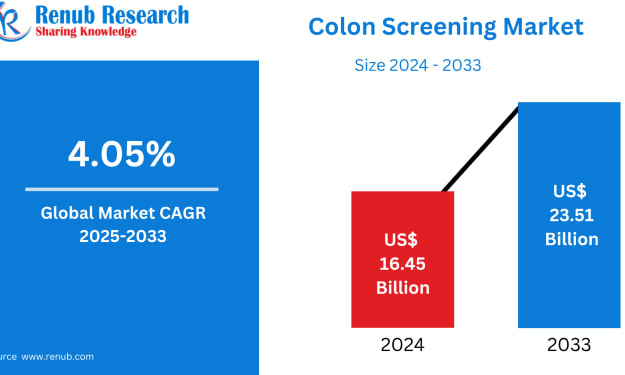
Colon Screening Market Size and Forecast (2025–2033)
Introduction The global healthcare industry is increasingly shifting its focus from reactive treatment to preventive care, and colon screening has emerged as one of the most critical pillars of this transformation. With colorectal cancer ranking among the most common and deadly cancers worldwide, early detection through effective screening has become a public health priority. Advances in diagnostic technologies, expanding government screening programs, and growing public awareness are collectively reshaping the colon screening landscape.
By Renub Research26 days ago in Longevity
Day 4 of Quitting
If this is how sobriety feels, maybe it’s better to go through life a little buzzed… this, along with other hits like, I want to kill myself, I wish I was dead, and I’m going to throw myself off a bridge have been the only thoughts on rotation these past few days. I promise myself that if, in a month, I still feel like this (‘this’ meaning despondent, full of rage, and simultaneously numb) I can go back to smoking. Until mid-February though? Nicotine is off the table.
By sleepy drafts7 days ago in Longevity
Fast Track one Day Detox Diet: Better Slow Down on the Detox Claim
Promise of a Quick Diet Through Detox Ann Louise Gittleman’s fad diet, The Fast Track One-Day Detox Diet, has a misleading title. The diet doesn’t take one day to complete, and it’s more about flushing “toxins” from the body. It may have short-term success as a weight loss program, but this diet depends too much on the concept of detoxification -- which has never been scientifically proven to be beneficial.
By Dean Traylor2 days ago in Longevity



Comments
There are no comments for this story
Be the first to respond and start the conversation.