
Three Japanese concepts that can offer insights into finding happiness.
Ancient perspectives on happiness that can soothe the modern soul.


a world that praises speed, achievement, and personal gain, the quiet, enduring wisdom of Japan offers an alternate compass for those seeking a more peaceful, fulfilling existence. Rooted in centuries of cultural values, Japanese philosophies surrounding happiness, resilience, and connection invite us to shift our focus—not toward what we can accumulate, but toward what we can cultivate: presence, balance, and compassion.
At the heart of this philosophy is the idea that happiness is not merely a solo pursuit. It is relational, communal, and deeply intertwined with the people around us. In contrast to the Western emphasis on self-actualization and individual triumph, Japanese perspectives remind us that joy often lives in the spaces between us. It's not just about who you are alone, but who you are with others—how you show up, how you care, and how you hold space for both pain and peace.
Harmony as a Foundation for Happiness
Japan’s long history with natural disasters and societal rebuilding has carved into its cultural consciousness a deep respect for harmony—both with nature and each other. There is a shared understanding that no one truly stands alone. Interdependence is not a weakness but a natural state of being. This perspective fosters systems of mutual support and social responsibility, allowing communities to bounce back together when life becomes difficult.
This collective mindset offers strength not through domination or control but through cohesion. Even in the aftermath of tragedy, there exists a unique capacity for what can be called “eudaimonic well-being”—a form of happiness based not on fleeting pleasure, but on meaning, purpose, and the ability to stay connected to something larger than oneself.
The Beauty of the Ordinary
In the pursuit of long-term contentment, Japanese wisdom often centers around subtlety. There is beauty in simplicity, grace in imperfection, and richness in routine. Unlike the pursuit of peak experiences or dramatic milestones, this philosophy embraces the steady rhythm of everyday life.
This outlook is encapsulated in the phrase heibun na jinsei—a stable, ordinary life. Not ordinary in a dull or unremarkable sense, but in the way a calm sea is ordinary after a storm, or a warm cup of tea is ordinary on a cold morning. It is in these gentle moments where happiness quietly takes root: a shared smile, a home-cooked meal, or the sound of birdsong through an open window.
The emphasis is not on amplifying life’s highs, but on appreciating its constants. This practice of noticing the micro-delights of daily life can make contentment feel more accessible, more consistent. Rather than waiting for extraordinary joy, we become receptive to the subtle beauty that’s already present.
Three Core Concepts for Inner Peace
Three deeply embedded cultural concepts offer a blueprint for cultivating this kind of lasting happiness:
1. Omoiyari – Often translated as empathy or compassion, omoiyari goes beyond sympathy. It is an intuitive understanding of another’s feelings, needs, or unspoken emotions. It fosters deep relational harmony, and just as importantly, can be directed inward. Practicing omoiyari toward ourselves—meeting our own flaws and struggles with gentle acceptance—can transform how we navigate hardship.
2. Wabi-sabi – This is the art of finding beauty in imperfection and impermanence. A cracked bowl, an aging tree, a faded photograph—wabi-sabi honors the passing of time and the uniqueness born of wear and weather. In life, it encourages us to release our pursuit of perfection and instead embrace what is real, raw, and evolving. There is serenity in accepting that things don’t need to be flawless to be meaningful.
3. Shikata ga nai – Meaning “it cannot be helped,” this phrase embodies a spirit of radical acceptance. Life will bring discomfort, failure, loss. Rather than resisting what we cannot change, this mindset encourages us to acknowledge reality and move forward with grace. It’s not resignation, but resilience—a way of bending rather than breaking when the winds of life blow strong.
A Slow, Sustainable Joy
While modern life often tells us to maximize productivity and chase the next thrill, Japanese philosophy invites a different pace—one that’s slow, mindful, and deeply rooted. It teaches us that happiness is not a finish line, but a rhythm we learn to dance to. It’s the steady beat of breath, the pauses between words, the stillness between seasons.
By integrating these values into our daily lives, we can begin to redefine what success, peace, and happiness truly mean. We can learn to measure wealth not by what we own, but by how present we are in our lives. We can start to see ourselves not as isolated individuals but as threads in a greater tapestry—connected, significant, and enough.
In the end, Japanese wisdom offers more than cultural insight; it offers a quiet revolution for the heart. One that says you don’t need more to be happy. You need to be here—fully, gently, and with an open heart. That’s the beginning of a good life.
About the Creator
SophiaSoso
I love you
Keep reading
More stories from SophiaSoso and writers in Longevity and other communities.
How Silence Saved Me: The Role of Solitude in My Growth
I used to believe that growth had to be loud. That progress meant being constantly in motion — networking, speaking, showing up, staying "on." I associated success with social proof and visibility, always chasing the next thing that would validate me. But in the noise of the world and the expectations I wore like armor, I lost touch with the quiet voice that mattered most: my own.
By SophiaSoso9 months ago in Longevity
Met Office Forecasts Dry Weather for Sindh
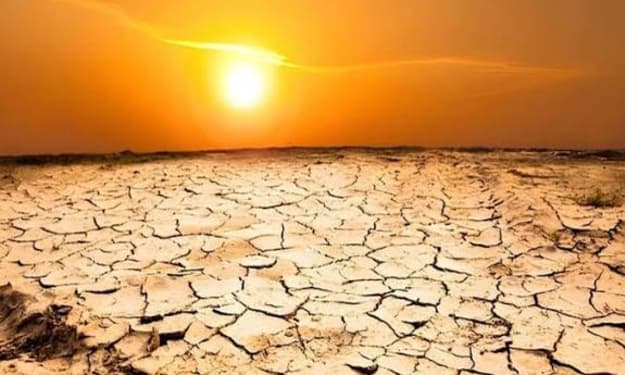
The Pakistan Meteorological Department has issued a forecast indicating that Sindh province is expected to experience a prolonged period of dry weather over the coming weeks. Meteorologists say the region will see little to no rainfall, with temperatures remaining above seasonal averages, raising concerns about agriculture, water resources, and public health. According to the Met Office, a high-pressure system over the Arabian Sea and the Indian subcontinent is likely to dominate weather patterns in Sindh for the next fortnight. This atmospheric configuration inhibits cloud formation, leading to clear skies and minimal precipitation. Forecasts predict daytime temperatures in major cities, including Karachi and Hyderabad, to hover between 28°C and 34°C, slightly above the long-term average for this period. Nighttime temperatures are expected to remain mild, ranging from 18°C to 22°C. The dry spell comes at a critical time for the agricultural sector. Sindh is a major contributor to Pakistan’s wheat, sugarcane, and rice production. Farmers are being advised to monitor soil moisture levels carefully and consider supplemental irrigation for crops at sensitive growth stages. Prolonged dry conditions can affect germination, yield, and quality, particularly for wheat crops that rely on moderate rainfall in the final stages before harvest. Water resource management is also expected to become a key challenge. Reservoirs and canals in Sindh, which depend on upstream flows from the Indus River system, are already operating at variable levels due to reduced inflows and increased water demand. Local authorities are monitoring water distribution closely, emphasizing conservation measures and urging residents to avoid excessive usage. In some districts, water rationing plans may be activated if the dry period persists. Public health officials have cautioned about potential heat-related risks. Although the current temperatures are not extreme, prolonged dry conditions can exacerbate health issues, particularly for vulnerable populations such as the elderly, children, and people with preexisting medical conditions. Heat stress, dehydration, and respiratory issues may become more common if residents do not take appropriate precautions. Health authorities recommend staying hydrated, avoiding prolonged exposure to the sun during peak hours, and ensuring access to cool environments. The Met Office also noted that dust storms and haze could occur in some areas due to the dry conditions combined with occasional strong winds. These phenomena can reduce visibility and impact road traffic, aviation, and outdoor activities. Residents are advised to take safety precautions, particularly when traveling, and to follow local advisories regarding dust and air quality. Economists have warned that the dry spell could have indirect effects on local markets. Reduced crop output may drive up food prices, especially for wheat, rice, and vegetables, affecting household budgets and contributing to inflationary pressures. Traders and suppliers are being advised to monitor market conditions and plan accordingly to avoid shortages or sudden price hikes. Despite the dry weather, meteorologists have noted that this pattern is part of a natural seasonal variation. Sindh typically experiences dry periods during the pre-monsoon and post-winter seasons, and occasional heat waves are not unusual. However, experts also emphasize that climate change may be altering rainfall patterns, leading to longer dry spells and more unpredictable weather events. Continuous monitoring and early warning systems are essential to mitigate risks to agriculture, water supplies, and public health. Authorities in Sindh have urged residents and local businesses to remain vigilant. Farmers should adopt efficient irrigation practices, municipal agencies should ensure water distribution networks function effectively, and the public should take measures to protect health and safety. Collaboration between government departments, meteorological agencies, and the community will be crucial in managing the impacts of this dry period. Looking ahead, the Met Office expects the dry spell to continue into late March, with little relief from rainfall until the onset of the pre-monsoon showers. While temperatures are likely to remain moderate, the persistence of dry weather underscores the need for careful planning and resource management in Sindh. Residents are encouraged to stay updated with official forecasts and advisories to minimize the effects of prolonged dry conditions on daily life and livelihoods.
By Fiaz Ahmed 6 days ago in Longevity
Two Grumpy Old Men Solve the Problem
Marty and Steve were two grumpy old men who lived together. They had known each other for years. Marty had been a bachelor all his life. Steve said it was because no one could stand to ever live with. Marty’s standard reply was “Well, you are, so what sort of a moron does that make you!”
By Calvin London4 days ago in Humor



Comments
There are no comments for this story
Be the first to respond and start the conversation.