
There are numerous unexpected and long-lasting health advantages of soaking in hot water.
Recognise your alternatives and limitations.


Few things are more welcoming than the dry embrace of a sauna or the warmth of a hot tub after a long day or a strenuous workout. However, aside from relaxing, which heat therapy is most beneficial to your body?
A recent study from the Bowerman Sports Science Centre at the University of Oregon suggests that hot tubs may provide the most potent health boost possible, in addition to relieving aching muscles.
The physiological effects of three popular forms of passive heating—hot tubs, conventional dry saunas, and contemporary far-infrared saunas—were investigated in this study.
The goal of the study was to determine how these various strategies affected immunological responses, cardiovascular health, and core body temperature. The study's lead author, Jessica Atencio, is a doctoral candidate in the University of Oregon's Department of Human Physiology.
"We compared the most widely used passive heating modalities as they are studied in scientific research and used in daily life," she said. "The acute reactions of the three have not been compared in any studies."
The body's response
10 men and 10 women between the ages of 20 and 28 were enlisted by Atencio and her team in order to obtain answers. Every participant was usually healthy and engaged in regular activity. The researchers were able to separate the effects of each form of heat exposure on youthful, active bodies because of this focused approach.
The team kept an eye on a variety of physiological markers during the investigation. Heart rate, blood pressure, cardiac output (the amount of blood the heart pumps out per minute), and inflammatory biomarker levels were among them. To monitor changes, blood samples were collected prior to, during, and following each session.
They discovered something startling: compared to both types of saunas, hot-water immersion considerably increased core body temperature. Numerous advantages accompanied that ascent.
According to Atencio, "we observed that hot water immersion had the greatest effect on raising core body temperature, which is the primary stimulus for these subsequent responses."
"The force of blood flowing through your vessels is good for your vascular health, and rising body temperature causes an increase in blood flow."
Sweating cannot remove the heat.
The fact that hot water restricts the body's capacity to cool itself contributes to its effectiveness. For instance, when you perspire in a sauna, the perspiration carries heat away from your body as it evaporates.
Sweat, however, simply combines with the surrounding water in a hot tub rather than evaporating. Your body remains hotter for longer due to this inefficiency in heat removal, which causes greater physiological changes.
"You can't dissipate heat as well as you can if you have contact with the air and you're sweating to cool the body," Atencio explained, adding that "hot water immersion gives you the most robust changes in core temperature." "Your sweat systems aren't working well when you're in water."
Only immersion in hot water produced detectable immune function alterations. Among these were increases in inflammatory cytokines, which are tiny proteins essential to cell signalling. They also caused increases in the activity of immunological cells.
Health benefits of hot tubs
The implications are both fascinating and useful to Professor Christopher Minson, the study's principal author and a specialist in heat therapy with over two decades of experience.
"As long as it's done in moderation, there's no question that if people are willing to do some heat therapy, it will align with improved health," he stated.
"Our lab and numerous others have demonstrated that these stresses are consistent with better health if they are repeated over time."
He sees heat therapy as a helpful substitute, but he also stresses that regular exercise still has wider health benefits. This is particularly true for those who are unable or unwilling to dedicate themselves to exercising.
It can be a very serene experience that is occasionally religious, cultural, and social, Minson continued. "And I believe those elements are crucial and add to the health benefits."
Recognise your alternatives and limitations.
Nevertheless, Minson and Atencio both emphasise how crucial safety is. According to Minson, "We want people to be smart and safe about it."
"We must ensure that their doctors have given the all-clear for heat therapy or exercise, including strength training, jogging, and mild to moderate walking. After that, they'll be okay to use heat therapy.
As a runner herself, Atencio is aware of those who mix exercise with heat therapy afterward. She does, however, see the benefit of adding passive heating to your wellness regimen even if you're not preparing for a marathon.
"We often say that the best nonpharmacological treatment for promoting health is exercise, but some people are unable or unwilling to do so."
"I said," she said. "Heat therapy is a useful addition."
According to scientists, the next time you're debating between soaking and sitting in dry heat, a hot tub may provide you more than just relaxation; it may also improve your chances of long-term health.
About the Creator
Keep reading
More stories from Francis Dami and writers in Longevity and other communities.
Researchers believe they have identified two important microorganisms that cause multiple sclerosis.
Researchers have been searching the gut for bacteria in the microbiome that cause multiple sclerosis (MS) for decades. Two types of bacteria that hide in the small intestine are now clearly implicated by new evidence from a rare twin study.
By Francis Dami7 months ago in Longevity
Day 4 of Quitting
If this is how sobriety feels, maybe it’s better to go through life a little buzzed… this, along with other hits like, I want to kill myself, I wish I was dead, and I’m going to throw myself off a bridge have been the only thoughts on rotation these past few days. I promise myself that if, in a month, I still feel like this (‘this’ meaning despondent, full of rage, and simultaneously numb) I can go back to smoking. Until mid-February though? Nicotine is off the table.
By sleepy drafts11 days ago in Longevity
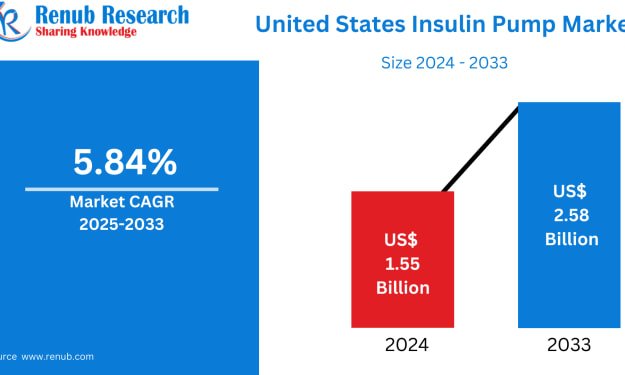
United States Insulin Pump Market Size and Forecast 2025–2033
Introduction Diabetes continues to be one of the most widespread chronic diseases in the United States, affecting millions of people across all age groups. With the growing emphasis on precision medicine, patient convenience, and digital healthcare integration, insulin delivery technologies are undergoing a major transformation. Among these innovations, insulin pumps have emerged as a cornerstone in modern diabetes management.
By jaiklin Fanandish2 days ago in Longevity



Comments
There are no comments for this story
Be the first to respond and start the conversation.