
The Science Behind Successful Hair Transplant Design
Natural Hairlines, Density, and Growth Patterns


The Biological Foundation of Natural Transplant Results
A natural-looking hair transplant begins long before the first graft is placed. It relies on understanding how follicular units behave inside the scalp, how blood supply supports growth, and how donor resources can be preserved for a lifetime. Each follicular unit contains between one and four hairs, and these units must be used strategically. Single-hair units shape the delicate outline of the frontal hairline, while multi-hair units add density through the mid-scalp. Surgeons who respect these natural structures create results that blend into existing hair without appearing artificial. Microscopic dissection elevates this process even further by allowing the surgeon to select grafts based on their native grouping and biological strength.
The Mathematics of Hairline Design
A believable hairline always follows established principles of facial symmetry. Modern hair restoration aligns with aesthetic measurements rooted in the golden ratio, guiding distances between facial landmarks and the natural curvature of the forehead. While younger patients often request low, straight hairlines, long-term design must consider the natural recession patterns that appear with age. Creating a mature, gently recessed hairline ensures that the result remains appropriate not only today but decades from now. When this planning is done correctly, the transplant ages gracefully along with the patient.
Angle, Direction, and the Geometry of Growth
Hair does not grow straight upward—it emerges from the skin at precise angles that vary depending on location. The frontal region requires an acute, forward-directed angle, while the mid-scalp lifts gradually, and the crown follows a spiral pattern unique to each person. Reproducing these angles is one of the most technically demanding aspects of a transplant. Incorrect orientation can make even thick, dense graft placement look unnatural. The crown is particularly complex because its whorl pattern follows a spiral structure similar to the Fibonacci sequence. Mapping this geometry is essential to recreating the natural flow of growth in the back of the scalp.
Density Planning and Donor Management
Designing density is a balance between visual fullness and donor preservation. The human eye perceives density based on hair thickness, color contrast, curl pattern, and distribution—not merely graft numbers. Thick or curly hair creates the impression of greater volume, while fine, straight hair requires more strategic placement to achieve the same visual effect. Because the donor area has a finite supply of grafts, surgeons must plan distribution with long-term goals in mind. Concentrating density at the frontal region, where the eye focuses most, delivers the greatest aesthetic benefit while reserving grafts for future needs. Sustainable design ensures that the patient maintains options for ongoing restoration as natural hair loss progresses.
Creating a Result That Remains Natural Over Time
The true test of a successful transplant is not how it looks the day after surgery, but how well it integrates with the individual’s appearance over many years. Surgeons must match the characteristics of transplanted follicles—such as color, texture, curl, and caliber—to surrounding hair to prevent visual inconsistency. Equally important is anticipating future thinning. By avoiding juvenile hairlines and maintaining natural temporal recessions, surgeons create a style that ages gracefully instead of appearing fixed in time. When anatomical principles, aesthetic ratios, and long-term strategy work together, the result is a transplant that looks authentic from every angle and continues to do so well into the future.
About the Creator
How China Is Challenging the U.S. to Become the Next Great Space Power
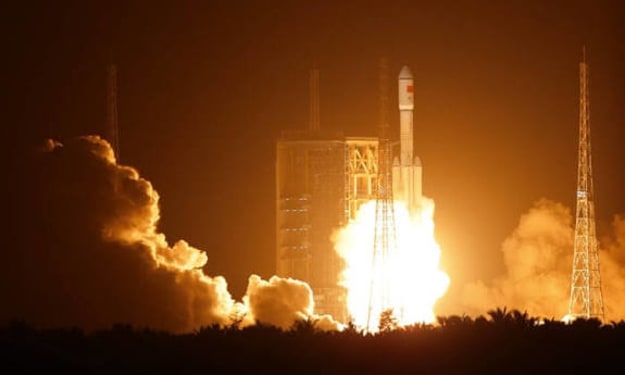
As Beijing’s space ambitions expand, Washington faces an intensifying geopolitical and technological rivalry in orbit and beyond. In the early decades of the 21st century, the United States long stood unchallenged as the dominant space power — a position built on decades of NASA leadership, unmatched launch capability, and a vibrant commercial space economy. But today, a determined China is mounting one of the most consequential strategic challenges in space since the Cold War, pushing to rival — and ultimately surpass — the U.S. in space influence, technology, and strategic advantage. National Strategy and Long‑Term Vision China’s leaders have openly signaled their ambition to become a global space powerhouse. Official space policy documents and state planning envision a broad array of capabilities — from heavy‑lift rockets to lunar exploration — aimed at reshaping the space order that has been U.S.‑dominated for decades. According to analyses of government planning, Beijing intends to establish a full suite of launch vehicles, satellites, and space infrastructure that could surpass current international norms by mid‑century. Underpinning this vision is a belief among Chinese space officials that self‑reliance and indigenous innovation are key to international competitiveness. Recent reports in state media emphasize that China’s aerospace industry is pushing far beyond imitation toward original technological breakthroughs in areas like rocket manufacturing, intelligent space systems, and advanced materials — all with the strategic goal of securing leadership in space. Commercial Space: From Government Giants to Private Innovators China’s rapid ascent isn’t limited to state space agencies. A growing ecosystem of private space companies — much like the commercial boom seen in the U.S. — has taken root, focusing on reusable rockets, satellite networks, and novel space services. A recent South China Morning Post report highlights Beijing’s push to encourage private innovation within its space sector, supporting technologies such as reusable launch vehicles, space debris monitoring, extraterrestrial resource utilization, and even in‑space biomanufacturing — fields long dominated by U.S. firms such as SpaceX or Blue Origin. This commercial expansion broadens China’s capabilities and compresses the technological gap with the U.S., challenging American assumptions that commercial innovation is exclusively an American forte. It also signals a shift in global space economics, where China may soon contend for commercial markets once dominated by Western companies. Military and Strategic Dimensions Alongside civil and commercial ambitions, China’s space strategy has clear military implications. U.S. strategic assessments note Beijing’s efforts to build counterspace capabilities — systems designed to deter, deny, or degrade another nation’s satellite operations — a key advantage in future conflicts. China has already deployed anti‑satellite weapons, jamming technologies, and sophisticated ground‑to‑space radar systems that could threaten U.S. space assets in a crisis. For the United States, which relies heavily on space systems for communication, navigation, and battlefield awareness, these capabilities represent a serious strategic challenge. Beijing’s ability to field space and counterspace technologies could blunt some of Washington’s military advantages in the Asia‑Pacific region and beyond. Lunar and Deep Space Objectives China’s Chang’e lunar exploration program is another marker of its space ambitions. With a series of increasingly complex robotic missions and plans for an International Lunar Research Station by the 2030s, Beijing aims to be a leading voice in lunar science and development — directly challenging the U.S. Artemis program and international partnerships spearheaded by NASA. � Wikipedia Missions like the strategically significant Queqiao‑2 communications relay satellite, which supports lunar missions over long distances, further demonstrate China’s growing sophistication in deep space operations and infrastructure deployment. U.S. Response: Maintaining Leadership Recognizing the challenge, U.S. policymakers are pushing legislative and strategic initiatives designed to preserve American competitiveness in space. A newly passed NASA authorization package includes provisions aimed at reinforcing U.S. lunar presence, strengthening Earth orbit assets, and countering Chinese influence in space science and technology — signaling a bipartisan consensus on the gravity of the space rivalry. A New Era of Cosmic Competition The emerging science and technological competition between China and the United States in space is unlike anything seen since the original Moon race. Today’s contest spans not only national prestige but military advantage, commercial opportunity, and scientific discovery. As each side pursues its vision of space dominance, the outcome will shape global power structures for decades to come — affecting diplomacy, security, and economic leadership both on Earth and beyond. If you’d like alternative versions, transcripts, or a set of headline + subtitle options for this topic, just let me know!
By Fiaz Ahmed 3 days ago in Longevity



Comments
There are no comments for this story
Be the first to respond and start the conversation.