
The Perfect Pancake Stack: Techniques from Professional Cafe Kitchens
Perfect Pancake Stack
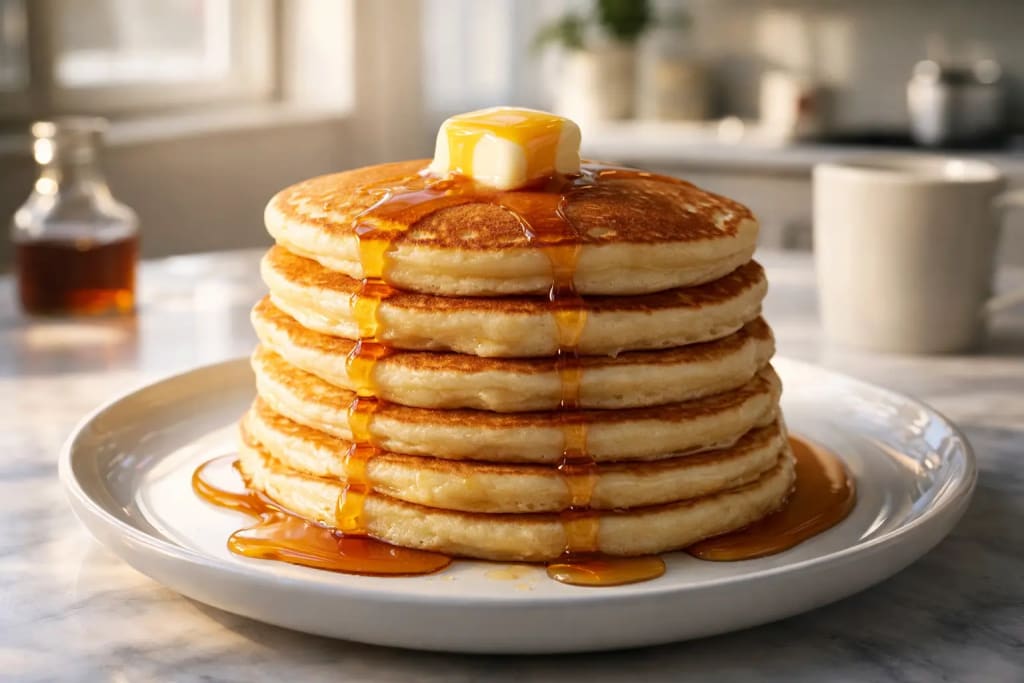
I've made thousands of pancakes. Literally thousands. And I've messed up more than I'd like to admit. Burned bottoms with raw middles. Flat, dense discs that could double as frisbees. Weirdly shaped blobs that looked nothing like the perfect circles I see in cafes.
Then I started talking to professional cooks. The people who make pancakes day in and day out. And here's what surprised me—making great pancakes isn't about following a recipe exactly. It's about understanding what's actually happening in that pan.
Let me share what I learned.
Why Most Home Pancakes Fall Flat (Literally)
The biggest mistake people make? Overmixing the batter. I did this for years.
When you mix pancake batter, you're activating gluten in the flour. Gluten gives bread its chewy texture, which is great for bagels but terrible for pancakes. The more you stir, the more gluten develops, and the tougher your pancakes get.
Professional kitchens know this. Watch a line cook make pancake batter and you'll see them mix just until the ingredients come together. There should still be lumps. It looks wrong, but those lumps mean tender, fluffy pancakes.
I tested this myself. Same recipe, two batches. One mixed until smooth (30 stirs), one mixed until barely combined (12 stirs). The difference was huge. The barely-mixed batch came out light and soft. The smooth batter made pancakes you could bounce off the floor.
Temperature Is Everything
Here's something nobody tells you—the first pancake always sucks. Every professional cook knows this. They call it the "test pancake" and usually toss it.
Why? Because your pan isn't at the right temperature yet.
Most people cook pancakes on medium-high heat. That's too hot. Your pancake will brown fast on the outside but stay gooey inside. Professional cafes use medium to medium-low heat. It takes longer, but you get even cooking and that perfect golden-brown color.
How do you know when your pan is ready? The water drop test. Flick a few drops of water onto the pan. If they sizzle and evaporate immediately, it's too hot. If they just sit there, it's too cool. You want them to dance around and evaporate in about 2-3 seconds.
A chef I spoke with at a busy London breakfast spot uses an infrared thermometer. They aim for 375°F (190°C). You probably don't need to be that precise at home, but it shows how seriously pros take temperature control.
The Secret Is In The Griddle (Or Pan)
Walk into any cafe known for their breakfast, and you'll see they're not using regular frying pans. They use flat griddles or cast iron pans.
Why does this matter? Even heat distribution. A thin pan has hot spots. Your pancake cooks faster in some areas and slower in others. Cast iron and griddles heat evenly, so every inch of your pancake cooks at the same rate.
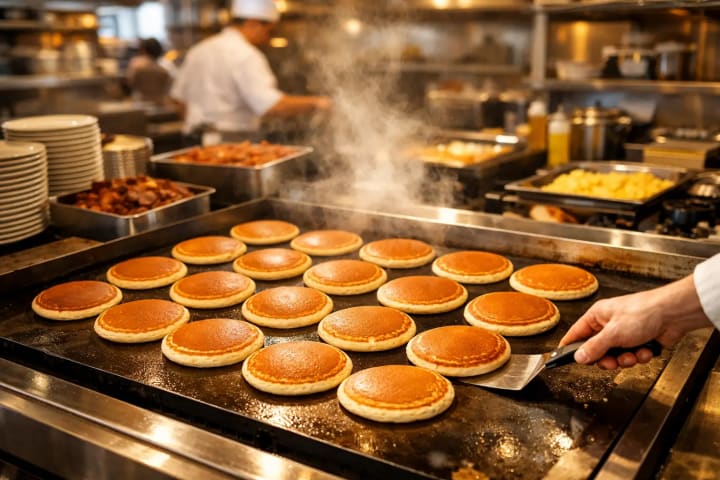
At Kula Cafe in London, I watched them work their breakfast rush. They use a large flat-top griddle that lets them cook multiple pancakes at once, all with consistent results. Each pancake comes out the same golden shade, the same thickness, the same fluffy texture. That's not luck—that's equipment and technique working together.
If you're cooking at home and don't have a griddle, cast iron is your best friend. It holds heat well and distributes it evenly. Just give it time to preheat—at least 5 minutes.
The Flip: Timing Matters More Than Technique
Everyone wants to know the secret to flipping pancakes. Here's the truth—if you flip at the right time, technique doesn't matter much.
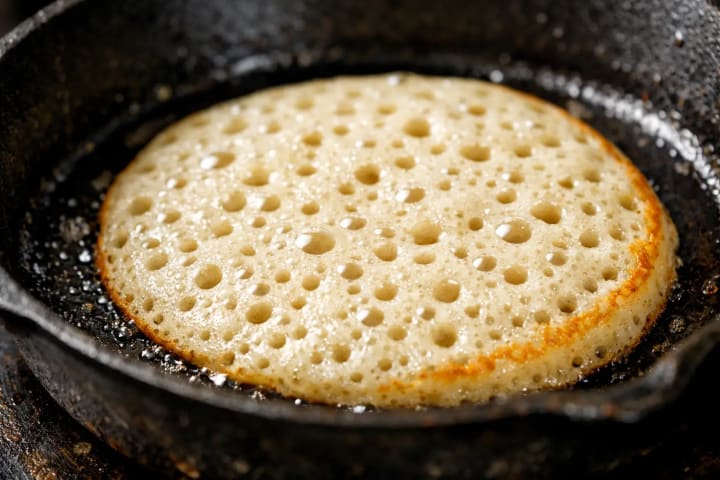
You flip when bubbles form on the surface and the edges start to look dry. Not just a few bubbles—lots of them. And some of those bubbles should pop and leave little holes. That's your signal.
I used to flip way too early. I'd see one or two bubbles and think "time to flip!" Then I'd end up with a half-cooked mess. Now I wait until the whole surface is covered with bubbles and the edges look set. The difference is night and day.
Here's another pro tip—you only flip once. Flipping multiple times makes pancakes tough. One flip. That's it.
Batter Consistency: The Ribbon Test
Professional bakers use something called the "ribbon test" for cake batter. It works for pancakes too.
When you scoop up some batter with a spoon or ladle and let it fall back into the bowl, it should flow in a thick ribbon. Not watery like milk. Not thick like paste. Somewhere in between.
If your batter is too thin, your pancakes spread out too much and come out flat. Too thick, and they're dense and cake-like instead of fluffy. The ribbon should hold its shape for just a second before blending back into the batter.
Different flours absorb liquid differently. The weather can even affect it—humid days make batter thinner. So don't just blindly follow measurements. Look at your batter. Adjust with small amounts of milk (to thin) or flour (to thicken) until it looks right.
Resting Time Changes Everything
This one surprised me. Letting pancake batter rest for 5-10 minutes before cooking makes a real difference.
When you first mix the batter, the flour hasn't fully absorbed the liquid yet. If you cook immediately, you get uneven texture. After resting, the flour hydrates properly, and the gluten you activated while mixing relaxes a bit.
Some professional kitchens rest their batter for up to 30 minutes. I've found even 10 minutes helps. Just cover the bowl and leave it on the counter while your pan heats up.
One warning though—don't rest batter with baking powder for too long. Baking powder starts working when it gets wet, creating bubbles that make pancakes fluffy. Wait too long (over an hour) and you lose that rising power.
Fat Content Matters
Butter makes everything better, including pancakes. But here's the trick—butter in the batter and butter on the pan serve different purposes.
Butter in the batter adds flavor and creates tender texture. Melted butter works better than cold because it mixes in more easily without overmixing.
Butter on the pan prevents sticking and adds that crispy edge everyone loves. But butter burns at high heat. That's why many cafes use a mix—butter for flavor, and a little vegetable oil for its higher smoke point.
I use this method at home now. I melt butter and let it cool slightly before adding to my batter. Then I use half butter, half oil on the pan. Best of both worlds.
Stacking for Success
You've made perfect pancakes. Now how do you keep them warm while you finish cooking the rest?
Here's what cafes do—they keep a low oven (200°F or about 95°C) running. As each batch comes off the griddle, it goes onto a baking sheet in the oven. This keeps them warm without overcooking.
Don't stack them too high in the oven, or the bottom ones will get soggy from steam. Spread them out in a single layer if possible, or two layers max with parchment paper between.
Why Practice Actually Makes Perfect
I've talked about all these techniques, but here's the honest truth—your first few attempts might still be rough. Even knowing what to do, pancakes take practice.
Professional cooks make them look easy because they've made thousands. They know exactly how their batter should look. They can tell by sound when the pan is the right temperature. They flip without thinking about it.
You'll get there too. Every weekend breakfast is practice. Pay attention to what works and what doesn't. Adjust.
Bringing It All Together
Perfect pancakes aren't about fancy ingredients or special equipment. They're about understanding the process. Mix gently. Get the temperature right. Wait for the bubbles. Flip once.
The cafes that serve amazing pancakes every single day aren't doing anything magical. They're just consistent. Same technique, same temperature, same timing.
You can do this at home. Will your first batch be as good as what you'd get at a professional cafe? Probably not. But your tenth batch? Your twentieth? You'll surprise yourself.
Next weekend, try these techniques. Mix less than you think you should. Wait longer before flipping than feels comfortable. Let your batter rest. Notice the difference.
Because once you nail it—once you pull off that perfect fluffy stack with golden-brown color and tender texture—you'll never go back to the old way.
About the Creator
The Connection Between ADHD and Genetics.
Commentary An Impulsive Gene? My youngest son jumps from one task to another. Ask him to clean his room, he eventually quits because he becomes fixated on something. He can’t sit still for long. On the other hand, when he’s doing something he likes, he is fixated on it, sometimes barely taking in his surroundings or listening to others.
By Dean Traylor6 days ago in Longevity




Comments
There are no comments for this story
Be the first to respond and start the conversation.