
🧠 The Overthinking Epidemic
Breaking Free from Endless Thoughts, Anxiety, and Mental Paralysis


Introduction: The Mental Storm of Overthinking
Have you ever stayed up all night replaying a conversation in your head?
Or spent hours debating a decision, only to feel more confused?
Or imagined every possible worst-case scenario before even taking action?
If so, you’re not alone.
Overthinking is one of the most common mental traps—a cycle of endless thoughts, second-guessing, and fear of making the wrong move.
It feels like problem-solving, but in reality, overthinking is just mental quicksand. The more you analyze, the deeper you sink.
This article will explore:
✅ Why we overthink and how it affects our brains
✅ The difference between problem-solving and mental paralysis
✅ How to quiet your thoughts and take action with confidence
1. Why Do We Overthink? (The Psychology Behind It)
Overthinking isn’t just a bad habit—it’s a biological survival instinct gone wrong.
📌 Your Brain Thinks It’s Keeping You Safe
The human brain evolved to detect and avoid threats.
When we overanalyze, our brain believes we’re preparing for danger.
Instead of taking action, we keep scanning for "what could go wrong."
📌 The Two Types of Overthinking
1️⃣ Ruminating on the Past ("I should have said this differently.")
2️⃣ Worrying About the Future ("What if I fail? What if I regret this?")
Both trap us in a mental loop, preventing us from making decisions and moving forward.
💡 Lesson? Overthinking is NOT real problem-solving—it’s your brain running in circles.
2. How Overthinking Works Against You
Most people believe thinking more = making better decisions. But that’s not true.
🚨 Overthinking leads to:
❌ Analysis Paralysis → Too many options = no decision at all.
❌ Increased Anxiety → The more we worry, the worse we feel.
❌ Missed Opportunities → While overthinkers analyze, action-takers succeed.
🔹 Example:
Imagine two people are starting a business.
Person A overthinks, researching every possible risk for years but never launches.
Person B takes imperfect action, learning from mistakes and adjusting along the way.
💡 Who wins? The person who actually does something—not the one stuck thinking.
3. How to Stop Overthinking (Step-by-Step Guide)
Ready to escape the mental spiral? Try these strategies:
✅ 1. Use the “10-10-10 Rule” for Decisions
Ask yourself:
Will this matter in 10 days?
Will this matter in 10 months?
Will this matter in 10 years?
This immediately reduces overthinking by shifting focus to the bigger picture.
✅ 2. Set a Time Limit for Decisions
Give yourself a deadline (e.g., “I have 5 minutes to decide”).
The brain works faster when it knows time is limited.
✅ 3. Interrupt the Thought Spiral
When you catch yourself overthinking, say "STOP."
Shift focus to something physical (stand up, stretch, breathe deeply).
This trains your brain to break the loop.
✅ 4. Take Small Actions Immediately
Instead of thinking endlessly, do one tiny step toward the solution.
Action disrupts overthinking.
🚀 Example: If you’re debating whether to email someone, just write the first sentence.
✅ 5. Ask: “What’s the Worst That Could Happen?”
Most overthinking is based on irrational fear.
90% of our worries never happen—but we still waste time overanalyzing.
💡 The secret to overcoming overthinking? Trust yourself.
4. The Difference Between Preparation and Overthinking
Some people believe thinking things through is necessary. And they’re right—to a degree.
📌 The Key Difference:
✅ Healthy Preparation:
You research, plan, and then take action.
❌ Overthinking:
You keep analyzing but never act.
🚨 Warning Signs You’re Overthinking Instead of Preparing:
You’ve been thinking about it for weeks, months, or even years.
You tell yourself, “I’ll be ready when I have more information.”
You’re waiting for the “perfect” moment (which never comes).
💡 Lesson? Take messy action now—perfection is a myth.
5. How to Train Your Brain to Overthink Less
Want to rewire your brain for confidence instead of doubt? Here’s how:
✅ 1. Start Practicing "Good Enough" Decisions
Not every choice needs to be perfect.
Sometimes, “good enough” is all you need to move forward.
✅ 2. Build a Bias Toward Action
The more you take action, the more confident you become.
The brain learns by doing, NOT by thinking.
✅ 3. Stop Asking for Everyone’s Opinion
More opinions = more overthinking.
Trust yourself first.
✅ 4. Meditate or Journal to Quiet Mental Noise
Overthinking thrives on mental clutter.
5 minutes of daily stillness can help break the habit.
💡 Overthinking is a habit. And like any habit, it can be unlearned.
Final Thoughts: Freeing Yourself from the Overthinking Trap
Overthinking feels productive—but it’s a trap.
🔥 Thinking won’t change your life—action will.
So next time you catch yourself overanalyzing, ask:
💡 "Am I thinking, or am I just avoiding action?"
The moment you take action, you escape the loop.
🚀 Trust yourself. Make the decision. Move forward.
Because in the end…
🧠 Overthinking steals time. Action creates results.
About the Creator
Ahmet Kıvanç Demirkıran
As a technology and innovation enthusiast, I aim to bring fresh perspectives to my readers, drawing from my experience.
Keep reading
More stories from Ahmet Kıvanç Demirkıran and writers in Longevity and other communities.
Day 4 of Quitting
If this is how sobriety feels, maybe it’s better to go through life a little buzzed… this, along with other hits like, I want to kill myself, I wish I was dead, and I’m going to throw myself off a bridge have been the only thoughts on rotation these past few days. I promise myself that if, in a month, I still feel like this (‘this’ meaning despondent, full of rage, and simultaneously numb) I can go back to smoking. Until mid-February though? Nicotine is off the table.
By sleepy drafts10 days ago in Longevity
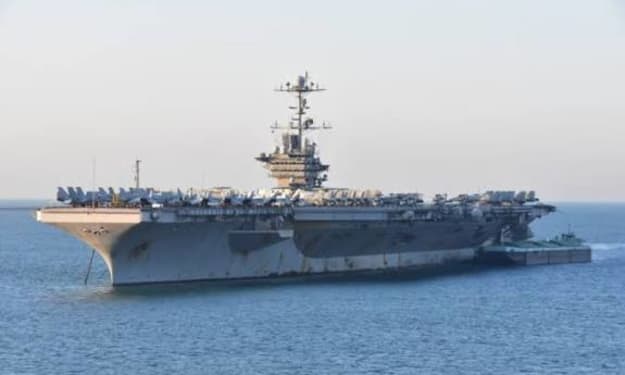
The Return of the Aircraft Carrier Truman Is Being Seen as a Snub to the Navy in the War of the Future
The return of the U.S. aircraft carrier USS Harry S. Truman to active deployment has sparked debate far beyond naval circles. While some see it as a show of enduring American naval power, others interpret the move as a symbolic snub—particularly in the context of how modern warfare is rapidly evolving. In an era dominated by drones, cyber warfare, hypersonic missiles, and artificial intelligence, the decision to once again lean heavily on a traditional aircraft carrier has raised uncomfortable questions about whether the Navy is preparing for the wars of tomorrow or clinging to the strategies of yesterday. A Floating Symbol of 20th-Century Power For decades, aircraft carriers have been the ultimate symbol of U.S. military dominance. These massive floating airbases project power thousands of miles from American shores and allow the U.S. to strike almost anywhere in the world. The Truman, like other Nimitz-class carriers, represents this legacy—housing nearly 5,000 sailors, dozens of fighter jets, and unmatched logistical capability. However, critics argue that what once made carriers indispensable now makes them vulnerable. Their sheer size, cost, and visibility turn them into high-value targets in a battlefield increasingly defined by precision strikes and long-range weapons. The “War of the Future” Looks Very Different Modern conflict is no longer limited to sea, land, and air. Cyber attacks can cripple infrastructure without a single shot fired. Drones can swarm targets at a fraction of the cost of traditional aircraft. Hypersonic missiles can reach targets faster than current defenses can respond. In this context, sending a massive carrier strike group into contested waters can appear less like a strategic necessity and more like a risky gamble. Critics argue that the return of the Truman reflects an outdated mindset—one that prioritizes visible force projection over adaptability and technological evolution. A Snub to Naval Innovation? Many analysts and serving officers believe the Navy’s future lies in distributed lethality—smaller, more agile platforms networked together, harder to detect and cheaper to replace. Unmanned surface vessels, autonomous submarines, and land-based missile systems are increasingly viewed as the backbone of next-generation naval warfare. Against this backdrop, recommitting to a traditional carrier is seen by some as sidelining innovation. It sends a message that, despite years of discussion about transformation, the Navy still defaults to familiar tools when tensions rise. This perception has led to frustration among those advocating for faster modernization. They argue that resources devoted to maintaining and protecting carriers like the Truman could instead accelerate investment in emerging technologies that are more relevant to future conflicts. The Strategic Signal to Allies and Rivals Supporters of the decision counter that the Truman’s return is not about nostalgia—it’s about deterrence. Aircraft carriers remain powerful political tools. Their presence reassures allies, signals commitment, and demonstrates readiness in a way few other assets can. Yet even here, the message is mixed. To technologically advanced rivals, the deployment may signal predictability rather than strength. Adversaries have spent years developing strategies specifically designed to neutralize carriers, including anti-ship ballistic missiles and advanced surveillance systems. Cost Versus Capability The financial reality cannot be ignored. A single carrier strike group costs billions of dollars to build, maintain, and operate. In contrast, drone fleets and missile systems can be produced and deployed at a much lower cost, often with greater strategic flexibility. Critics argue that continuing to rely on carriers drains resources from areas where the Navy needs to grow most urgently. In a future conflict defined by speed, dispersion, and digital dominance, the cost-benefit equation of aircraft carriers looks increasingly questionable. Why the Carrier Still Matters—For Now Despite the criticism, aircraft carriers are not obsolete—yet. They remain unmatched in their ability to sustain prolonged air operations without relying on foreign bases. In regions where access is limited or politically sensitive, carriers still provide options no other platform can. The real issue, many experts say, is not the existence of carriers like the Truman, but over-reliance on them. Using them as one component of a broader, more flexible strategy may still make sense. Treating them as the centerpiece of future war planning may not. A Turning Point for Naval Strategy The return of the USS Harry S. Truman highlights a deeper tension within modern military thinking. It represents a crossroads between tradition and transformation, between proven power and emerging threats. Whether history views this moment as a wise assertion of strength or a missed opportunity for innovation will depend on what comes next. If the Navy pairs legacy platforms with bold technological change, the carrier’s return may be justified. If not, it risks becoming a powerful symbol—not of dominance, but of reluctance to adapt in a rapidly changing world.
By Fiaz Ahmed Brohi5 days ago in Longevity



Comments
There are no comments for this story
Be the first to respond and start the conversation.