
The Origin of Sophisticated Bench Poufs and Ottomans: A Timeless Appeal
Exploring the History and Evolution of Versatile Furnishings in Home Décor
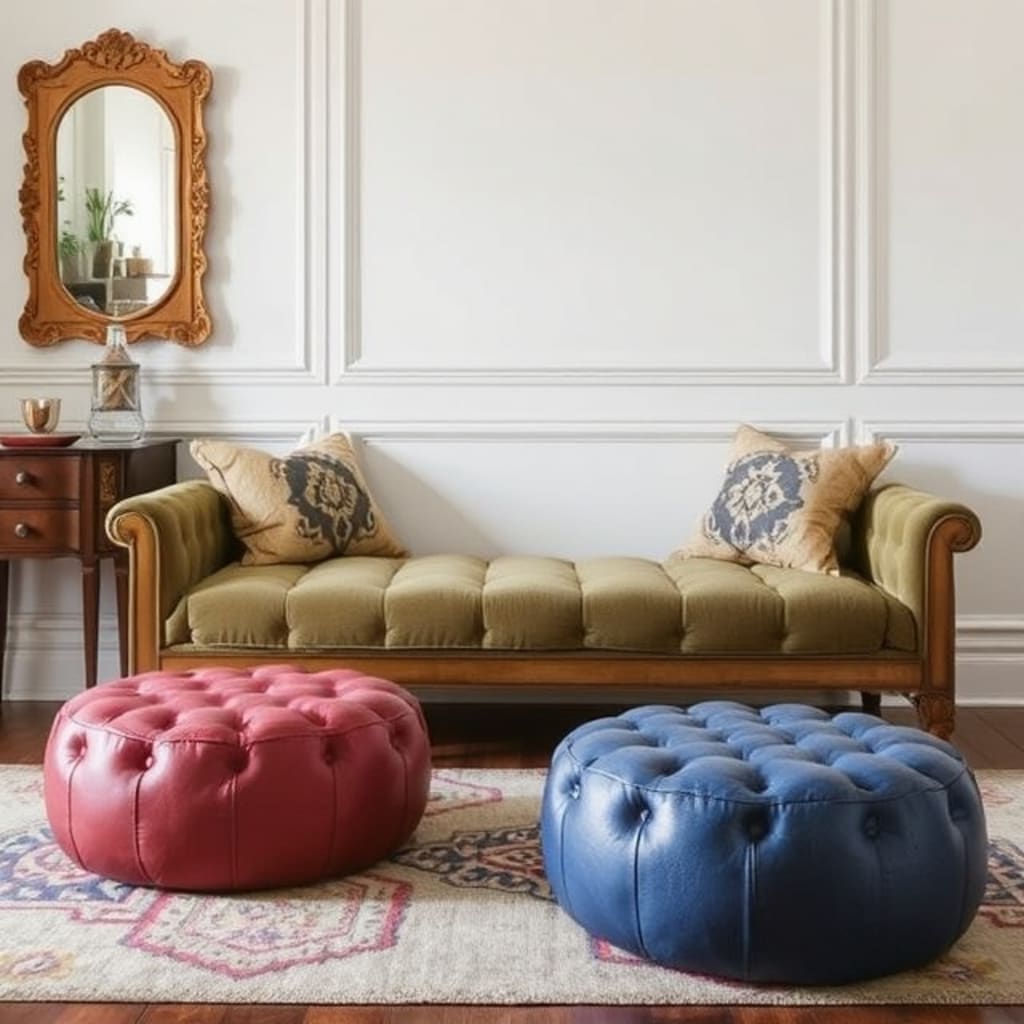
The bench pouf and ottoman are among the most enduring and versatile pieces of furniture, with a rich history that spans centuries. Originally designed as luxurious and functional seating, these pieces have evolved into essential elements of modern home décor. Their origins trace back to the 18th century, when they first gained prominence in the grand courts of Europe. Over the years, ottomans and poufs have undergone significant transformations, reflecting the changing tastes and needs of society. Despite these changes, they have remained beloved fixtures in homes around the world, offering a perfect blend of comfort, practicality, and style.
Origins in Royalty and Aristocracy
The earliest records of the ottoman and bench pouf date back to the 18th century, during the reign of European monarchs and aristocrats. The ottoman was initially introduced in the Ottoman Empire, and it was not long before it gained popularity in Western Europe, where it was embraced by royal courts. These early ottomans were low, cushioned pieces designed for relaxation and comfort. They were often upholstered in luxurious fabrics, such as velvet or silk, and adorned with intricate designs that reflected the opulence of the time. Ottomans were typically placed in grand salons, drawing rooms, or palaces, where they added both comfort and sophistication to lavish interiors.
The bench pouf, which shares many characteristics with the ottoman, emerged as a similar piece of furniture. Its low-profile design and plush padding made it a desirable seating option in these elegant spaces. Like the ottoman, bench poufs often featured rich upholstery, ornamental details, and decorative elements that exuded a sense of refinement. These furniture pieces were highly prized among the aristocracy, becoming symbols of luxury and status in affluent homes. For centuries, they remained associated with royalty, and their use was considered a sign of prestige.
The Evolution of Design in the 19th Century
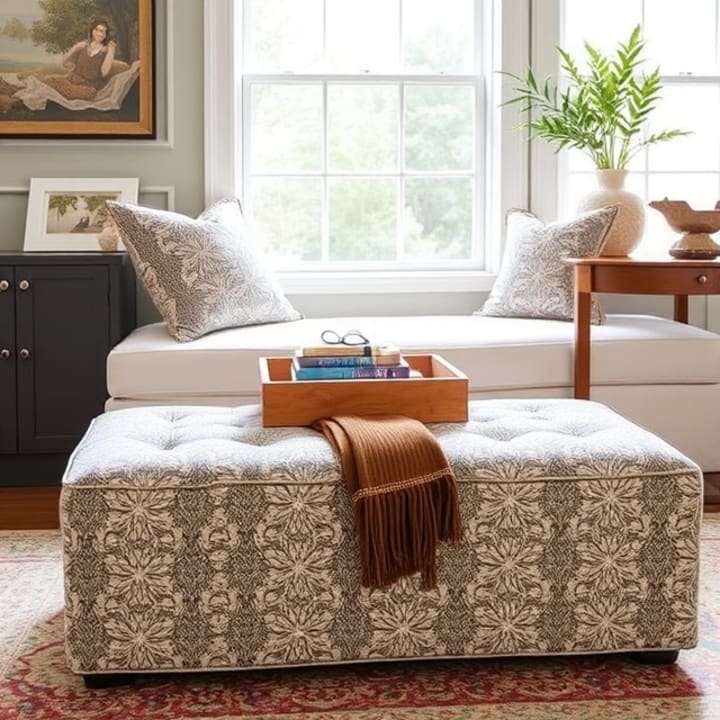
As the 19th century brought about significant social and economic changes, the popularity of ottomans and poufs began to spread beyond the royal courts. The Industrial Revolution and the rise of the middle class made luxury items like these more accessible to a broader audience. During this time, furniture design began to shift to accommodate the changing needs of society. Ottomans and poufs transitioned from exclusive, ornate pieces to more practical and versatile furnishings suitable for a wider range of homes.
The growing demand for functional furniture led to the development of multi-purpose ottomans and bench poufs. These pieces, once seen as purely decorative, began to serve more practical functions. They were designed not only as seats but also as storage solutions, offering homeowners a way to maximize space in increasingly crowded living environments. Ottomans, in particular, became popular as footrests and even as coffee tables, providing both comfort and utility. Their design evolved to suit the tastes of the middle class, with simpler, more understated forms that retained the elegance of earlier versions but were more accessible to a wider audience.
Adapting to Modern Tastes in the 20th and 21st Centuries
As the design world continued to evolve into the 20th century, ottomans and bench poufs adapted to the changing aesthetics of modern interiors. In the early 20th century, these pieces became more streamlined and functional, reflecting the rise of minimalist design. Furniture designers sought to create pieces that were not only beautiful but also practical and space-efficient. Ottomans and poufs were no longer seen solely as symbols of wealth and opulence; they became fixtures in middle-class homes, where functionality and versatility were key.
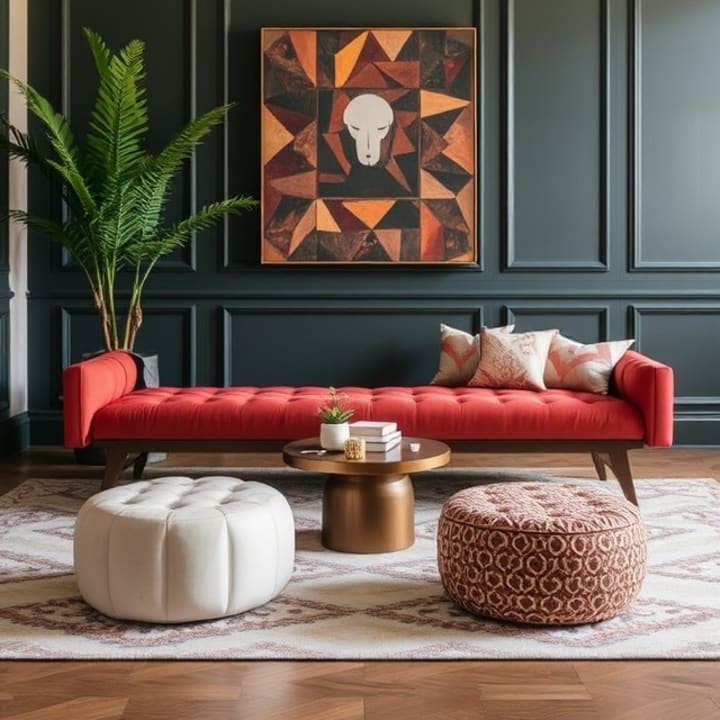
In the mid-20th century, as interior design trends began to shift again, ottomans and poufs saw a resurgence in popularity. The mid-century modern movement embraced clean lines, neutral tones, and minimalist designs, and ottomans were designed to fit seamlessly into this aesthetic. Poufs, in particular, became iconic elements of modern interiors, often featuring geometric patterns, natural textures, and bold colors.
By the late 20th and early 21st centuries, ottomans and bench poufs had become indispensable in contemporary homes. They were no longer just functional seating options but were reimagined in a variety of styles and materials, from plush velvet to sleek leather, to suit diverse tastes. These pieces became staples in both minimalist and eclectic homes, where they were used as seating, footrests, coffee tables, and storage units. Their adaptability made them ideal for small apartments and large family homes alike, where space efficiency and style are equally important.
The Enduring Legacy of Ottomans and Bench Poufs
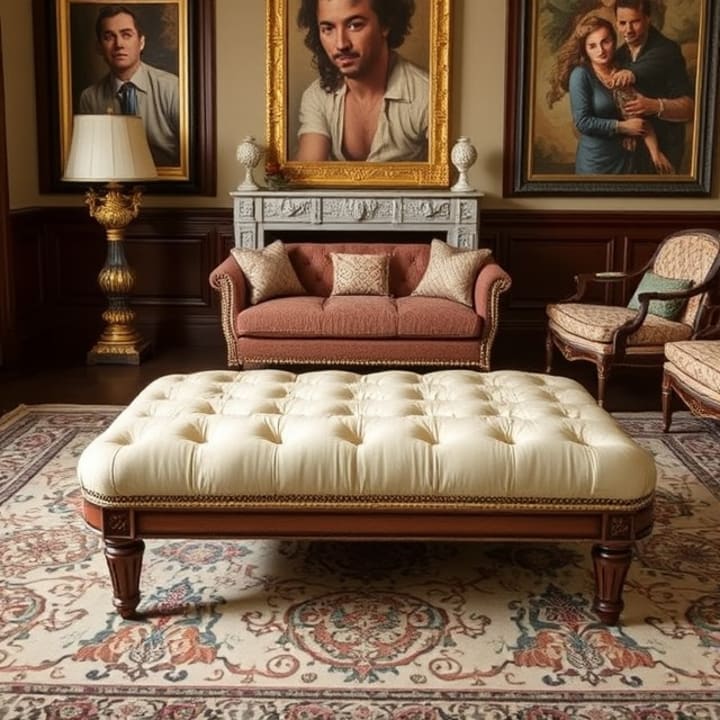
Today, ottomans and bench poufs continue to be beloved and practical elements of interior design. Their ability to combine comfort and style, along with their versatility, ensures they remain essential pieces in contemporary living spaces. Whether used as extra seating for guests, a footrest after a long day, or a stylish storage solution, these pieces continue to offer the perfect balance of function and beauty.
Their evolution from exclusive, aristocratic furnishings to everyday essentials reflects the changing tastes and needs of society over time. Despite their transformation, bench poufs and ottomans have retained the charm and sophistication that made them so beloved in the first place. Their ability to adapt to different home styles, from traditional to modern, ensures that they will remain timeless pieces, adding both elegance and practicality to living spaces for generations to come.
As we look ahead, the bench pouf and ottoman will undoubtedly continue to evolve, maintaining their status as symbols of comfort, style, and timeless appeal.
About the Creator
Keep reading
More stories from Opaa Homes and writers in Longevity and other communities.
The Psychology of Furniture: How Your Choices Can Influence Your Mood and Well-Being
Furniture does much more than simply occupy space in your home or office. It has the power to shape our mood, boost productivity, and enhance our overall well-being. Whether we realize it or not, the colors, shapes, and arrangement of furniture pieces directly influence how we feel and interact with our environment every day. By understanding the psychology behind our furniture choices, we can create spaces that not only look aesthetically pleasing but also contribute positively to our emotional and mental state.
By Opaa Homesabout a year ago in Lifehack
Day 4 of Quitting
If this is how sobriety feels, maybe it’s better to go through life a little buzzed… this, along with other hits like, I want to kill myself, I wish I was dead, and I’m going to throw myself off a bridge have been the only thoughts on rotation these past few days. I promise myself that if, in a month, I still feel like this (‘this’ meaning despondent, full of rage, and simultaneously numb) I can go back to smoking. Until mid-February though? Nicotine is off the table.
By sleepy drafts11 days ago in Longevity
Saudi Arabia Medical Ceramic Market Size and Forecast 2025–2033
The Saudi Arabia Medical Ceramic Market is expected to reach US$ 340.42 million by 2033, up from US$ 188.15 million in 2024, expanding at a CAGR of 6.81% during 2025–2033. This strong growth trajectory reflects rising healthcare expenditures, an aging population, increasing demand for complex surgical procedures, and rapid developments in biocompatible materials for orthopedic and dental applications. As Saudi Arabia continues to transform its healthcare ecosystem under Vision 2030, medical ceramics are emerging as a foundational material supporting advanced diagnostics, minimally invasive surgery, and long-term implant solutions.
By Aaina Oberoi4 days ago in Longevity
So You Decided To Become a Nurse Practitioner:
So you decided to become an "Advanced Practice" nurse. Congratulations!... is what I would say if this was a good idea. Grad school? In this economy? What were you thinking? Likely it was something along the lines of either 1) “I've seen these other chucklefucks do it— Why can't I?” or even 2) “I've got a nice career, I should shake it up. I miss feeling like I have no clue what I'm doing.”
By Sandor Szaboa day ago in Fiction


Comments
There are no comments for this story
Be the first to respond and start the conversation.