

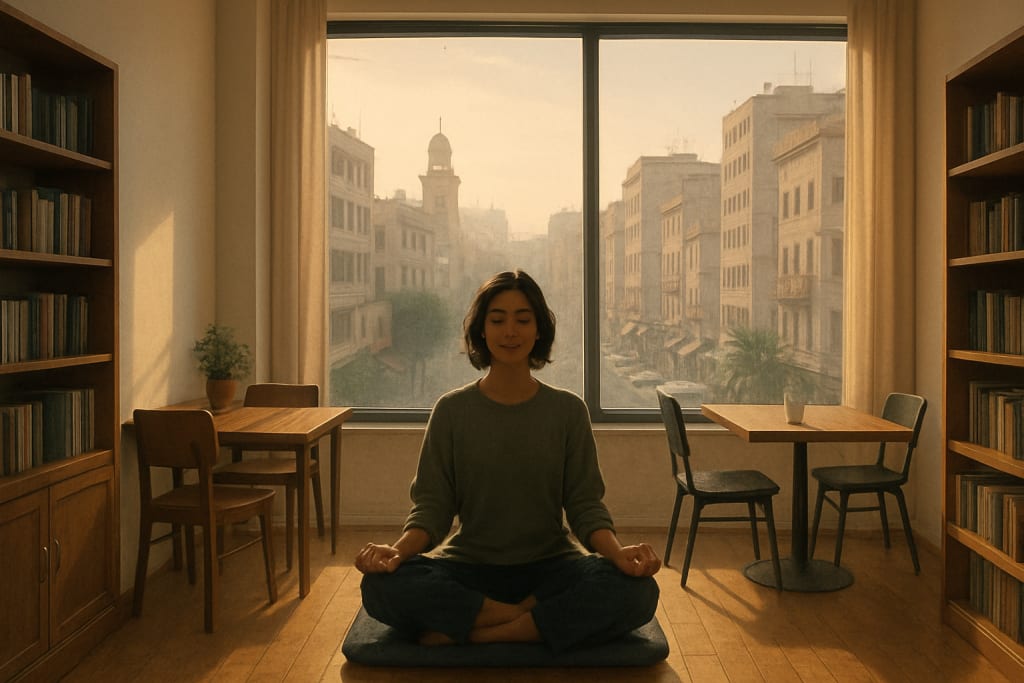
Is meditation truly a path to peace—or just another illusion sold by the wellness industry? In an era where self-help books flood bookshelves and influencers preach “good vibes only,” meditation has become a buzzword, a symbol of balance and success. But beneath the soft music, lotus poses, and Instagram quotes lies a bigger question: is meditation really as powerful as claimed, or is it just the latest trend in a billion-dollar personal development market? With science on one side and skepticism on the other, it’s time to take a closer look at what meditation actually does—and doesn’t—do.
Meditation’s rise in the West has paralleled the explosion of the self-help industry. Apps like Headspace and Calm have attracted millions of users and raised millions in funding. But unlike vague motivational speeches or one-size-fits-all coaching programs, meditation has roots that stretch back thousands of years. Originating in ancient India and developed through Buddhist, Hindu, and Taoist traditions, meditation was never meant to be a quick fix or a productivity hack—it was a spiritual discipline aimed at deep inner transformation. The modern repackaging of it, critics argue, strips away its depth in favor of something marketable and palatable. So is the modern version still valid?
Science suggests: yes, but with nuance. Peer-reviewed studies published by Harvard Medical School and Johns Hopkins University show that regular meditation can reduce stress, anxiety, and symptoms of depression. It’s even been linked to improved memory, better focus, and lower blood pressure. MRI scans have revealed that long-term meditation can physically change the brain, increasing gray matter density in areas linked to learning and emotional regulation. However, researchers also warn that these effects are modest, not magical. Meditation is not a cure-all, and results depend heavily on the method, frequency, and the individual’s mental state.
Another layer to the meditation debate is its commodification. When something ancient and spiritual becomes a product, what gets lost in translation? Critics argue that meditation has been hijacked by corporate culture—not to empower people, but to help them tolerate toxic environments. Companies offering mindfulness sessions might seem progressive, but some see it as a band-aid for burnout rather than a solution to overwork and systemic stress. A peaceful mind is noble, but when meditation is marketed as a tool for boosting productivity instead of fostering awareness, its original purpose fades. Are we meditating for inner peace—or just to become better cogs in the machine?
Yet despite the hype, there’s something undeniably valuable about stillness. In a world of distraction, endless scrolling, and mental overload, the simple act of sitting quietly with your thoughts can feel revolutionary. Meditation invites us to listen—to ourselves, to our breath, to what we’re usually too busy to notice. That isn’t a scam. That’s a skill. When practiced with sincerity and without expectation of instant enlightenment, meditation can offer clarity, presence, and a deeper sense of connection. But only if we approach it as a practice, not a product.
It’s also important to recognize that meditation isn’t one-size-fits-all. There are countless techniques—from mindfulness and loving-kindness meditation to transcendental and body scan practices. Some people thrive with guided sessions, while others find solitude more effective. The key is personal fit and consistency, not following a trend or mimicking what works for someone else on social media.
So, is meditation a myth or a miracle? Neither. It’s a method—one that works for some, not for all, and certainly not as a shortcut to happiness. Like any tool, its value depends on how and why it’s used.
Maybe the real illusion isn’t meditation itself, but our desire to turn every human experience into a quick solution. In chasing inner peace through five-minute sessions and mindfulness slogans, we risk forgetting the true purpose of meditation: not to escape reality, but to meet it, fully awake. And maybe that’s where the real healing begins.
About the Creator
Bubble Chill Media
Bubble Chill Media for all things digital, reading, board games, gaming, travel, art, and culture. Our articles share all our ideas, reflections, and creative experiences. Stay Chill in a connected world. We wish you all a good read.
Keep reading
More stories from Bubble Chill Media and writers in Longevity and other communities.
The Power of Slowness
What if everything you believe about success and productivity is wrong? In a world addicted to speed—fast food, fast fashion, fast Wi-Fi—we’ve come to associate slowness with laziness, weakness, or failure. But what if slowing down is not only healthier, but actually smarter? Across the globe, from Scandinavian schools to Japanese tea ceremonies, a quiet revolution is emerging: the celebration of slowness. And this movement is more than a lifestyle trend. It’s a radical shift in how we live, work, and think.
By Bubble Chill Media 8 months ago in Longevity
What Happens to Your Body When You Skip Meals Regularly
“I’ll eat later.” “I’m not that hungry.” “I’m too busy.” For many university students, skipping meals feels normal. But when student irregular eating becomes a habit, your body starts responding in ways you might not immediately notice.
By Being Inquisitive4 days ago in Longevity
The Weight of a Touch: Why My best Training Equipment Isn't made of Iron
The Weight of a Touch: Why My Best Training Equipment Isn't Made of Iron The air in a commercial gym is thick with more than just the smell of rubber mats and recycled oxygen. If you stop moving for a second and just observe, you’ll feel it—a heavy, invisible fog of human ambition, deep-seated anxiety, and the restless energy of people trying to outrun their own shadows. Most personal trainers see this environment as a simple workspace where calories are burned and muscles are built. But for me, the gym floor is a sanctuary where two souls meet in a very raw, vulnerable state. And because of what I’ve survived, I refuse to walk onto that floor without a very specific kind of protection.
By Feliks Karić4 days ago in Longevity
When the Shelter Closes
Across the street from my house, a man slept under a tree, his dog by his side. My first, naive thought: he must be traveling through. But he kept coming back, often sleeping there during the day. Then it hit me—that person might not have a home.
By Bride of Sound4 days ago in Humans



Comments
There are no comments for this story
Be the first to respond and start the conversation.