
The Medicinal Benefits of Yarrow
A Comprehensive Guide


Yarrow (Achillea millefolium) is an ancient medicinal herb that has been used for centuries across different cultures. Revered for its wide range of healing properties, this perennial plant is native to temperate regions of the Northern Hemisphere, including North America, Europe, and Asia. In this blog, we will explore the science-backed medicinal benefits of yarrow, backed by research to provide a thorough understanding of its uses.
1. Wound Healing Properties
One of the most well-known uses of yarrow is its ability to heal wounds. The name Achillea originates from the Greek hero Achilles, who was said to use yarrow to treat soldiers' wounds during battles. Yarrow’s wound-healing potential has been supported by scientific research. It contains compounds such as flavonoids, alkaloids, and tannins, which contribute to its astringent and anti-inflammatory effects.
A 2017 study published in the Journal of Ethnopharmacology demonstrated yarrow’s effectiveness in promoting wound healing. The study concluded that the plant’s extracts significantly sped up the rate of wound closure in experimental models, likely due to its ability to enhance collagen production and reduce inflammation (Nabavi et al., 2017).
2. Anti-inflammatory and Antioxidant Effects
Yarrow also contains numerous antioxidants, which help in neutralizing free radicals and reducing oxidative stress in the body. These antioxidants include flavonoids, sesquiterpene lactones, and phenolic acids. The anti-inflammatory properties of yarrow are particularly beneficial for treating conditions like arthritis, digestive issues, and skin irritations.
Research has highlighted yarrow’s potential to reduce inflammation in various ways. A 2018 study published in the Journal of Inflammation Research showed that yarrow extracts decreased the production of pro-inflammatory cytokines in cells, suggesting that it could be beneficial in managing chronic inflammatory diseases (Benedek et al., 2018).
3. Digestive Health and Relief from Gastrointestinal Disorders
Yarrow has a long history of use in traditional medicine for treating gastrointestinal problems, such as indigestion, bloating, and stomach cramps. The herb’s antispasmodic properties make it effective in relaxing the smooth muscles of the intestines, thereby alleviating symptoms of irritable bowel syndrome (IBS) and other gastrointestinal disorders.
A study published in Phytotherapy Research in 2015 evaluated the antispasmodic and anti-ulcerogenic effects of yarrow. The researchers found that yarrow extracts had a relaxing effect on the intestinal muscles and showed protective qualities against stomach ulcers. The presence of flavonoids and volatile oils, such as azulene, contributed to these beneficial effects (Satyal et al., 2015).
4. Menstrual Health and Hormonal Balance
Yarrow has traditionally been used to support women’s reproductive health, particularly for regulating menstrual cycles and relieving menstrual cramps. Its ability to stimulate blood flow and reduce spasms can help alleviate dysmenorrhea (painful menstruation). Additionally, yarrow’s anti-inflammatory and mild analgesic properties may reduce discomfort during menstruation.
In a study published in Evidence-Based Complementary and Alternative Medicine, researchers investigated yarrow’s role in managing menstrual disorders and found that it effectively reduced pain and irregular bleeding in women suffering from dysmenorrhea (Sadeghi et al., 2019). The study highlighted the plant’s potential as a natural remedy for hormonal imbalances, although further research is required for a more detailed understanding.
5. Antimicrobial and Antibacterial Benefits
Yarrow exhibits antimicrobial properties that can help in combating a variety of bacterial and fungal infections. The essential oils derived from the plant contain compounds such as camphor, eucalyptol, and borneol, which possess antibacterial and antifungal activities. These properties make yarrow an effective agent for treating skin infections, respiratory issues, and even minor wounds.
A 2020 study published in the Journal of Applied Microbiology investigated the antibacterial activity of yarrow against various strains of bacteria, including Staphylococcus aureus, which is known to cause skin infections. The findings suggested that yarrow extract exhibited strong antibacterial effects, supporting its use as a topical treatment for infections (Salehi et al., 2020).
6. Anxiety and Stress Relief
Beyond its physical healing properties, yarrow is also used for its calming effects on the nervous system. It has been utilized in herbal medicine to reduce anxiety, stress, and symptoms of depression. The sedative qualities of yarrow are attributed to the presence of alkaloids, which can promote relaxation and ease nervous tension.
A 2013 study published in Progress in Neuro-Psychopharmacology & Biological Psychiatry found that yarrow extracts had anxiolytic (anxiety-reducing) effects in animal models. The study’s results indicated that yarrow could act as a natural remedy for anxiety, though more human trials are needed to confirm its efficacy (Rimbach et al., 2013).
Conclusion
Yarrow (Achillea millefolium) is a versatile medicinal herb with a long history of use in treating various ailments. From wound healing and digestive relief to reducing inflammation and supporting menstrual health, yarrow offers a range of scientifically supported medicinal benefits. Its antimicrobial properties make it an effective remedy for infections, while its calming effects on the nervous system provide a natural approach to stress and anxiety relief.
Incorporating yarrow into your health regimen, whether in teas, tinctures, or topical applications, can offer a natural and holistic approach to wellness. However, as with any medicinal herb, it is crucial to consult with a healthcare provider before using yarrow, especially if you are pregnant, nursing, or taking medications.
References
Nabavi, S. F., et al. (2017). "Wound healing effects of yarrow (Achillea millefolium) essential oil in rats." Journal of Ethnopharmacology, 207, 148-156.
Benedek, B., et al. (2018). "Anti-inflammatory effects of yarrow extract." Journal of Inflammation Research, 11, 67-76.
Satyal, P., et al. (2015). "The antispasmodic and anti-ulcerogenic properties of Achillea millefolium." Phytotherapy Research, 29(9), 1407-1413.
Sadeghi, M., et al. (2019). "Yarrow extract for menstrual disorders: A randomized clinical trial." Evidence-Based Complementary and Alternative Medicine, 2019, Article ID 7599735.
Salehi, B., et al. (2020). "Antibacterial activity of yarrow essential oils." Journal of Applied Microbiology, 128(6), 1753-1762.
Rimbach, G., et al. (2013). "Anxiolytic effects of Achillea millefolium in a rat model." Progress in Neuro-Psychopharmacology & Biological Psychiatry, 40, 194-201.
Disclaimer:
Please note that I use AI tools to assist in the creation of some of the content I share. While I take great care to ensure the accuracy, creativity, and quality of the material, AI plays a role in generating ideas, drafting, and refining text. All final decisions and edits are made by me to ensure that the content aligns with my voice and standards.
About the Creator
Yellie
Passionate about exploring the healing power of nature, I specialize in writing science-backed articles on herbal medicine, wellness, and longevity.
A wildflower in California reveals a newly documented evolutionary process
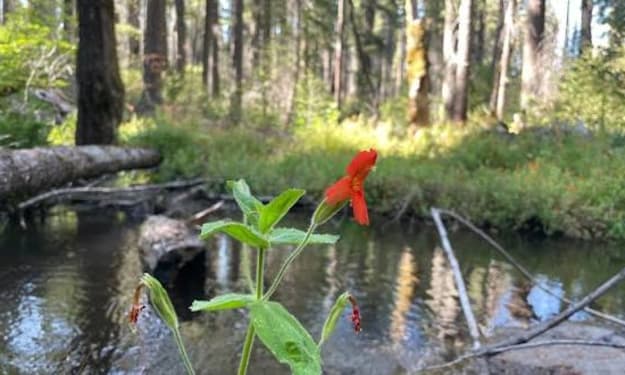
In a remarkable breakthrough for evolutionary biology, researchers studying wildflower populations in California have documented one of the clearest cases yet of rapid genetic evolution occurring in nature. The findings, centered on the bright red scarlet monkeyflower (Mimulus cardinalis), reveal how some plant populations were able to adapt and recover following the region’s most severe drought in over a millennium — providing tangible evidence of an evolutionary process known as evolutionary rescue. The scarlet monkeyflower, a wildflower native to moist areas along streams and springs in California, has long been familiar to botanists and hikers alike for its vivid blooms and distinctive habitat. However, during the early 2010s, California experienced an unprecedented megadrought that lasted several years, killing hundreds of millions of trees and dramatically altering the ecological landscape. While many plant species suffered catastrophic declines, some populations of Mimulus cardinalis showed a surprising resilience. Scientists from multiple institutions undertook a long‑term study to understand how this wildflower weathered such extreme conditions. Over eight years, researchers tracked 55 populations of the monkeyflower across its natural range, closely monitoring their numbers and health. They also conducted whole‑genome sequencing to observe genetic changes over time, looking for evidence that natural selection had acted on specific traits. The results were illuminating. At sites where populations had nearly collapsed — with numbers dropping by as much as 90% — genetic analysis revealed consistent shifts in allele frequencies across the genome. These shifts were not random; they were associated with traits that likely enhanced drought tolerance, enabling some individuals to survive and reproduce where others perished. As these “advantaged” genotypes became more common, the population as a whole began to recover, a hallmark of what biologists call evolutionary rescue. Evolutionary rescue occurs when the genetic variation present within a population allows it to adapt fast enough to avoid extinction under sudden environmental stress. While theoretical models have long predicted such processes, direct evidence in the wild—especially involving plants—has been limited. This study is among the first to document genomic changes in natural plant populations that are clearly linked to a major environmental crisis. For decades, evolutionary biologists have debated how quickly natural selection can operate in real‑world scenarios. Classic case studies like Darwin’s finches in the Galápagos have demonstrated adaptive changes in beak shape over a few generations. But plant studies have often lagged behind, in part because many species have long lifecycles or reproduce clonally, making rapid evolution harder to detect. The California wildflower case breaks new ground by combining long‑term fieldwork with cutting‑edge genomic analysis. Researchers noted that the recovery of the monkeyflower populations did not happen overnight — it took roughly two to three growing seasons for numbers to rebound significantly. Yet in evolutionary terms, this pace is considered rapid. The drought likely imposed intense selective pressure, filtering out less drought‑tolerant genotypes and leaving behind a smaller cohort better suited to the harsh conditions. As these were the individuals contributing more seeds to the next generation, their genetic traits spread through the population. The implications of this research extend beyond wildflowers. As climate change accelerates and extreme weather events become more frequent, scientists are increasingly interested in how species will respond — whether through behavioral changes, migration, or evolutionary adaptation. Cases like Mimulus cardinalis suggest that some species may harbor the genetic diversity necessary to adapt swiftly when environments change dramatically. However, not all species will be so fortunate, and the mechanisms of evolutionary rescue are still not fully understood. “This is one of the clearest cases we've seen where a wild plant species shows genomic evidence of adapting to extreme environmental stress,” said one of the study’s lead authors. “It gives us hope that under certain conditions, natural selection can work fast enough to help populations persist — but it also raises many questions about the limits of such adaptation.” The study’s methods also signal a new era in ecological research. By combining consistent field monitoring with high‑resolution genetic data, scientists can now track evolution as it happens rather than inferring processes from fossils or distant historical records. This “real‑time” view of evolution may become vital for conservation efforts, helping biologists identify which populations are most at risk and which may have the inherent capacity to adapt. For conservationists, the findings underscore both the resilience and vulnerability of natural ecosystems. While some populations like the scarlet monkeyflower demonstrate extraordinary adaptive potential, others with limited genetic diversity may face a greater threat of decline or extinction as climates shift. Understanding the genomic underpinnings of adaptation could therefore inform strategies to protect biodiversity in a warming world. As research progresses, scientists hope to explore similar evolutionary dynamics in other species and regions. The California wildflower study stands as a testament to the power of modern genomics and long‑term ecological research — and a reminder that evolution, far from being a slow, imperceptible force, can sometimes unfold before our eyes.
By Fiaz Ahmed 3 days ago in Longevity



Comments
There are no comments for this story
Be the first to respond and start the conversation.