
The Man Who Stopped Aging, the Love Story
A moving reflection on how love endures, evolves, and shapes our understanding of what it means to truly live

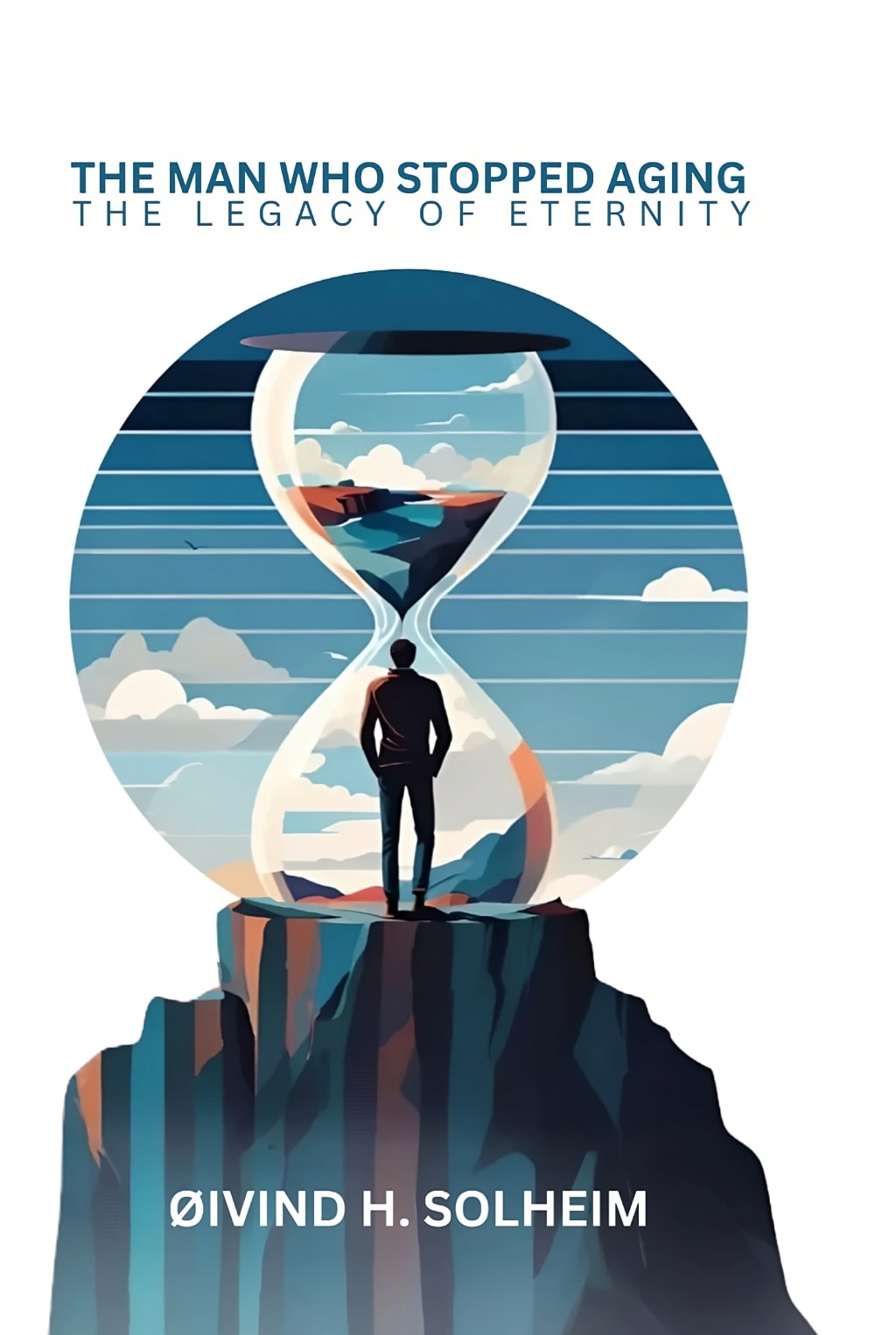
Can we halt the aging process?
In my latest novel, The Man Who Stopped Aging: The Legacy of Eternity, the love story unfolds against the backdrop of a groundbreaking discovery that halts the aging process. At the heart of this narrative is William, who, while grappling with the implications of eternal youth, finds himself navigating a complex web of love and loss. As he confronts the challenges of immortality, his relationships with those he loves take on new dimensions, blending tenderness, longing, and the deep bonds forged over time.
William's journey is not just about defying death but also about cherishing the moments that define a lifetime. Through his enduring love for Lina and his profound connection with Sarah, the novel explores the transformative power of love, even in the face of eternity. It is a story of devotion, memory, and the eternal quest to find meaning in an ever-changing world.
The Man Who Stopped Aging is a moving reflection on how love endures, evolves, and shapes our understanding of what it means to truly live.
The Man Who Stopped Aging, The Legacy of Eternity, a Novel
Øivind H. Solheim
Chapter 1 Beyond the Veil of Consciousness
On the brink of his ninth decade, William ventured into unknown terrain — not a physical landscape, but an existential frontier. The lab’s gentle hum enveloped him, providing comfort and a hint of the otherworldly.
Before him lay a journey that defied mortality’s grasp. Screens flickered, their data dancing like constellations, and machines whirred in coordination with human ingenuity. Here, in this cradle of digital consciousness, the boundary between man and machine blurred.
Dr. Evelyn Archer, a trailblazer in neural digitization, greeted him with a smile that masked the gravity of their endeavor. “Are you ready to transcend mortality, William?” Her voice was filled with warmth and scientific curiosity.
William’s nod belied the racing of his heart — a mix of exhilaration and trepidation. “As ready as one can be,” he replied, his gaze tracing the contours of the equipment poised to delve into the recesses of his mind.
The process, as Dr. Archer explained, involved mapping his connectome with unprecedented detail. Every neural pathway, every synaptic connection that wove his memories, thoughts, and emotions would be digitized and transplanted into a virtual existence.
William envisioned his consciousness drifting through the digital ether, liberated from the constraints of his aging physical form.
As he reclined within the scanner — a sleek apparatus resembling a fusion of a medical MRI and a futuristic sarcophagus — William contemplated the journey that had led him here.
From the dog-eared pages of philosophical treatises and science fiction novels that had ignited his youthful curiosity to the poignant losses that had etched impermanence into his soul, each step had been a preparation for this pivotal instant.
The machine hummed to life, and a tranquil voice urged him to relax, directing his focus toward his most potent memories.
William shut his eyes, and there they were: Lina and Sarah, their smiles etched behind his eyelids — the echo of their laughter, the tender warmth of their touch.
These memories constituted the very essence of his being. He hoped they would remain intact in his new digital form.
Dr. Archer explained that his genetic makeup would be analyzed as part of the preparation for examining his biological foundations.
“We anticipate that the scans will uncover previously unknown mutations or alterations that may be contributing to your extended lifespan,” she noted.
William gazed at her, his exterior serene, yet a potent tension simmered within. She continued, “This may involve memories of experimental treatments or therapies you’ve undergone, potentially bringing up aspects of tension and ethical dilemmas.”
“In regard to the neural digitization process,” the doctor explained, “a crucial objective currently is to elucidate the effects of mapping and transferring your consciousness into a digital domain on your biological and psychological state.”
“Alright.” William gained a sliver of confidence. “Will I experience any sensations — such as pain — or their absence?”
“I wouldn’t expect so,” Dr. Archer replied. “We will investigate any potential side effects or unexpected outcomes of this sophisticated technology, under the presumption that it is completely safe.”
As the scan progressed, Dr. Archer monitored the data streaming in real-time, her face illuminated by the soft glow of the computer screens.
“We’re seeing excellent fidelity in the memory encoding,” she remarked, her voice tinged with excitement. “Your consciousness is being mapped with incredible detail.”
The process was both exhaustive and invasive, delving into corners of his mind that William had long forgotten.
Childhood memories, once tucked away in the recesses of his mind, now stood exposed — catalogued by the unerring eye of the machine. Those long-lost dreams, the ephemeral dance of joy and despair — all unfurled like ancient scrolls, their ink etched in neural patterns.
As the scan reached its final crescendo, William experienced a curious sense of disembodiment. It was as if a spectral thread connected him to the digital realm — a whisper of existence already woven into the ones and zeros.
The boundary blurred further, and he wondered: Was he still William, or had he become something more?
Dr. Archer helped him to his feet, her eyes gleaming with the success of their endeavor.
“Welcome to your new beginning, William,” she said, offering her hand.
William accepted her hand, feeling a mix of excitement and apprehension. “Thank you,
Dr. Archer. I feel this is quite overwhelming. I have numerous questions.”
“That’s understandable,” Dr. Archer smiled. “What is it that you wish to know?”
William paused, then said, “How will this treatment affect my daily life? Will I notice any changes?”
Dr. Archer led him to a nearby chair, where they both sat. “In terms of daily experiences, there should be minimal difference. You’ll continue living your life as you have, encountering the full range of life’s moments. The primary difference is that you won’t age as you once did. Your physical deterioration will be dramatically slowed.”
William looked at her, his brow furrowed in curiosity. “So, I won’t grow older? Not in the traditional sense?”
“Correct,” Dr. Archer said. “Your cells will continue to function efficiently, repairing themselves and resisting the typical signs of aging. You will maintain your current state of health and vitality for an extended period.”
William nodded slowly, taking it all in. “What about the psychological effects? Will I still feel like myself, or will this change me in other ways?”
“Psychologically, you will continue to be the same individual. Your memories and personality — those are essential aspects of your identity and will remain unchanged. The challenge will be in adjusting to the concept of an extended lifespan and the implications that come with it.”
“Implications?” William echoed, intrigued. “What do you mean by that?”
“Living significantly longer than those around you can be a bit challenging,” Dr. Archer elaborated. “Witnessing generations pass can be an emotionally demanding experience. It’s important to maintain connections and find new purposes as time progresses.”
William considered her words carefully. “I suppose it’s something I’ll have to adapt to as it happens. But, in practical terms, how soon will I notice these changes?”
“The process is gradual,” Dr. Archer replied. “You might start to notice subtle differences in a few months. Increased energy, quicker recovery from minor illnesses, things like that. The full impact of the treatment’s effects will unfold over the coming years.”
William thought, feeling a wave of curiosity tinged with a hint of unease. “And there are no significant side effects? No hidden drawbacks?”
Dr. Archer shook her head. “We’ve designed this treatment to be as seamless as possible. The technology is advanced, but we’ve tested it thoroughly. You should be able to live your life with minimal disruption.”
William sighed, feeling a mixture of relief and uncertainty. “This is a lot to process, Dr. Archer. I’m filled with excitement yet somewhat apprehensive,” he confessed.
“That’s completely natural,” she replied gently. “Just take it one step at a time. You’re beginning a new chapter, but it’s your life, now with extra moments to cherish.”
William smiled, reassured. “Thank you, Dr. Archer. I think I’m ready to embrace this new beginning.”
Dr. Archer returned his smile. “That’s good, William. Please feel free to reach out if you have questions.”
William rose, filled with a renewed sense of purpose. “I will. And thank you again. For everything.”
Dr. Archer watched him as he left the room, her expression one of satisfaction and hope. “You’re welcome, William. Welcome to your new life.”
In the ensuing weeks, William immersed himself in a series of sessions, acclimating to the contours of his digital existence.
A virtual haven materialized — a simulacrum of his cherished study, replete with westward-facing windows that framed pixelated sunsets and shelves adorned with digital books.
Here, unshackled by the constraints of flesh and bone, he delved into the annals of philosophy and the enigma of consciousness.
Yet, within this binary sanctuary, existential questions loomed: What defines his essence now? Was he still William, or had he metamorphosed into an algorithmic wanderer, seeking meaning in the ether?
The answers remained elusive, encrypted in the very code that animated his newfound being. Was this digital consciousness truly him, or merely a copy? Could a collection of data, no matter how detailed, capture the essence of a human soul?
In his moments of doubt, he found comfort in the digital manifestations of Lina and Sarah, reconstructed from his memories with astonishing accuracy. Their presence, albeit virtual, filled the void of their physical absence, offering a semblance of the connections that had defined his life.
As William forged ahead in this uncharted realm, he became a beacon for others intrigued by the prospect of digital immortality.
The lectures he gave, streamed to audiences around the globe, sparked debates on the ethics, implications, and potential of living beyond the physical plane.
Even as William accepted his newfound reality, the echoes of his human past stayed with him. These memories served as markers of the path that brought him to this point, filled with affection, bereavement, and yearning that molded his essence.
In the boundless realm of the digital world, William continued his quest for enlightenment, driven by an unwavering curiosity that had long defined his existence.
In this immense virtual cosmos, William found more than the prospect of everlasting life; he understood that the core of existence — with its splendor, its anguish, and its intricate depth — surpassed the limits of any one state of being.
Chapter 2: Sarah Goes Away
The room, previously a haven, now accentuated the void. William perched on the bed’s edge, his gaze fixed on the partially packed suitcase.
The silence, once a solace, now felt suffocating. He could hear Sarah humming softly from the bathroom, a tune he couldn’t place. Words failed him; she was already gone from the room.
Sarah’s death left a void. Standing in the center of the room, William felt the weight of her absence. The longing was palpable, a solitude as heavy as lead.
Their last conversation played in his mind. Unbeknownst to them at the time, that conversation would be their last. They discussed life, inspired by existentialist philosophers.
Sarah had brought light to his lonely world for years. The sun’s weak rays created a gloomy glow on the walls lined with books — mute witnesses to their quest for meaning. Sarah’s voice broke the silence. “We are forever exiled, longing for a realm beyond our reach. Is that not the greatest sorrow of humanity?”
William reflected. “Maybe. Our misfortune stems not from the pursuit but from believing there is a realm to acquire in the first place.”
“Exactly,” Sarah said, eyes gleaming with understanding. “Our lives are a battle with the absurdity of existence, against the wave of meaninglessness.”
He moved closer, holding his cup. “But isn’t there beauty in that battle? In resisting the absurd and creating meaning in an indifferent universe?”
She laughed, a hint of sadness in her voice. “We are rebellious souls, aren’t we? Finding meaning where there is none.”
They wandered through existential questions, discussing freedom, choice, and death.
Each topic was a thread in life’s intricate fabric.
“Every choice is a declaration of freedom but also a shadow of death,” Sarah said, eyes sparkling with passion.
“It’s a paradox,” William agreed. “Freedom is our greatest gift and our heaviest responsibility. In the end, we face our choices and mortality alone.” As the sun set, they talked about love, loss, happiness, and suffering.
“We find beauty and connection in this absurdity,” William said. “Isn’t that our true defiance? Finding joy in chaos?”
Sarah smiled, expressing the complexity of their journey. “Maybe that is our victory — to see beauty in exile, to build an inner kingdom despite its futility.”
Now, her voice was a ghostly companion. Her absence was tangible, echoing life’s fragility.
A smile touched his lips, recalling their talks about existential philosophers like Sartre and de Beauvoir.
“Yes, you are Simone, Sarah,” he had said.
“Well, then you must be Sartre,” she replied with a smile.
“No, I’m not,” he said. “And Simone was the greater philosophical spirit. Sartre benefited from his gender in how posterity views his contributions.” “Yes, she wrote ‘The Second Sex,’” Sarah noted.
“You see,” he said. “You’re the dedicated philosopher here.” They laughed at themselves, sharing a warm moment.
In this room, where her laughter once filled the air, William faced the existential questions alone. Sarah’s wisdom still guided him, shining in the dark universe. Her departure filled him with grief but also showed resilience against absurdity. Her absence urged him to embrace life’s highs and lows. This struggle defines humanity and identity.
Sarah’s death changed everything, thrusting him into a new reality. He had to cope now. Death, once abstract, became painfully real. Losing Sarah made him realize that nothing is permanent. Her absence is a reminder of life’s transience.
Books were his silent companions, reminding him of their life together. The walls, witnesses to their joy, now preserved her memory.
Sarah’s energy had once brightened his existence. “Have you ever wondered how fleeting this all is?” she asked, her voice a mix of wonder and sorrow.
“Life’s transience gives it intensity and beauty,” he replied, passing her a cup of tea. She gazed at the fading light. “That haunts me — the urge to live with purpose before the void comes.”
“Isn’t that what it means to be human? To seek meaning despite knowing our mortality?” Her bright laughter echoed. “True, we have no choice but to be free,” she said with philosophical resignation.
They spent the afternoon weaving words and silences, probing life’s futility. Looking back, William realized it was their last inquiry into the existential puzzle. Her absence was a void. She left abruptly, reminding him of life’s absurdity. In this room, where their dialogue haunts him, he faced solitude. Sarah unknowingly prepared him for this reckoning. Her lively words now sounded hollow.
The loss of her urged him to find meaning in absurdity. He has the freedom to create meaning from chaos, despite the void.
In the silenced room, among books of human thought, her essence lingers. Her spirit endures, a sign of the quest for meaning in an indifferent universe.
Lina was his first love, infusing life with meaning. Her laughter transcended the ordinary, giving him refuge from life’s dullness.
After Lina’s death, Sarah reignited his life. She gave him a new beginning.
Losing Lina and Sarah taught him something. He loved them both deeply. Sarah’s death is fresh, but it doesn’t diminish Lina’s importance.
Their house is full of memories. Every spot resonates with their shared times. The rooms, once lively, are now silent, except for faint echoes of laughter. Grief reminds him of their connection but also provides a sacred space for memories.
Lina’s memory offers companionship in solitude. In quiet moments, he senses her presence, her laughter a gentle breeze in the stillness.
About the Creator
Øivind H. Solheim
Novel author, lifelong learner and nature photographer: Poetry, short stories, personal essays, articles and stories on nature, hiking, physical and mental health, living in relationships, love, and future. “Make Your Dream Be Your Future”
Keep reading
More stories from Øivind H. Solheim and writers in Longevity and other communities.
Calm History Podcast
It is always amazing, and somewhat disturbing, how humans can mess up the most basic of processes. They eat ultra-processed foods. They drink too much alcohol. Their behavior with sex ranges from the bizarre to the toxic to the violent. Humans even mess up sleep. Ever see a dog with insomnia? According to the American Academy of Sleep Medicine, approximately 10% to 30% of adults worldwide suffer from insomnia at any given time, with up to 50% of people experiencing it in a given year. In the U.S., roughly 25 to 30 million people struggle with insomnia, and about 12% of adults have been diagnosed with chronic insomnia.
By Frank Racioppi4 days ago in Longevity
Two Grumpy Old Men Solve the Problem
Marty and Steve were two grumpy old men who lived together. They had known each other for years. Marty had been a bachelor all his life. Steve said it was because no one could stand to ever live with. Marty’s standard reply was “Well, you are, so what sort of a moron does that make you!”
By Calvin London3 days ago in Humor




Comments
There are no comments for this story
Be the first to respond and start the conversation.