
The important role of assistive technology in in home care
technology can save a life

Why Assistive Tech Matters and Why Backup Care Is Still a Mess
Let’s talk what it’s really like depending on in-home care. Not just the nice version people write in brochures. The real deal. Because if you’ve ever had to count on someone else to help you get out of bed, eat, shower, or even go to the bathroom, you already know there’s no room for failure. You need people to show up. You need a system that works.
And honestly, a lot of the time, it doesn’t.
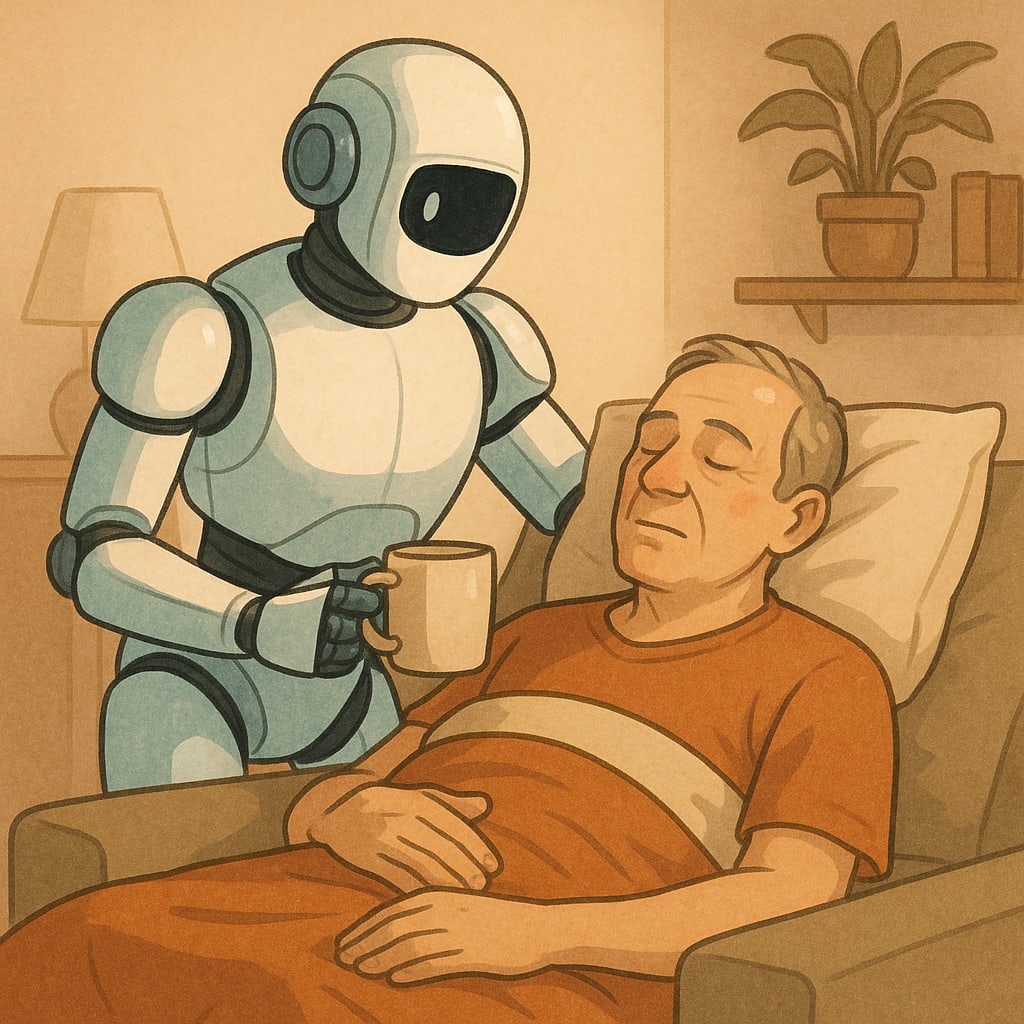
But before I get into all the ways it fails, I want to highlight something that gives people like me a little more power over our own lives’ assistive technology.
That stuff is a game changer.
I’m not talking about just high-end robotic gear. I mean basic tech, too—voice-activated devices, smart home tools, communication apps, electric wheelchairs with better control, door openers, feeding aids, medication reminders. Tools that let you get more done by yourself, on your own time, without waiting for a caregiver to do it for you.
When assistive tech works, it gives you some of that freedom back. You don’t have to ask someone to adjust the thermostat or turn the lights on or off. You don’t have to wait for someone to write things down for you if you have a communication app that lets you speak with your eyes or type with your voice.
It’s not about replacing caregivers completely. It’s about not needing them for every single little task. And that takes pressure off both sides. The person receiving care gets more independence, and the caregiver isn’t run into the ground trying to juggle 50 things at once.
That’s the good side.
Now for the reality check.
The backup system for caregivers is broken.
When your regular caregiver can’t make it—maybe they’re sick, or their car broke down, or they had a family emergency—there’s supposed to be a plan. Agencies promise they’ll send a replacement. They say they’ve got a pool of trained people ready to go.
But here’s what really happens.
You get a call an hour before your shift saying your caregiver can’t come. And then nothing. Maybe someone shows up late. Maybe no one shows up at all. Or maybe they send someone who’s never worked with you before and has no idea what they’re doing. That’s if you're lucky. Other times they just leave you hanging.
Imagine being stuck in bed for 12 hours because no one came. Imagine missing meals, skipping meds, not being able to use the bathroom. This isn’t just inconvenient—it’s dangerous. It can mess up your health, your mental state, your whole life.
And people act like it’s no big deal.
Let me be clear: it is a big deal. If you need help to live, and that help doesn’t show up, you are at risk. You’re vulnerable. You’re invisible to a system that says it’s built to support you but can’t even manage basic coverage when one person calls out.
It’s not just a one-time issue. It happens over and over. And it’s not about bad caregivers—most of them are doing their best with little support and low pay. The problem is the structure. Agencies are overbooked, underfunded, and sometimes just plain disorganized. They don’t keep enough trained people on call. They don’t plan for real emergencies. They assume families will step in. But not everyone has family nearby or family at all.
Even worse, when things go wrong, there's usually no accountability. You call to complain, and they say sorry and promise to do better next time. But then next time comes and it’s the same story. You’re left scrambling, again.
This is where assistive tech can help if it’s available. But let’s not kid ourselves. A lot of the most helpful tech is expensive. Insurance doesn’t always cover it. And the people who need it most are often the ones who can’t afford it.
So now we’re stuck in a cycle. The system fails, assistive tech could help, but we can’t always get it, and the result is people falling through the cracks. Over and over.
What we need is better support all around. We need agencies to have real backup plans, not just promises. We need more funding for in-home care and better pay for caregivers so more people want to do the job. We need assistive tech to be seen as essential, not optional.
And we need people to stop acting like disabled lives are something to fit in when it’s convenient. We exist all the time. We need care all the time. We deserve reliability, dignity, and safety just like anyone else.
This isn’t about asking for special treatment. It’s about being able to count on the basics. About not having to worry if you’ll get out of bed today or if you’ll be stuck hoping someone comes through.
And if we want to build a system that works, we’ve got to start listening to the people who live in it every day. Not just the CEOs or the policy makers. The people getting the care. The ones being let down.
So yeah, assistive tech helps. It’s a lifeline when it’s done right. The real fix must come from changing how care is handled when system fails
Because the current system isn’t built for when things go wrong. And for people like me, that’s not good enough. Hey some videos from YouTube showing you how this technology can give people with disabilities greater independence. https://www.youtube.com/watch?v=eT1TDAUd7I4
https://www.youtube.com/watch?v=d19g3MifrVA
About the Creator
Yvonne Knight
I'm trying to find a place for my writing.
Reader insights
Outstanding
Excellent work. Looking forward to reading more!
Top insights
Expert insights and opinions
Arguments were carefully researched and presented
Heartfelt and relatable
The story invoked strong personal emotions
Keep reading
More stories from Yvonne Knight and writers in Longevity and other communities.
The Home Healthcare System is Broken
The personal care Health system is so broken, and sometimes I wonder if it can be fixed. These people coming to your house, and they act like they are doing you a favor, but what caregivers fail to realize it Is they are gaining paid to perform a service. These people are coming whenever they feel like it and leave whatever they want to. It's they did that a typical job they would be fired immediately. As a client, I have to turn everyday people into personal care assistants. Most of the time, I have to direct my care to a stranger I have never met before; we have to learn to each other on the fly. There is this added worry if their personality Will meshes well with mine. I am an avid believer that you know necessarily have don't like the person you are working with if it Is a temporary situation. For example, if somebody is picking up a shift to fill in, then you can put aside the differences to get done with needs to be done. If you are spending a lot of days and hours with one person, then you have to find a personality that can gel with yours. You don't want a staff that treats you like you work for them. Like they can Control everything you do. You don't want somebody that's going to tried to Control your Financial well-being. There are so many things to consider when assessing a personal care aide. There are so many pitfalls to this whole system. You don't want to get too close, because most PCA's don't stick around very long. As you are ready to put down your guard with some of them, it seems those are the ones who are prepared to steal from you.
By Yvonne Knight6 years ago in Longevity
Day 4 of Quitting
If this is how sobriety feels, maybe it’s better to go through life a little buzzed… this, along with other hits like, I want to kill myself, I wish I was dead, and I’m going to throw myself off a bridge have been the only thoughts on rotation these past few days. I promise myself that if, in a month, I still feel like this (‘this’ meaning despondent, full of rage, and simultaneously numb) I can go back to smoking. Until mid-February though? Nicotine is off the table.
By sleepy drafts11 days ago in Longevity
Distributed Control Systems Market Outlook
Introduction: From Centralized Control to Distributed Intelligence Modern industry is no longer defined by isolated machines and manual supervision. Today’s factories, power plants, refineries, and utilities operate as interconnected digital ecosystems—where data, automation, and intelligent decision-making flow seamlessly across processes. At the center of this transformation stands the Distributed Control System (DCS).
By Janine Root 6 days ago in Longevity




Comments
There are no comments for this story
Be the first to respond and start the conversation.