
❄️🔥 The Hot–Cold Revolution: Why Saunas and Cold Plunges Are Becoming the New Fountain of Youth
Inside the viral wellness routine that promises better mood, longer life, and a stronger body — with surprisingly simple science

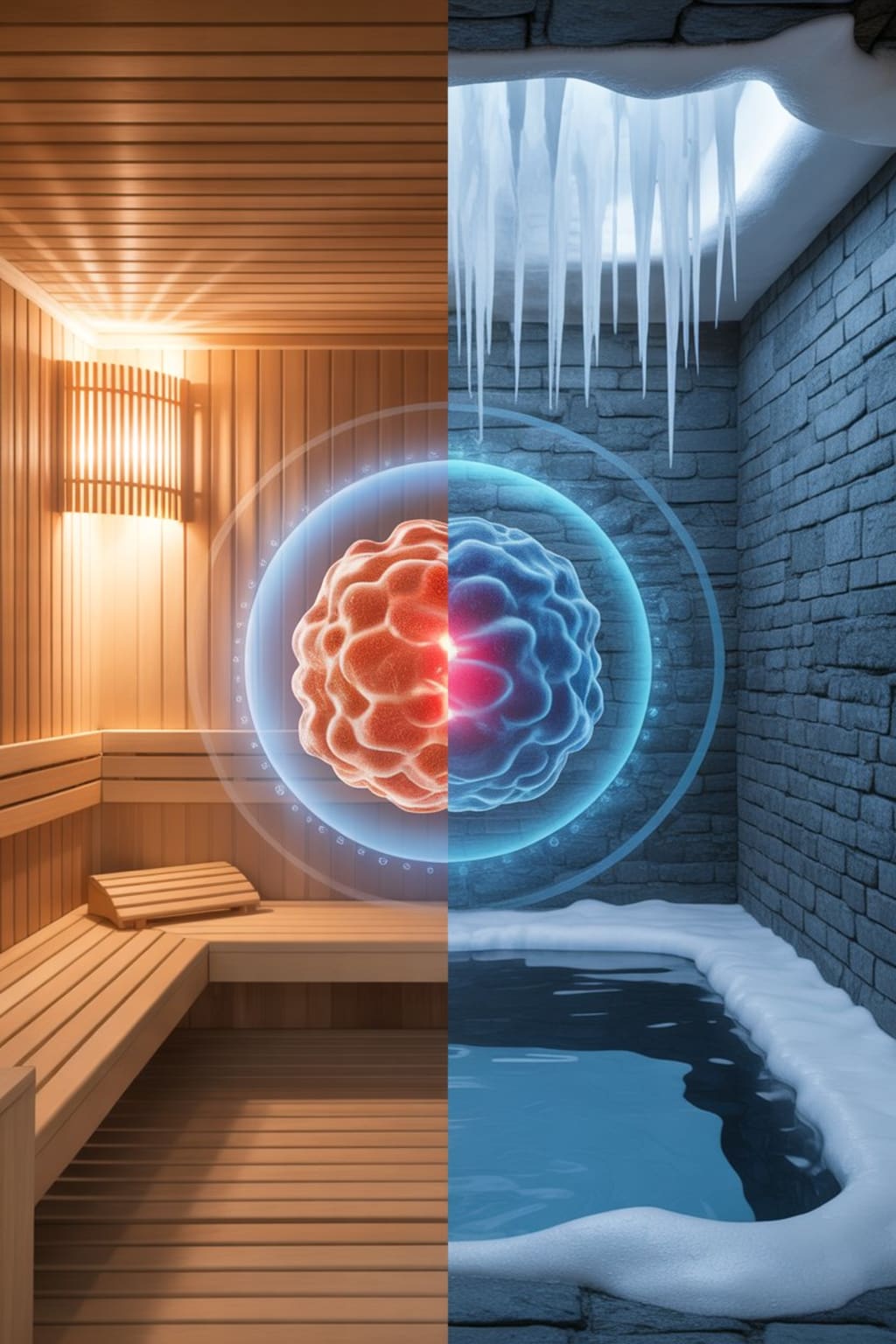
1. The Wellness Trend Taking Over the World
If you scroll through social media in 2025, you’ll find a new ritual everywhere:
People plunging into icy water, screaming, laughing, and then jumping into glowing, steamy saunas.
From everyday office workers to elite athletes and longevity influencers, the hot–cold routine has become the newest wellness obsession. Not for aesthetics. Not for weight loss. But for something deeper:
🔥 better mood
❄️ stronger immunity
🔥 faster recovery
❄️ reduced inflammation
🔥 improved sleep
❄️ longer lifespan
What seems like torture at first glance might actually be one of the most powerful longevity tools we have.
2. Why Stressing Your Body (a Little) Makes You Live Longer
The secret behind the hot–cold trend is a biological phenomenon called hormesis.
Hormesis is what happens when the body becomes stronger by experiencing small amounts of controlled stress — the same idea behind fasting, exercise, and certain supplements.
Both cold exposure and sauna heat create tiny, positive stress signals that force your cells to repair and upgrade.
Cold exposure does this by:
Activating brown fat (the “good fat” that burns energy)
Supercharging metabolism
Increasing dopamine by up to 250% (hello, good mood!)
Lowering inflammation
Training your cardiovascular system
Sauna heat does this by:
Increasing heat shock proteins (cellular repair tools)
Improving circulation
Lowering blood pressure
Enhancing detoxification
Boosting endurance
Together, they form a powerful cycle of recovery and repair — like pushing a reset button on your body.
3. The Ritual: How People Do Hot–Cold for Longevity
Most people follow a simple pattern:
1. Sauna – 10 to 20 minutes
Your body heats up, heart rate increases, you start sweating, and your cardiovascular system gets a gentle workout.
2. Cold plunge – 1 to 3 minutes
Your blood vessels constrict, your nervous system wakes up, and your brain floods with dopamine and norepinephrine.
3. Repeat 2–3 cycles
End with cold if your goal is fat-burning.
End with heat if your goal is relaxation.
This routine is being called:
“The natural antidepressant”
and
“The 15-minute longevity workout.”
4. Why Hot–Cold Therapy Is So Trendy in 2025
Three reasons:
1. Mental health crisis
People are overwhelmed, anxious, burned out — and looking for drug-free mood boosters.
Cold plunges deliver an immediate dopamine spike and long-lasting calm.
2. It’s easy and feels good afterward
Unlike extreme diets or brutal workouts, the hot–cold routine is surprisingly manageable.
Uncomfortable for a minute, but the afterglow is addictive.
3. The science is legit
Studies from Finland, Japan, and the U.S. show regular sauna users have:
40–60% reduced risk of heart disease
Longer lifespan
Lower rates of dementia
Better mood and sleep
Add cold exposure, and results are even stronger.
5. What People Experience After 2–4 Weeks
People who adopt the routine report stunning changes:
🎯 More energy
Cold exposure activates your sympathetic nervous system — your “go mode.”
😌 Less anxiety
The combination boosts neurotransmitters that stabilize mood and reduce stress.
💤 Deeper sleep
Post-sauna relaxation is powerful, making your body ready for rest.
🔥 Better metabolism
Heat and cold both raise calorie burn and improve insulin sensitivity.
🧠 Sharper thinking
Improved blood flow + reduced inflammation = clearer mind.
💪 Faster recovery
Athletes use hot–cold cycles to reduce soreness and speed muscle repair.
Many describe the routine as:
“Therapy for the body and brain.”
6. The Secret Benefit: Cold Plunges Increase Dopamine for Hours
This is one of the biggest reasons the trend exploded.
A single 1–2 minute cold plunge can increase dopamine by 250% —
and unlike caffeine or sugar, the rise is slow, steady, and long-lasting.
This means:
More motivation
More focus
Better mood
Less depression
More “mental toughness”
No supplement comes close.
Even better: The more you do it, the stronger the positive effects become.
7. But What About Safety?
Good news:
Saunas and cold plunges are safe for most people when done correctly.
❄️ Cold Plunge Safety
Avoid if you have:
Severe heart conditions
Uncontrolled high blood pressure
Never jump directly into ice water after alcohol — dangerous.
Start with:
30 seconds → 1 minute → 2 minutes.
🔥 Sauna Safety
Avoid if you have:
Severe cardiovascular issues
Low blood pressure
Start with:
8–10 minutes → gradually increase.
As always, consult a doctor if unsure.
8. You Don’t Need a Spa or Cold Tub to Start
Here’s the best part:
You can do hot–cold therapy at home for free.
Home version:
✔ hot shower for 4 minutes
✔ cold shower for 1 minute
✔ repeat 3 cycles
Even this simple routine gives benefits.
For cold exposure:
Cold shower
Ice packs
Face dunk in cold water
Standing outside in winter for 60 seconds
For heat:
Hot bath
Warm shower
Infrared heating pad
You don’t need luxurious facilities — just consistency.
9. The Bottom Line
Hot–cold therapy is not a fad.
It’s a return to something our ancestors did naturally — exposing the body to temperature changes that made it resilient.
In a world of comfort, we’ve lost that resilience.
This ritual brings it back.
A few minutes of discomfort → hours of clarity, calm, and energy.
Whether your goal is:
✔ living longer
✔ reducing stress
✔ boosting your mood
✔ improving your metabolism
✔ recovering faster
✔ or just feeling alive again
The hot–cold routine may be the simplest and most powerful longevity tool you ever try.
Sometimes the body doesn’t need luxury —
it just needs a little fire and a little ice.
About the Creator
Keep reading
More stories from arsalan ahmad and writers in Longevity and other communities.
🏃♂️ Zone 2 Cardio: The Secret Workout That Could Add 10 More Years to Your Life
1. The Fitness Trend Nobody Saw Coming For years, fitness culture was obsessed with intensity — HIIT classes, brutal bootcamps, fasted cardio, and sweat-drenched workouts that left you gasping for air.
By arsalan ahmad4 months ago in Longevity
Microsoft's Purposeful Marketing Deception About AI's Ability To Beat Physicians In Diagnosis
When you look at the world of scientific research... If you are not careful... You will be fooled into believing things that are not actually supported by the data.
By Dr. Cody Dakota Wooten, DFM, DHM, DAS (hc)a day ago in Longevity
A Transparent Look at Vocal Challenges and Top Stories
Almost three years ago, we shared a resource article that served as a place for people to suggest new challenge prompts. We thought it would be a good idea to refresh that thread, and take the opportunity to answer a few common questions about top stories, how challenges are judged and how submissions are reviewed.
By Vocal Curation Team4 days ago in Resources



Comments
There are no comments for this story
Be the first to respond and start the conversation.