
The Heartbeat Paradox: Order Within Chaos
Unveiling the Secrets of the Cardiac Cycle and ECG


The heart, revered across cultures as a symbol of life and emotion, beats relentlessly throughout our lives, fueling every cell in our body with oxygen and nutrients. Its rhythmic pulse, often taken for granted, belies a profound complexity that governs its function. Have you ever paused to ponder what truly happens during a heartbeat? Beyond its outward simplicity lies a symphony of precise electrical signals and coordinated muscular contractions, orchestrating the intricate dance known as the cardiac cycle. This journey into the depths of the cardiac cycle will uncover the hidden order within what may seem like chaotic activity, and unveil the secrets captured in the intricate tracings of the electrocardiogram (ECG), revealing the heartbeat's remarkable essence.
Phases of the Cardiac Cycle
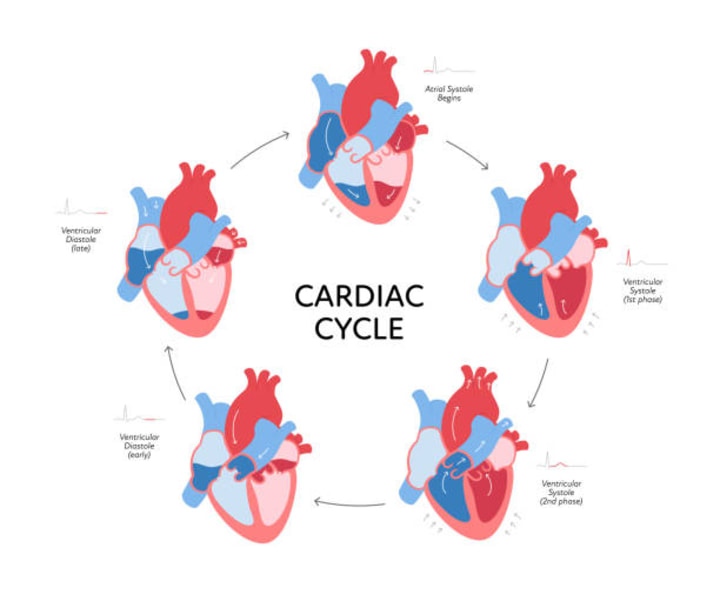
Visualize the cardiac cycle as a circular process with key phases:
Isovolumetric Relaxation (Ventricular Diastole Begins):
- Here, the ventricles start to relax without changing volume since all valves are closed. The ventricular pressure is higher than the atrial pressure but not high enough to push blood into the aorta or pulmonary trunk
Ventricular Filling:
- As the ventricles continue to relax, the atrial pressure exceeds the ventricular pressure, causing the atrioventricular (AV) valves to open. Blood flows passively from the atria into the ventricles. This includes:
- Rapid Filling: Blood flows quickly into the ventricles.
- Diastasis: Slower filling as pressure gradient decreases.
- Atrial Contraction (Atrial Systole): The atria contract, pushing the final blood volume into the ventricles.
Isovolumetric Contraction (Ventricular Systole Begins):
- Ventricles start contracting, increasing pressure and closing the AV valves. The volume remains constant as the semilunar valves are still closed.
Ventricular Ejection:
- Ventricular pressure exceeds aortic and pulmonary pressure, opening the semilunar valves and ejecting blood.
Isovolumetric Relaxation:
- Ventricles relax again, and the semilunar valves close, marking the end of systole and beginning of diastole.
Correlation with ECG
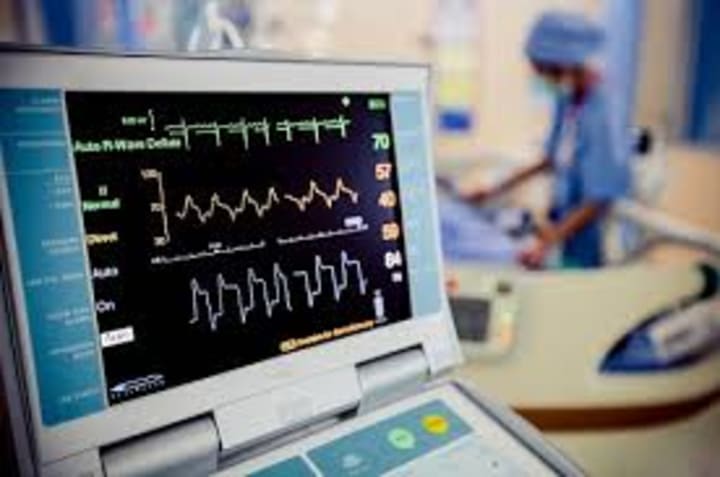
Understanding the ECG tracings is crucial for interpreting the cardiac cycle:
- P Wave: Represents atrial depolarization, leading to atrial contraction. This is the electrical signal triggering atrial systole.
- QRS Complex: Indicates ventricular depolarization, initiating ventricular contraction. It’s essential for assessing ventricular function.
- T Wave: Shows ventricular repolarization, where the ventricles reset electrically post-contraction.
The Intricacies of Ventricular Filling
- Passive Filling: Most blood enters the ventricles passively due to a pressure gradient.
- Atrial Kick: The final push of blood into the ventricles by atrial contraction, ensuring optimal filling.
- Isovolumetric Contraction: Ensures AV valves close tightly before ejection begins.
- Isovolumetric Relaxation: Prevents premature AV valve opening, allowing proper pressure drop and filling.
Significance of Isovolumetric Phases
Practical Applications
Knowledge of the cardiac cycle and ECG correlation is crucial for:
Diagnosing Heart Conditions: ECGs play a pivotal role in identifying abnormalities such as atrial fibrillation, a chaotic rhythm originating from the atria, potentially leading to blood clots and strokes. Additionally, ECGs detect myocardial infarction by revealing characteristic changes in the heart's electrical activity caused by insufficient blood flow to the heart muscle, prompting immediate medical intervention.
Monitoring Heart Health: Regular ECG monitoring provides ongoing assessment of heart function, helping healthcare providers detect subtle changes or irregularities in heart rhythm that may indicate developing conditions. This proactive approach allows for timely adjustments in treatment plans to optimize cardiovascular health and prevent complications.
Guiding Treatment: ECG results inform personalized treatment strategies, guiding the prescription of medications to manage heart rhythm disorders or ischemic heart disease. Moreover, ECG findings are crucial in determining the necessity and type of interventions such as pacemaker implantation or cardiac catheterization, ensuring precise and effective therapeutic interventions tailored to each patient's unique cardiac profile.
Conclusion
The cardiac cycle is a testament to the intricate design of the heart, where every phase plays a crucial role in maintaining efficient blood circulation. By deciphering the phases of the cardiac cycle and their correlation with ECG tracings, we gain insight into the heart's language — a language of electrical impulses and mechanical actions that sustain life itself. This understanding not only enhances our ability to diagnose and treat heart conditions but also deepens our appreciation for the remarkable organ that beats tirelessly within us. As we continue to unravel the mysteries of the cardiac cycle, we unveil a world where chaos gives way to order, and where each heartbeat echoes the symphony of life.
About the Creator
Mojalefa Mokoena
Discover the world through the eyes of Mojalefa Mokoena, a passionate storyteller from the heart of South Africa. Mojalefa's narratives blend cultural richness with contemporary insights, offering a unique perspective on global themes
Keep reading
More stories from Mojalefa Mokoena and writers in Longevity and other communities.
Heart Health: Busting Myths and Sharing Truths
"Outsmarting Heart Attacks with Science and Common Sense" When it comes to heart health, myths abound. From diet fads to misconceptions about symptoms, it's time to set the record straight. Join us as Dr. Eugenia Giannis and Dr. Vanita Shah, leading cardiologists, debunk common heart health myths and share essential tips for keeping your ticker in top shape.
By Mojalefa Mokoena2 years ago in Longevity
Himalayan Salt Therapy Benefits for Women’s Health: A Modern Wellness Perspective
The health and wellness of women today is scrutinized not from a one-sided perspective. It is of a multidimensional character - it is concerned with the balance of hormones, the regulation of the nervous system, the quality of sleep, skin health, the strength of the respiratory system, and emotional state. As more people become interested in being inclusive towards integrative approaches of wellness, the approach of Himalayan salt therapy has not received credit as a miracle treatment but as a type of environment-based treatment, which fits in the objectives of holistic health results.
By David Smith6 days ago in Longevity
Are You Actually Burned Out or Just Nutrient Deficient?
Exhaustion has become the unofficial personality trait of university students. You wake up tired, drag yourself through lectures, lose focus halfway through studying, and end the day wondering why everything feels so heavy. Most students immediately assume one thing: I’m burned out.
By Being Inquisitiveabout 2 hours ago in Longevity



Comments
There are no comments for this story
Be the first to respond and start the conversation.