
The Biggest Alzheimer’s Secret You Didn’t Know- It’s Not Just For Old People
Early Onset Alzheimer's Disease Explained

Despite the brisk March wind and cold late evening temperatures, no one in the Washington, D.C. Alzheimer’s Forum crowd of delegates and legislators moved. Mesmerized by Tony’s words, hundreds of people stood silent at the foot of the Lincoln Memorial as they listened to the heartbreaking story of his wife’s losing battle with Alzheimer’s Disease.

He told of how it started with her letting laundry pile up, unwashed and unattended for days at a time. He told of how he would come home from a long day at work to no dinner made. He told of her disinterest in him and their children; of the marital arguments because of her apparent apathy towards their relationship. He told of countless trips to numerous specialists and multiple misdiagnoses until Alzheimer’s Disease was finally noted as the cause of Tracy’s symptoms.
He told of the heartbreaking speed with which she deteriorated from a vibrant, capable woman to a bed-bound invalid, incapable of recognizing or communicating with her loved ones until death finally released her.
The deafening sound that broke the silence came at the end of his speech. It was a collective gasp of horror and disbelief as he ended with the words — “Tracy was 43 years old when she died.”
In the four different years I attended the Alzheimer’s Forum as a Florida delegate, nothing captured the attention of weary, bored legislators more than the stories of Early Onset Alzheimer’s Disease.
Why? Because up until this knowledge was imparted to them, they dismissed the disease as an “old person’s” disease, and honestly, they may not have expressed it out loud, but we suspected they were thinking — Why be bothered with allocating precious resources to a bunch of people who are close to dying anyway?
But when it might hit home — when it might hit those of them in their 40s and 50s, well, then, they sat up and took notice.
This article, the 7th in my Alzheimer Series, will enlighten you about Early Onset Alzheimer’s Disease — what it is; how it is diagnosed; who is at risk; and what, if anything, can be done to improve the quality of life of those afflicted.
What is EOAD?
The most commonly accepted definition of Early Onset Alzheimer’s Disease from Johns Hopkins is “When Alzheimer’s disease occurs in someone under age 65, it is known as early-onset (or younger-onset) Alzheimer’s disease.”
What are the Symptoms?
Often subtle symptoms begin as early as age ranges in the 30s and 40s. These symptoms are confusing and very difficult to diagnose because:
They are not always related to memory (as discussed in my article — The Top Five Early Symptoms of Alzheimer’s Disease — It’s not always about memory.)
Can be caused by a variety of other conditions
Are often vague and intermittent
They include:
· Personality Change
· Difficulty understanding directions
· Loss of Inhibition and social filter
· Excessive Talking
· Word finding/substitution difficulties
· Loss of interest in activities
· Forgetting newly learned information, appointments, and/or important dates
· Asking for the same information again and again
· Trouble solving basic problems, such as keeping track of bills or following a favorite recipe
· Losing track of the date or time of year
· Losing track of where you are and how you got there
· Trouble with depth perception or other vision problems
· Trouble joining conversations or finding the right word for something
· Misplacing things and not being able to retrace your steps to find it
· Increasingly poor judgment
· Withdrawal from work and social situations
As you can surmise from this list, if these symptoms occurred in a person in their 70’s or 80’s, Alzheimer’s Disease may be immediately suspected, but if they occur in someone in their 40’s, the list of possible diagnoses changes to:
· Job stress
· Menopause
· Midlife crisis
· Anxiety
· Depression
· Brain tumor
· Undetected Stroke
· Normal Pressure Hydrocephalus (fluid on the brain)
HOW IS IT DIAGNOSED?
Getting an appropriate diagnosis boils down to engaging in serious detective work by sleuthing out the correct specialist and undergoing a series of tests that eliminate all conditions until Alzheimer’s Disease is the only one left.
Always begin with your loved one’s primary care physician, but based upon years of frustrating experience, DO NOT ACCEPT THE VAGUE ANSWER — “Oh, it’s probably just stress. I’ll give them a prescription for an anti-anxiety drug (i.e. Xanax).”
I understand how difficult, time-consuming, and exasperating it can be, but your loved one’s quality of life depends upon your determination and persistence in finding an appropriate professional experienced in Memory Disorders, particularly EOAD.
Tony finally found an excellent memory specialist at Massachusetts General Hospital to handle his wife’s case, and I found Premier Research Institute of West Palm Beach, Florida to handle my husband’s case.
Generally, the tests performed are:
· Memory and mental tests — consist of patient interviews, paper and pencil memory and mental tests, and depth and visual perception tests.
· Comprehensive interviews with family members, particularly members who live with the person being evaluated
· Brain Imaging — MRI; C-Scans; PET Scans — to look for or rule out brain tumors, strokes, NPH (Normal Pressure Hydrocephalus)
· Blood Tests — to check for vitamin B deficiencies or thyroid issues
These are by no means, the only tests performed, but they are the most common and will detect issues that may be causing the symptoms. Most importantly, some of these issues are treatable, such as vitamin deficiencies and fluid on the brain that can be drained, thus alleviating symptoms.
RISK FACTORS FOR EOAD:
Family history -The biggest risk factor for EOAD is familial. If a parent or sibling had the disease, your risk of getting it increases, but it’s not a foregone conclusion. My brother-in-law’s father and ALL of his father’s brothers had Alzheimer’s Disease. My brother-in-law is one of five brothers between the ages of 50 and 68, and none of them have developed the disease.
My husband’s maternal grandmother and maternal aunt developed Alzheimer’s Disease well into their 80’s, and both died of it in their 90’s. My husband developed it before age 60 and died at age 72.
The Alzheimer Gene- Risk genes increase the likelihood of developing a disease but do not guarantee it will happen. Researchers have found several genes that increase the risk of Alzheimer’s. APOE-e4 is the first risk gene identified and remains the gene with the strongest impact on risk. Researchers estimate that between 40–65% of people diagnosed with Alzheimer’s have the APOE-e4 gene.
My husband tested positive for the APOE-e4 gene.
Treatment:
Medications:
Some medications may or may not alleviate some of the symptoms and help improve or stabilize functioning for a limited length of time. I am not being deliberately vague. The truth is that everyone is different and responds differently to medications, so I cannot provide an absolute answer to how medications will or will not work for your loved one.
· AChE inhibitors — Donepezil, Galantamine, and Rivastigmine increase levels of acetylcholine, a substance in the brain that helps nerve cells communicate with each other.
· Memantine — This medicine is not an AChE inhibitor. It works by blocking the effects of an excessive amount of a chemical in the brain called glutamate.
Social Interaction:
Medications have limited efficacy for a limited amount of time. Experts will tell you the importance of social interaction in improving the quality of life for someone with Alzheimer’s Disease, particularly a younger person with EOAD.
During the early to mid stages of my husband’s disease, I became active with a group of wives whose husbands had Alzheimer’s Disease (mostly EOAD) and we arranged social outings, trips, and game days, for our husbands. Game days were held at our homes chaperoned by us, and trips were driven and chaperoned by qualified professionals.
All the husbands expressed that they enjoyed the get-togethers because they didn’t have the stress of pretending to keep up with friends unafflicted by Alzheimer’s Disease; that they understood each other’s problems; that they were able to offer support to one another. They played games on their level — dominoes over poker or anything more complicated. I am convinced that these social interactions prolonged my husband’s ability to enjoy life longer than if he had been without them.
Later in the disease, when his abilities diminished, and he needed more specialized socialization and activities, I enrolled him in an Alzheimer’s Day Care.
The purpose of this article is to enlighten and inform you about EOAD. If anyone you know is under the age of 65 and exhibiting any of the aforementioned symptoms, it would be wise to make an appointment with an accredited Memory Disorders Clinic to investigate the possibility of EOAD.
Keep a positive outlook — it may turn out to be something treatable. such as a vitamin deficiency or thyroid problem.
Watch for my next article that tells the riveting stories of two extraordinary people with EOAD. A young mother in the health care field. A psychologist at the peak of his career. Two individuals who changed the lives of those with EOAD and their families, with their incredible writings, lecturing, advocacy, and a special program for children of young parents with EOAD.
Resources:
First published in Medium.com Publication - Illuminated - Curated
©Copyright 2022 Joan Gershman
About the Creator
Joan Gershman
Retired - Speech/language therapist, Special Education Asst, English teacher
Websites: www.thealzheimerspouse.com; talktimewithjoan.com
Whimsical essays, short stories -funny, serious, and thought-provoking
Weightloss Series
Reader insights
Outstanding
Excellent work. Looking forward to reading more!
Top insight
Expert insights and opinions
Arguments were carefully researched and presented
Keep reading
More stories from Joan Gershman and writers in Longevity and other communities.
Is it Time to Take the Keys? — 3 Secrets About Alzheimer’s Disease and Driving That Will Give You the Answer
NOTE: Of all the issues involved in caring for a loved one with Alzheimer’s Disease, one that can cause the most stress is when to take the keys away. When is someone with dementia so impaired that it is dangerous for them to drive? This article is a compilation of resources, blogs, and research taken from my website, www.thealzheimerspouse.com, which was the #1site on the Internet for support and information for Alzheimer’s spouse caregivers during the years I was caring for my Alzheimer’s Diseased husband, Sid.
By Joan Gershman4 years ago in Longevity
Day 4 of Quitting
If this is how sobriety feels, maybe it’s better to go through life a little buzzed… this, along with other hits like, I want to kill myself, I wish I was dead, and I’m going to throw myself off a bridge have been the only thoughts on rotation these past few days. I promise myself that if, in a month, I still feel like this (‘this’ meaning despondent, full of rage, and simultaneously numb) I can go back to smoking. Until mid-February though? Nicotine is off the table.
By sleepy drafts11 days ago in Longevity
The Hidden Power of the Nerve Endings in Your Feet
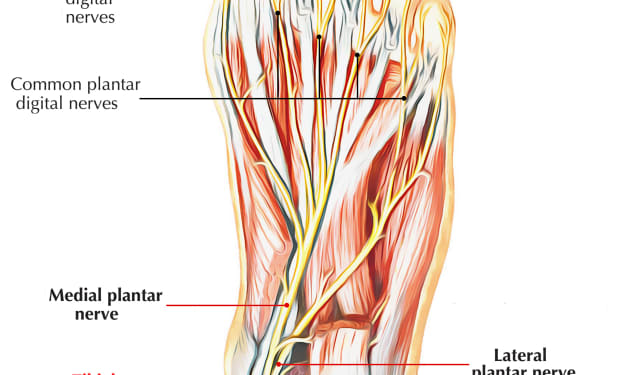
Most people don’t give much thought to their feet unless they’re uncomfortable or tired. Yet beneath the surface, the nerve endings in the feet are constantly working, sending vital information to the brain that influences balance, posture, and movement. These signals operate quietly in the background, but they play a far greater role in daily life than many people realize.
By AhmedFitLife4 days ago in Longevity



Comments (2)
Hi Joan. A great piece of educational mental health awareness you have written. I was a mental health nurse for 32 years until I caught Covid and disabled me - I simply write now. It's great to see others writing on the subject of this. The trouble in our world is that too many are 'labeled' when it comes to health problems. Well done😊.
You always have useful stories that are so we'll written. Thank you for writing this resources and FYI story 🥰