
🦁 The Animal in Us: How Humans and Animals Are More Alike Than We Think
The Hidden Similarities Between Human and Animal Behavior

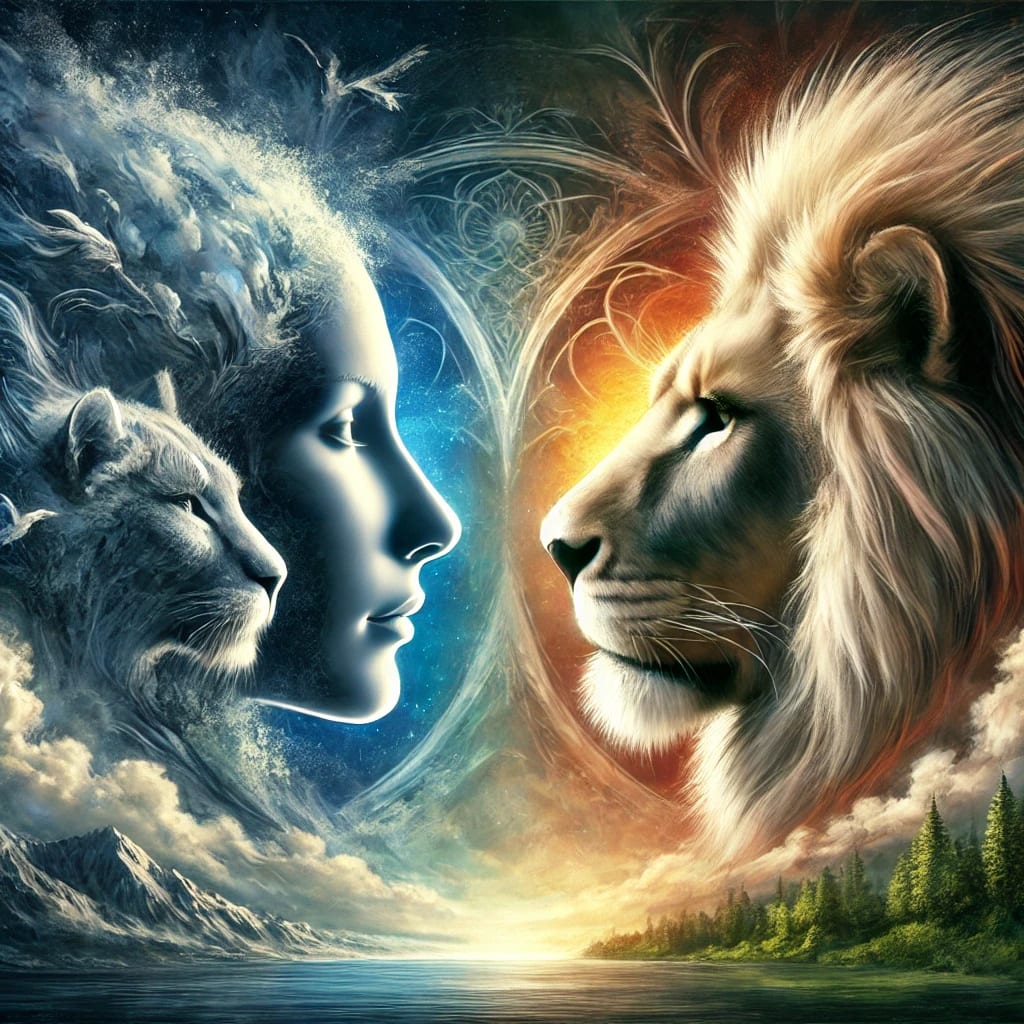
Introduction: Are We Really So Different?
Look into the eyes of a wolf, and you might see determination. Watch a mother elephant, and you’ll witness deep, unconditional love. Observe a chimpanzee using tools, and suddenly, intelligence doesn’t seem so uniquely human anymore.
For centuries, we’ve drawn a hard line between humans and animals—placing ourselves above nature, believing our intelligence, emotions, and culture separate us. But modern science tells a different story. We are not as different as we once thought.
From emotions to problem-solving, from social structures to even morality, animals and humans share more similarities than we ever imagined. This article explores the surprising ways in which we mirror the animal world—and what it reveals about our own nature.
1. The Emotional Lives of Animals
One of the biggest misconceptions about animals is that they lack complex emotions. However, research has shown that many species experience joy, grief, fear, and love in ways remarkably similar to humans.
- ✅ Grief and Mourning: Elephants are known to mourn their dead, sometimes even returning to the bones of lost family members for years.
- ✅ Love and Attachment: Wolves, like humans, form deep emotional bonds and lifelong partnerships.
- ✅ Laughter: Rats giggle when tickled, and chimpanzees laugh when playing—proof that joy is not unique to humans.
Animals don’t just react to the world—they feel it, just like we do.
2. Intelligence and Problem-Solving: Not Just a Human Trait
For years, we believed intelligence set humans apart. But animals have demonstrated problem-solving skills, strategic thinking, and even tool use that challenge our assumptions.
🦜 Crows and Ravens: These birds can solve complex puzzles, remember human faces, and even plan for the future—skills once thought to be exclusively human.
🐬 Dolphins: Known for their playful intelligence, dolphins call each other by unique names and even show signs of self-awareness.
🐵 Chimpanzees: These primates not only use tools but also teach skills to younger generations—a form of cultural transmission much like humans.
If intelligence defines us, then many animals belong in our club.
3. Social Structures and Morality in the Animal Kingdom
We often think of human society as uniquely complex, but many animals have hierarchies, social rules, and even moral behaviors.
✔️ Cooperation & Fairness: Capuchin monkeys will protest if they see a fellow monkey being treated unfairly—suggesting a deep-rooted sense of justice.
✔️ Leadership & Politics: Wolves have structured packs with leaders that guide their groups—not through brute force, but through respect and experience.
✔️ Altruism: Dolphins have been known to rescue humans and other animals in distress, displaying an instinct for compassion and kindness.
In many ways, our social instincts mirror those found in nature.
4. Communication: The Language of the Wild
Humans use complex language, but animals have their own sophisticated forms of communication.
🔊 Whale Songs: Humpback whales create long, evolving songs that can travel for miles, possibly functioning as a cultural form of storytelling.
🐘 Elephant Conversations: Elephants use deep rumbles that can be heard and understood miles away, even warning others of danger.
🐦 Prairie Dog Vocabulary: Studies show that prairie dogs have specific calls for different predators—meaning they describe threats much like we do with words.
Language, it seems, is not just a human invention.
5. The Mirror Test: Self-Awareness in Animals
One of the tests for human-like intelligence is the mirror test—whether an animal recognizes itself in a reflection.
✅ Who Passes the Mirror Test?
- Dolphins
- Elephants
- Great Apes (Chimpanzees, Bonobos, Orangutans)
- Some Birds (Magpies and Crows)
These animals understand that they are looking at themselves, a trait once thought to be uniquely human.
6. Are Humans Just Another Animal?
Despite our advancements, our instincts, emotions, and intelligence connect us deeply to the animal kingdom. From our fight-or-flight responses to the way we form tribal identities, we are not separate from nature—we are a part of it.
Perhaps instead of asking, Are animals like us? we should be asking, Are we more like animals than we admit?
Final Thoughts: Bridging the Human-Animal Divide
Science has shown us time and again that animals are not just instinct-driven machines—they are emotional, intelligent, and social beings. Understanding our similarities doesn’t diminish humanity—it enriches it.
By seeing animals as fellow sentient beings, we deepen our respect for nature, our empathy for other creatures, and our understanding of ourselves.
After all, the animal in us is not something to deny—it’s something to embrace.
About the Creator
Ahmet Kıvanç Demirkıran
As a technology and innovation enthusiast, I aim to bring fresh perspectives to my readers, drawing from my experience.
Keep reading
More stories from Ahmet Kıvanç Demirkıran and writers in Longevity and other communities.
🛠 The Myth of Passion: Why You Don’t Need to “Find” Your Purpose
Introduction: The Pressure to “Find” Your Passion We’ve all heard it: “Follow your passion.” It’s the advice given in commencement speeches, career workshops, and self-help books. The idea is simple—your purpose is out there, waiting to be found. Once you discover it, work won’t feel like work, success will come effortlessly, and life will be fulfilling.
By Ahmet Kıvanç Demirkıran11 months ago in Longevity
Day 4 of Quitting
If this is how sobriety feels, maybe it’s better to go through life a little buzzed… this, along with other hits like, I want to kill myself, I wish I was dead, and I’m going to throw myself off a bridge have been the only thoughts on rotation these past few days. I promise myself that if, in a month, I still feel like this (‘this’ meaning despondent, full of rage, and simultaneously numb) I can go back to smoking. Until mid-February though? Nicotine is off the table.
By sleepy drafts11 days ago in Longevity
Cloud's advice
A Conversation with the Cloud Friday, 5 January 2018 By Javed Iqbal Dark clouds had spread across the sky. They were so thick and heavy that even during the daytime, it felt as if night had fallen. Zeeshan was walking quickly toward his fields. He was worried that if it started raining, the bundles of wheat lying in the open would be damaged. He wanted to cover them with plastic sheets before the rain arrived.
By Sudais Zakwan3 days ago in Longevity




Comments
There are no comments for this story
Be the first to respond and start the conversation.