celebrities
Top celebrities and influencers in the health and wellness industry. Our favorite Longevity advocates.
When You Can’t “Let Go”: Meditating with Attachment Instead
We’ve all heard the advice: “Just let it go.” Whether it’s a painful relationship, a lingering resentment, or an old fear, the phrase is often used as a shorthand for moving on, clearing space, or cultivating peace. But what happens when letting go feels impossible? When the grip is too tight, the memory too raw, or the emotion too alive? Meditation, contrary to popular belief, doesn’t require us to force detachment. In fact, some of the deepest healing happens when we sit down with our attachments—not in spite of them.
By Marina Gomez8 months ago in Longevity
Softening Resistance: Meditating with the Feelings You’d Rather Avoid
There’s a moment — just before we sit down to meditate — when discomfort knocks. Maybe it’s sadness. Maybe it’s boredom. Maybe it’s a vague, shapeless ache. And instinctively, we want to escape. To fix it, to scroll past it, to do anything but feel it. But this is exactly where the real practice begins.
By Black Mark8 months ago in Longevity
Your Health Is Your Wealth: Small Habits, Big Impact
Introduction In today’s fast-paced digital world, we often ignore the very engine that drives us—our health. We prioritize deadlines, devices, and distractions, while our body quietly absorbs the pressure. But here’s a truth worth remembering: your health is the foundation of your success, happiness, and freedom. It’s time to invest in it, one small habit at a time.
By KAMRAN AHMAD8 months ago in Longevity
Legacy Built on Discipline
“Dreams are not what you see in your sleep. Dreams are things that don’t let you sleep.” This quote from Cristiano Ronaldo perfectly captures the essence of a man who refused to settle for anything less than greatness. Born on the Portuguese island of Madeira, Ronaldo’s story is one of relentless discipline, sacrifice, and an unyielding mindset that propelled him from humble beginnings to global football superstardom.
By Hazrat Usman Usman8 months ago in Longevity
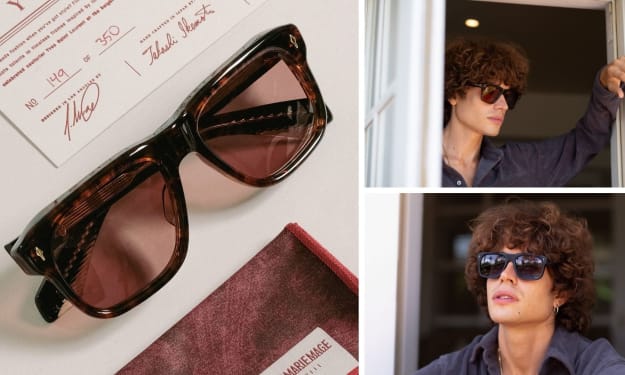
Modern Elegance: Replica Jacques Marie Mage Sunglasses
In the evolving world of fashion, eyewear has become more than just a utility—it’s a signature of personal style, identity, and attitude. Among the most coveted designer frames in recent years is the unique and bold aesthetic of Jacques Marie Mage. Known for their limited-edition releases and handcrafted quality, Jacques Marie Mage sunglasses have become a symbol of understated luxury. However, for many fashion-forward individuals, accessing these pieces can be financially out of reach. This is where the world of high-quality replicas enters the scene, offering style aficionados a way to experience iconic designs without compromising on aesthetic or detail.
By charliesamuel8 months ago in Longevity
How to Spot Stylish Trends: The Allure of Replica Miu Miu Sunglasses and Other 1:1 Styles
In a world where fashion moves at lightning speed, accessories like sunglasses offer not only protection but also an instant upgrade to any look. But as designer prices rise, a growing number of consumers are turning toward high-quality replicas that capture the essence of luxury without the heavy price tag. Among these, replica Miu Miu sunglasses are making waves in the fashion-conscious crowd. These shades embody the elegance, creativity, and boldness of the original designs—yet remain accessible.
By charliesamuel8 months ago in Longevity
Are Chemicals Causing Cancer in Young People
Cancer in young people is no longer a rare diagnosis. Over the past few decades, scientists and healthcare providers have observed a troubling rise in early-onset cancers. While genetics and lifestyle factors have always played a role, researchers are increasingly asking a critical question. Could everyday chemical exposure be a hidden culprit?
By Lucy watson8 months ago in Longevity
From Rage to Calm: Breath as an Emotional Regulator
Anger can hit like a storm—hot, overwhelming, and sometimes uncontrollable. When rage takes over, it’s easy to feel disconnected from reason, compassion, and even yourself. But what if something as simple as your breath could help you shift from fury to calm?
By Marina Gomez8 months ago in Longevity
Is Obesity a Disease or a Lifestyle Issue?
Obesity rates are rising rapidly across the globe, with the World Health Organization estimating that over 650 million adults are clinically obese. As waistlines expand, so does the debate: Should obesity be officially recognized as a disease rather than just a condition caused by lifestyle choices?
By Lucy watson8 months ago in Longevity
Seasonal Meditation: How to Align with Spring, Summer, Fall & Winter
The Earth moves in cycles. So do we. But in the rush of modern life—climate-controlled homes, 24/7 productivity, glowing screens—we often forget that we are seasonal beings. Just like the trees, the soil, and the migrating birds, our bodies and minds respond to the changing rhythms of light, temperature, and time.
By Victoria Marse8 months ago in Longevity