
Softening Resistance: Meditating with the Feelings You’d Rather Avoid
Feelings You’d Rather Avoid

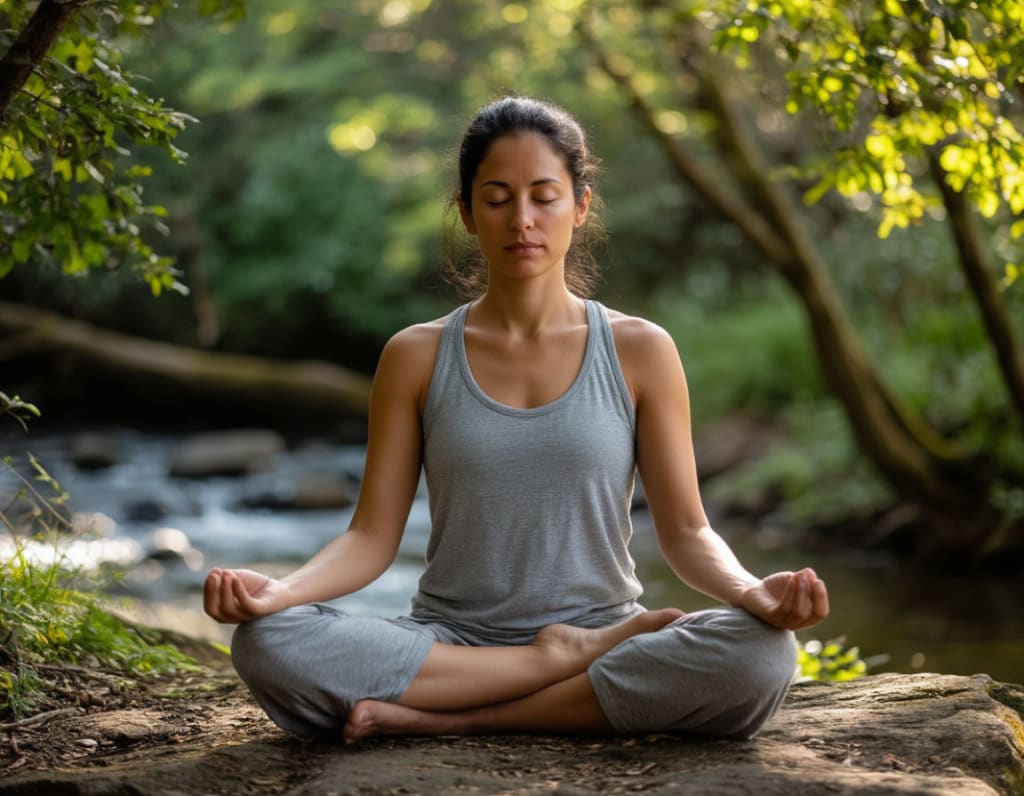
There’s a moment — just before we sit down to meditate — when discomfort knocks. Maybe it’s sadness. Maybe it’s boredom. Maybe it’s a vague, shapeless ache. And instinctively, we want to escape. To fix it, to scroll past it, to do anything but feel it. But this is exactly where the real practice begins.
Meditation isn’t about escaping feelings — it’s about softening our grip around them. When we sit with the emotions we usually avoid, we build something quietly radical: emotional tolerance. It’s not about wallowing or dramatizing. It’s about making gentle space for what’s already there.
Instead of trying to "fix" your sadness or anxiety in meditation, experiment with naming it: “Here is tightness. Here is heaviness. Here is resistance.” That simple act of labeling with kindness changes everything. You move from being inside the emotion to being the one observing it — and that shift creates room to breathe.
One powerful practice for this is the “softening breath.” When you feel a sensation you’d rather not feel — maybe tension in the chest or nausea in the gut — breathe toward it. Not to get rid of it, but to sit with it. Imagine your inhale as curiosity, and your exhale as softening. This isn’t forced surrender. It’s tender co-existence.
Many people turn to mindfulness precisely because they’re tired of running from themselves. The beauty is, meditation offers a safe space to gently turn toward the shadows — not with judgment, but with presence. And often, that’s all those feelings were asking for in the first place: to be seen.
If you’re looking to go deeper in cultivating this kind of mindful emotional resilience, you might explore some of the reflective tools available at Meditation Life. There, you’ll find resources that meet you exactly where you are — even in the uncomfortable spaces.
Remember: resistance is not the enemy. It’s often the doorway.
The irony is that the feelings we avoid tend to linger the longest. What we resist doesn't just persist — it grows in the shadows. But when we bring mindfulness to discomfort, we begin to rewrite that dynamic. We stop feeding the fear of feeling, and start developing trust in our own inner capacity to hold whatever arises.
This kind of practice builds more than calm — it builds courage. The courage to stay, to witness, to not flinch at your own humanity. Over time, you may notice that the emotions you once feared become less sharp, less overwhelming. Not because they’ve vanished, but because you’ve expanded. You’ve grown bigger than them — simply by staying.
When we allow ourselves to sit with the raw edges of grief, anger, shame, or loneliness, something subtle but profound happens: we stop abandoning ourselves. Meditation becomes an act of self-loyalty. Instead of outsourcing safety or soothing, we become the steady presence we've always needed — right in the heart of the storm.
This doesn’t mean wallowing or over-identifying with pain. It means creating space for the full spectrum of human emotion without judgment. It’s in this open, permissive space that emotions soften naturally — like knots unwinding under warmth. Resistance dissolves not by force, but by compassion.
About the Creator
Keep reading
More stories from Black Mark and writers in Longevity and other communities.
How to Meditate When You Feel Numb
We often turn to meditation in moments of stress, sadness, or overload. But what about when you feel… nothing? Not peace. Not tension. Just a vague numbness—like you’re watching your life from a distance, barely connected to what’s happening.
By Black Mark8 months ago in Longevity
The Porcelain Protocol: Engineering Perfection in the Middle Kingdom
In the shimmering high-rises of Chengdu and the bustling tech hubs of Shenzhen, a new kind of industrial revolution is taking place—one that isn't measured in steel output or software exports, but in the precise millimeters of a double-eyelid crease and the sharp angle of a "V-line" jaw. China has rapidly evolved into the world’s most sophisticated laboratory for cosmetic transformation. What was once a hushed medical necessity or a luxury for the cinematic elite has transformed into a standardized, multi-billion-dollar rite of passage for the modern Chinese woman. To understand this phenomenon is to peel back the layers of a society caught between ancient physiognomy and a hyper-competitive digital future.
By yusuf selho6 days ago in Longevity
Microsoft's Purposeful Marketing Deception About AI's Ability To Beat Physicians In Diagnosis
When you look at the world of scientific research... If you are not careful... You will be fooled into believing things that are not actually supported by the data.
By Dr. Cody Dakota Wooten, DFM, DHM, DAS (hc)about 3 hours ago in Longevity



Comments
There are no comments for this story
Be the first to respond and start the conversation.