
Study on the value of stem cell therapy for Parkinson's degenerative diseases
Parkinson's disease is a common neurodegenerative disease in the elderly


Parkinson's disease is a common neurodegenerative disease in the elderly, with a prevalence of more than 2% in people over 65 years of age, which seriously affects people's physical and mental health and poses a serious burden to society. The most promising treatment for this disease is cell transplantation. Cell transplantation therapy can be divided into embryonic midbrain cell transplantation, embryonic stem cell transplantation, and induced multifunctional stem cell transplantation according to the source of the cells.
Embryonic midbrain cell transplantation therapy
Transplantation of midbrain tissue from human embryos in animal models of Parkinson's disease can improve motor function in animals. Based on these experimental data, transplantation of human embryonic midbrain tissue was performed in 300-400 Parkinson's patients during 1980-1990. This treatment demonstrated that embryonic midbrain cell transplantation was significantly more effective in improving motor symptoms in Parkinson's disease than before transplantation, and PET scans also showed a progressive increase in the uptake of fludopa in the striatum at 6 and 12 months after transplantation. However, unilateral striatal transplantation in Parkinson's patients requires one to four embryonic midbrains, so transplantation of human embryonic midbrain tissue is limited by a lack of cell sources and ethical controversy, which limits the further application of this treatment.
Embryonic stem cell transplantation therapy
Embryonic stem cells (ESCs) are primitive undifferentiated cells that have the potential to differentiate into various tissues and organs. 1963 saw the discovery of stem cells by McCulloch and Till, which opened the door to stem cell research.
Subsequently, Evans successfully cultured a stem cell line from mouse embryos in 1981 Thomson cultured a stem cell line from human embryonic tissue in 1998 Gas is considered to be the most promising source of cells for cell therapy for neurological disorders due to the ability of embryonic stem cells to self-renew and their totipotent nature.
Bjorklund found that undifferentiated embryonic stem cells injected stereotaxically into the striatum of a rat model of Parkinson's disease spontaneously differentiated into dopaminergic neurons and also into 5-hydroxytryptamine neurons. In addition to the histological experiments, PET and MRI experiments revealed that embryonic stem cell-derived neurons could integrate into the neural network of the striatum to improve motor function in a rat model of Parkinson's disease.
In 2002, Kim reported that first differentiating mouse embryonic stem cells into dopaminergic neurons and then injecting them into the striatum of rats with Parkinson's disease, resulted in significant improvements in several Parkinson's disease-related motor symptoms in the rats, and the implanted cells also exhibited electrophysiological properties typical of midbrain dopaminergic neurons Gas co-culture of human embryonic stem cells and immortalized midbrain glial cells resulted in a large number of A The cells were injected into the striatum of rats with Parkinson's disease and also showed significant improvement in motor function [1].
In 2011, Li reported a new induction protocol to rapidly (one week) differentiate human embryonic stem cells into primary neural stem cells (pNSCs) without going through the neurosphere stage, which can self-renew for 30-50 generations without differentiation, thus ensuring the generation of sufficient cells for transplantation. The generated pNSCs were cultured in a medium containing N2, BDNF, GDNF, and dbCAMP for 23 weeks and could generate 60%-70% TH-positive neurons. Kirks et al. transplanted cells differentiated by a similar method into the striatum of animals with Parkinson's disease and found that the cells survived and improved the behavior of the animals [2].
Induced allogeneic stem cell transplantation therapy
Induced all-powerful stem cells (iPSCs) are a pioneering technology in the field of regenerative medicine° Yamanaka and Takahashi introduced four transcription factors: OCT4, Sox2, Kif4, and c_Myc into mouse or human fibroblasts via a viral vector and transformed them into induced all-powerful stem cells. The resulting induced totipotent stem cells are of the patient's origin and are thus theoretically immune rejection-free. The induced totipotent stem cells are similar to embryonic stem cells in terms of genomic stability, transcriptional profile, totipotency, and dopaminergic neuronal differentiation capacity. Several laboratories have successfully differentiated dopamine neurons from induced allogeneic stem cells, and these neurons were also able to integrate into the striatum of a rat model of Parkinson's disease and achieve similar behavioral improvements as stem cell-derived dopamine neurons.
Conclusion
In the cell therapy of Parkinson's disease, ESCs and iPSCs are considered to be the main source of cell therapy and can provide an inexhaustible supply of cells for transplantation. However, effective differentiation techniques are necessary to apply these cells in clinical therapy. Because incompletely differentiated cells may lead to tumor formation, further clinical experimental studies are needed to enable ESCs and iPSCs to be truly used in the clinical treatment of patients.
[1]: Roy, N.S., et al. Functional engraftment of human ES cell-derived dopaminergic neurons enriched by coculture with telomerase-immortalized midbrain astrocytes. Nat Med, 2006. 12(11): p. 1259-68
[2]: Kirks, S., et al., Dopamine neurons derived fi? om human ES cells efficiently engraft in animal models of Parkinson's disease. Nature, 2011. 480( 7378): p. 547-51
About the Creator
De pepper
Share a little science every day
Day 4 of Quitting
If this is how sobriety feels, maybe it’s better to go through life a little buzzed… this, along with other hits like, I want to kill myself, I wish I was dead, and I’m going to throw myself off a bridge have been the only thoughts on rotation these past few days. I promise myself that if, in a month, I still feel like this (‘this’ meaning despondent, full of rage, and simultaneously numb) I can go back to smoking. Until mid-February though? Nicotine is off the table.
By sleepy drafts10 days ago in Longevity
What You See Is Not a Ship: At 385 Metres Long, Havfarm Is the World’s Largest Offshore Salmon Farm
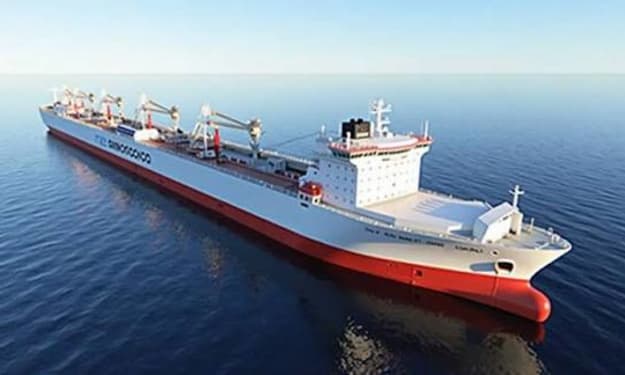
At first glance, Havfarm looks like a massive industrial ship drifting across the open sea. Stretching an astonishing 385 metres in length, it rivals some of the world’s largest oil tankers and aircraft carriers. But Havfarm is not a ship at all. It is the world’s largest offshore salmon farm, a floating giant designed to transform the future of global aquaculture.
By Fiazahmedbrohi 6 days ago in Longevity



Comments
There are no comments for this story
Be the first to respond and start the conversation.