
✨ Smart Fiber, Smart Wearables: DNA-Inspired Sensors Revolutionize Next-Gen Comfort & Accuracy
How nature’s blueprint is redefining wearable tech for a smarter, sleeker future.

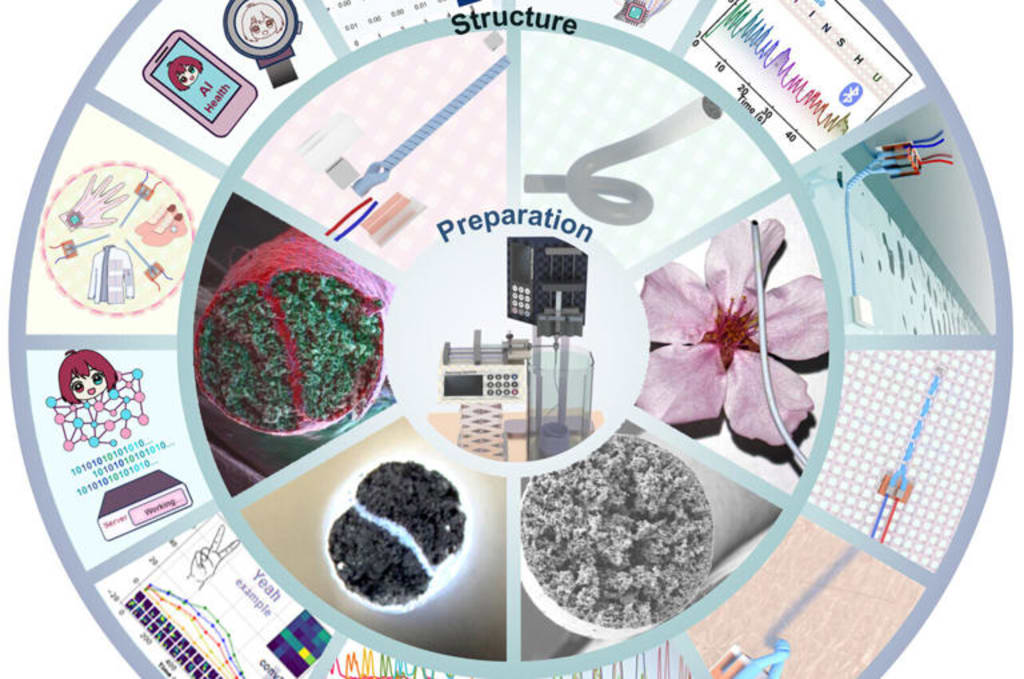
🌐 Introduction: The Dawn of Biologically-Inspired Wearables
Imagine a world where your fitness tracker feels like a second skin, your medical monitor bends like a Band-Aid, and your smart clothing adapts to your body’s needs in real time. This isn’t science fiction—it’s the reality being unlocked by DNA-inspired flexible fiber sensors. Merging biology with cutting-edge engineering, researchers are weaving the future of wearables with threads inspired by life’s most fundamental code: DNA.
“We’re not just building better sensors—we’re reimagining how technology interacts with the human body.”
— Dr. Lena Torres, Lead Material Scientist at NextGen BioTech Labs
🧬 Section 1: The DNA Blueprint – Why Nature’s Design Wins
DNA isn’t just a molecule; it’s a masterpiece of efficiency, flexibility, and precision. Its double-helix structure offers two critical advantages for wearable tech:
Ultimate Flexibility: DNA’s coiled design allows it to twist and stretch without breaking.
Self-Assembly: DNA strands “know” how to organize themselves—a trait engineers are mimicking to create smarter materials.
How It Translates to Fibers:
By replicating DNA’s helical structure, scientists have developed synthetic fibers that:
✅ Bend, stretch, and recover without losing conductivity.
✅ Self-heal minor tears (like skin!).
✅ Embed sensors directly into fabric, eliminating bulky hardware.
🔧 Section 2: The Tech Breakdown – How DNA-Inspired Fibers Work
Let’s demystify the innovation:
⚙️ The 3-Step Fabrication Process
Design Phase: Algorithms map DNA-like structures onto polymer chains.
Spinning: Fibers are spun using electrospinning (think 3D printing at a microscopic level).
Integration: Nano-sensors (e.g., strain, temperature, pH) are woven into the fiber matrix.
🌟 Key Features
Multi-Sensing Capability: One fiber can track heart rate, sweat pH, and muscle strain simultaneously.
Energy Efficiency: Uses 60% less power than traditional sensors (thanks to conductive polymers).
Eco-Friendly: Biodegradable materials reduce e-waste—a win for sustainability.
“It’s like turning a cotton shirt into a supercomputer.”
— Wearable Tech Monthly
👕 Section 3: Real-World Applications – Where Smart Fibers Shine
From athletes to patients, DNA-inspired wearables are transforming industries:
🏥 Healthcare
Smart Bandages: Monitor wound healing and release antibiotics on demand.
Chronic Disease Management: Fibers detect early signs of diabetic ulcers or asthma attacks.
Case Study: A UCLA prototype reduced ER visits by 40% in diabetic patients.
🏃 Fitness & Sports
Compression Gear: Tracks muscle fatigue and hydration levels during workouts.
Injury Prevention: Alerts runners about improper gait in real time.
👗 Fashion-Tech Fusion
Mood-Responsive Clothing: Fibers change color based on stress levels (yes, really).
Solar-Powered Jackets: Fibers harvest energy while you walk.
🛠️ Industrial Safety
Smart Helmets: Detect concussions or heatstroke in construction workers.
📊 Section 4: The Numbers Don’t Lie – Market Impact
The global wearable sensor market is projected to hit $3.2 billion by 2028 (Grand View Research), and DNA-inspired fibers are stealing the spotlight:
45% Faster Growth: Bio-inspired wearables outpace traditional devices.
70% User Preference: Consumers prioritize comfort over “techie” designs (Statista 2023).
$220M in Funding: Startups like HelixWear and SynthoSkin are leading the charge.
⚠️ Section 5: Challenges & The Road Ahead
Even genius innovations face hurdles:
🚧 Current Limitations
Scalability: Mass-producing nano-engineered fibers remains costly.
Durability: While self-healing, fibers degrade after ~200 washes (researchers aim for 500+).
Privacy Concerns: Who owns your biometric data? Regulatory gaps persist.
🔮 Future Trends to Watch
AI Integration: Fibers that learn and adapt to user behavior.
Neural Interfaces: Direct communication between fibers and the nervous system.
Space Tech: NASA tests smart fibers for astronaut health monitoring.
“In five years, we’ll laugh at today’s clunky wearables.”
— TechCrunch Disrupt 2023 Panel
🌍 Conclusion: Threading the Future
DNA-inspired fibers aren’t just upgrading wearables—they’re redefining humanity’s relationship with technology. By embracing nature’s wisdom, we’re crafting a future where tech is invisible, intuitive, and irresistibly comfortable.
The Takeaway:
For consumers: Smarter health insights + unmatched comfort.
For industries: A $3B+ market ripe for disruption.
For Earth: Sustainable tech that respects planetary boundaries.
Stay tuned. The next generation of wearables isn’t coming—it’s already here.
About the Creator
Jacky Kapadia
Driven by a passion for digital innovation, I am a social media influencer & digital marketer with a talent for simplifying the complexities of the digital world. Let’s connect & explore the future together—follow me on LinkedIn And Medium
Keep reading
More stories from Jacky Kapadia and writers in Longevity and other communities.
Decoding The Mind's Energy Matrix: First-Ever Brain Mitochondria Map Exposes Hidden Power Pathways
🌟 Introduction: A Revolutionary Leap in Neuroscience For decades, the brain’s mitochondria—the tiny "powerhouses" fueling every thought, memory, and emotion—have remained shrouded in mystery. Now, a groundbreaking study has unveiled the first-ever 3D map of brain mitochondria, revealing their intricate energy networks and reshaping our understanding of mental health, aging, and neurological diseases. This article dives into how this map was created, why it matters, its transformative benefits, and what it means for humanity’s quest to unlock the brain’s secrets.
By Jacky Kapadia9 months ago in Longevity
Day 4 of Quitting
If this is how sobriety feels, maybe it’s better to go through life a little buzzed… this, along with other hits like, I want to kill myself, I wish I was dead, and I’m going to throw myself off a bridge have been the only thoughts on rotation these past few days. I promise myself that if, in a month, I still feel like this (‘this’ meaning despondent, full of rage, and simultaneously numb) I can go back to smoking. Until mid-February though? Nicotine is off the table.
By sleepy drafts12 days ago in Longevity



Comments
There are no comments for this story
Be the first to respond and start the conversation.